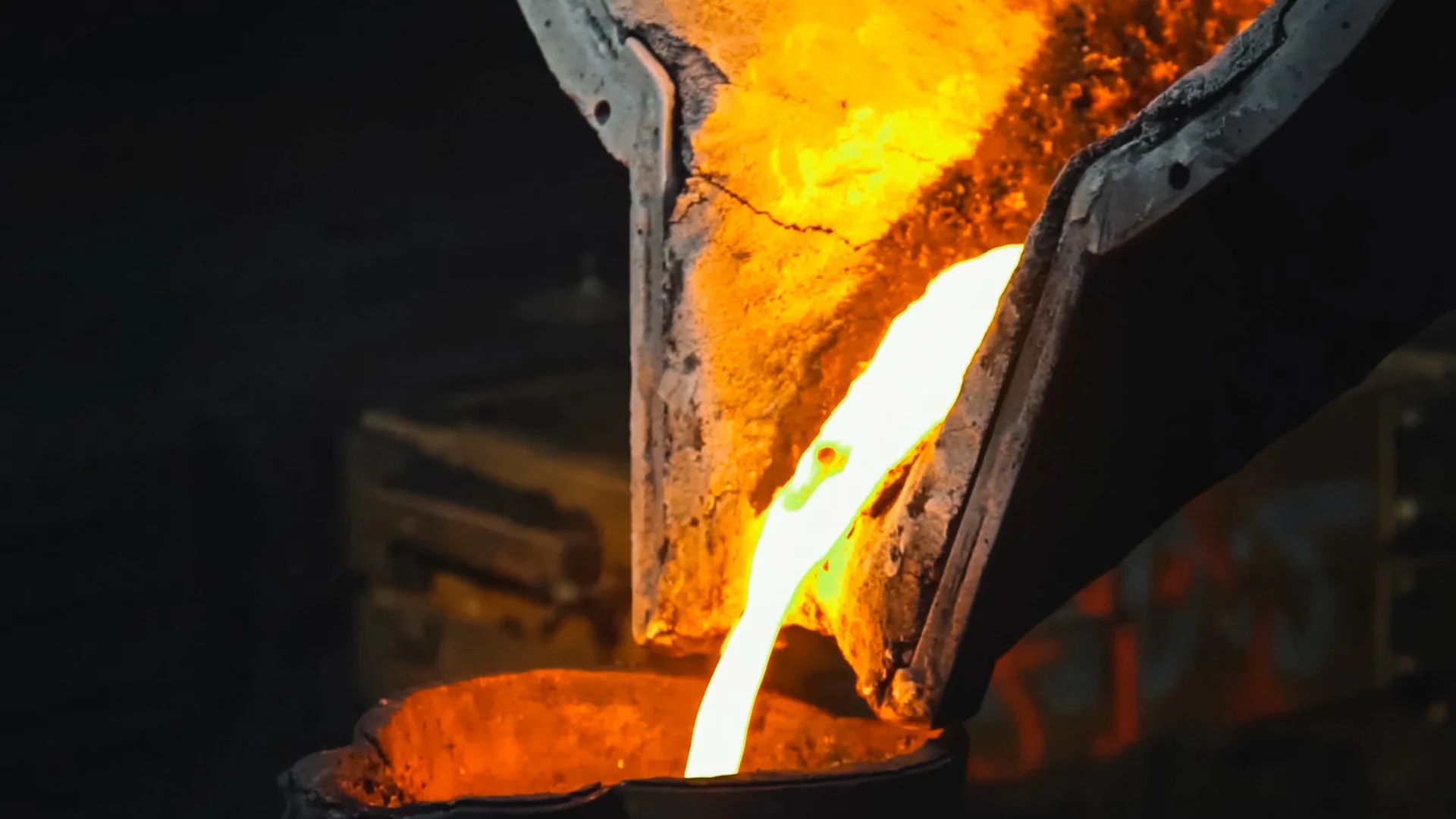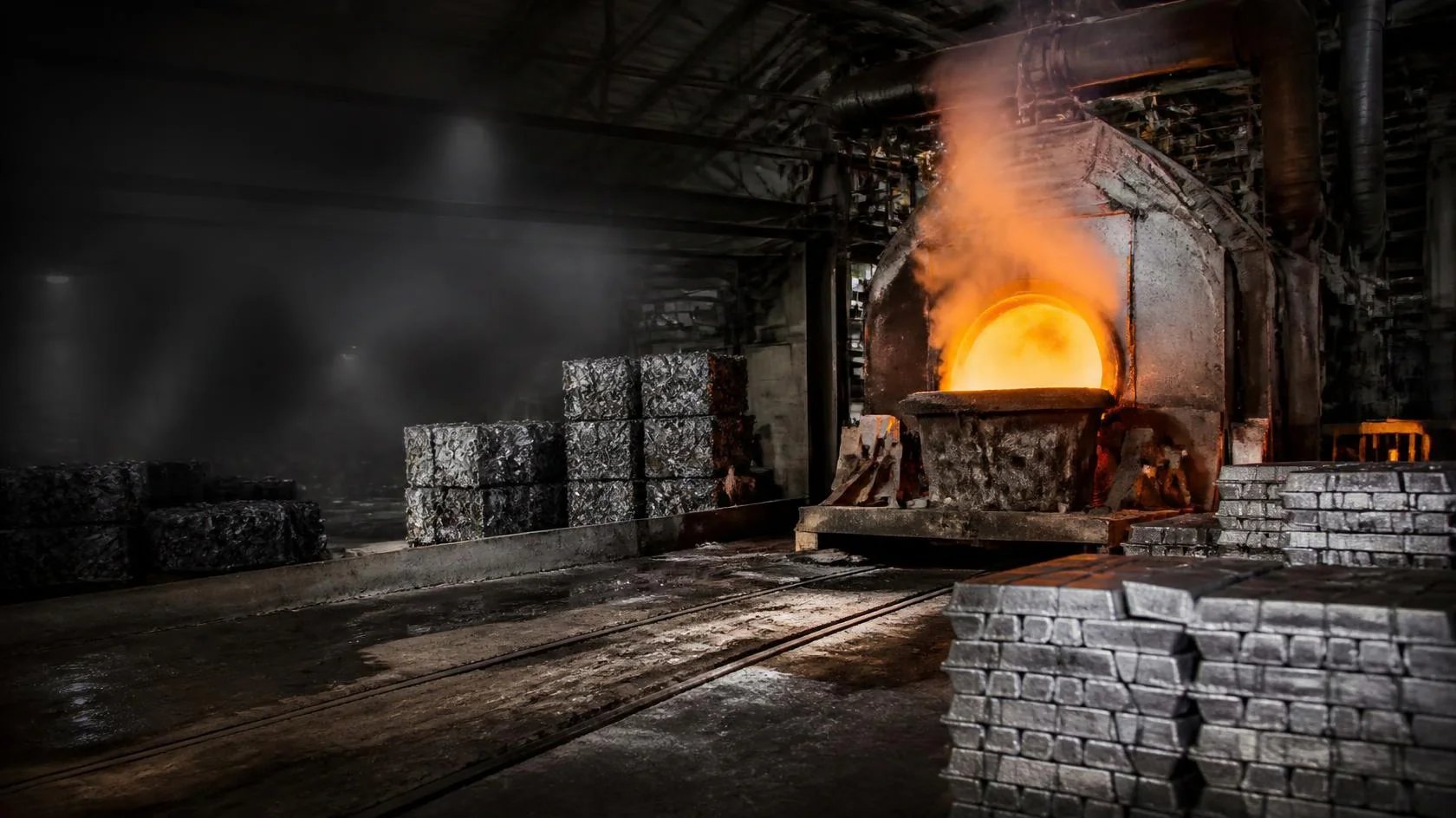
Today
Standing dilution ratios, sized for uncertainty
- Charge recipes set by alloy, with standing primary dilution ratios.
- Scrap categorised by grade, with composition assumed within it.
- Heat chemistry confirmed after melting, corrected downstream.

Once scrap is in the furnace, most tramp elements cannot be removed, so remelt and cast house teams meet specification by adding primary metal. INSUS works on the charge decision before that point: which scrap lots go into each heat, and how much dilution the tramp load actually on hand requires. Metallurgists approve every charge.
01
The charge is decided before the chemistry is fixed.
02
Element limits stay hard constraints, with margins shown.
03
Metallurgists approve every charge. No closed-loop charging.
The problem
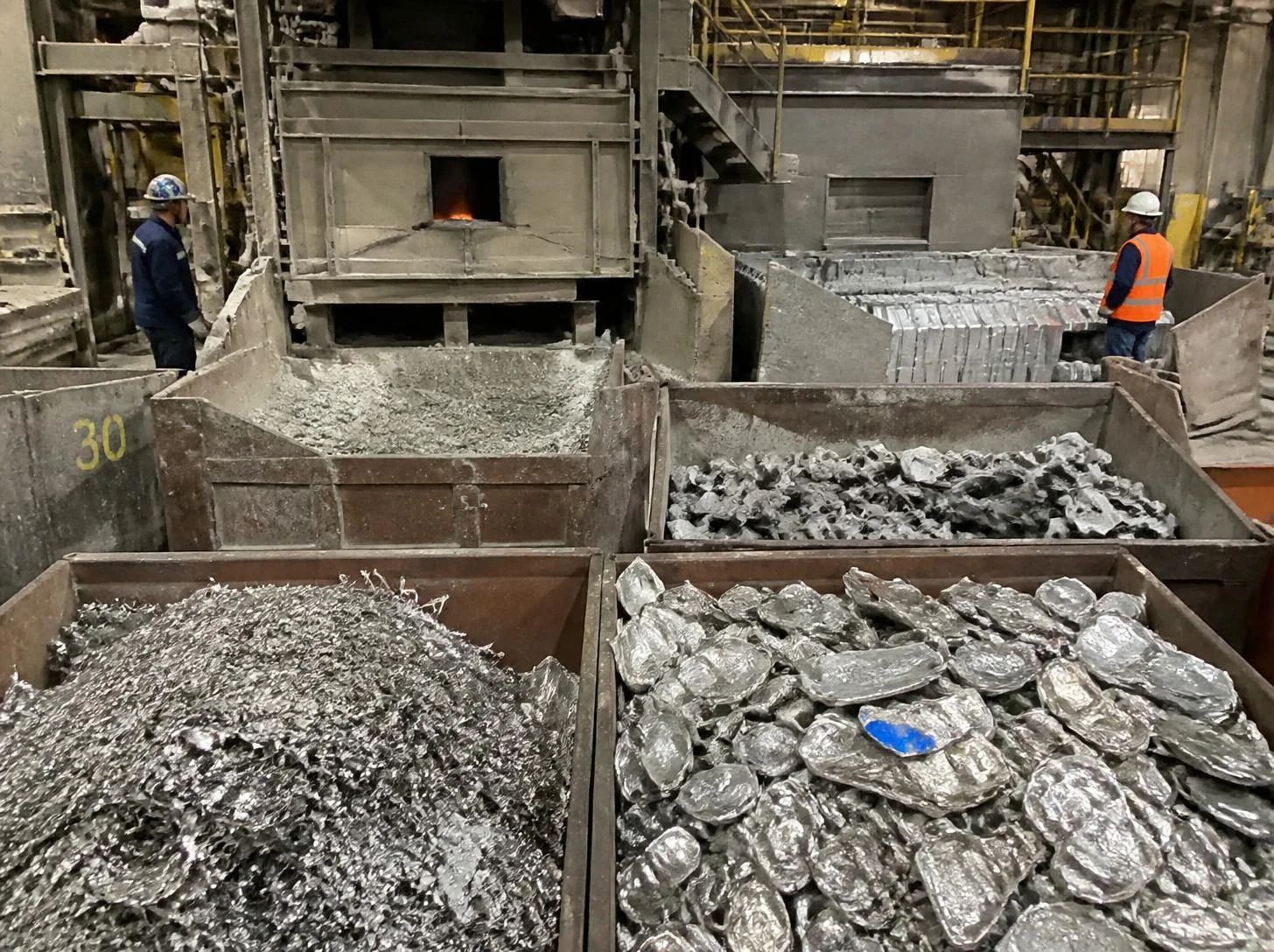
Scrap melting uses far less energy than primary aluminium, but the advantage erodes through impurity management. Scrap carries tramp elements such as iron that cannot be removed economically once molten, so specification is met by blending in primary metal. Charge recipes are often set conservatively by alloy, with standing dilution ratios and composition assumed from a scrap grade. Some of that primary metal buys margin against uncertainty rather than against measured tramp load.
The shift
The alloy specification does not move. What can move is how accurately the charge is matched to the scrap actually on hand.
Today
With INSUS
How it works
This fits OptiStudio as constrained charge optimisation and decision support. Day one is read-only. Melt and metallurgical staff approve every charge. Element limits stay hard constraints.
Connect
Connect read-only to scrap inventory by lot with source, grade and any composition analysis; LIMS spectrometer results from past heats; furnace charge records and outcomes; alloy specifications; primary metal and master alloy inventory and cost; and the production schedule from MES.
Understand
From this plant's own heat history, learn how lots and grades have translated into measured chemistry on these furnaces, including element-by-element recovery and melt-loss behaviour.
Predict
For any candidate charge, predict the expected composition element by element, with uncertainty as a range. That range is what determines how much dilution margin is genuinely needed.
Advise
Propose which lots, in what proportions, how much primary metal and which master alloys to meet specification at minimum cost and primary content, inside hard tramp-element limits and schedule requirements. The distance to every element limit is shown with the recommendation.
Verify
Compare each prediction with the spectrometer result for that heat. Track prediction accuracy, primary content per tonne, recycled content by alloy, and out-of-spec or downgraded heats, which must not rise.
Getting started
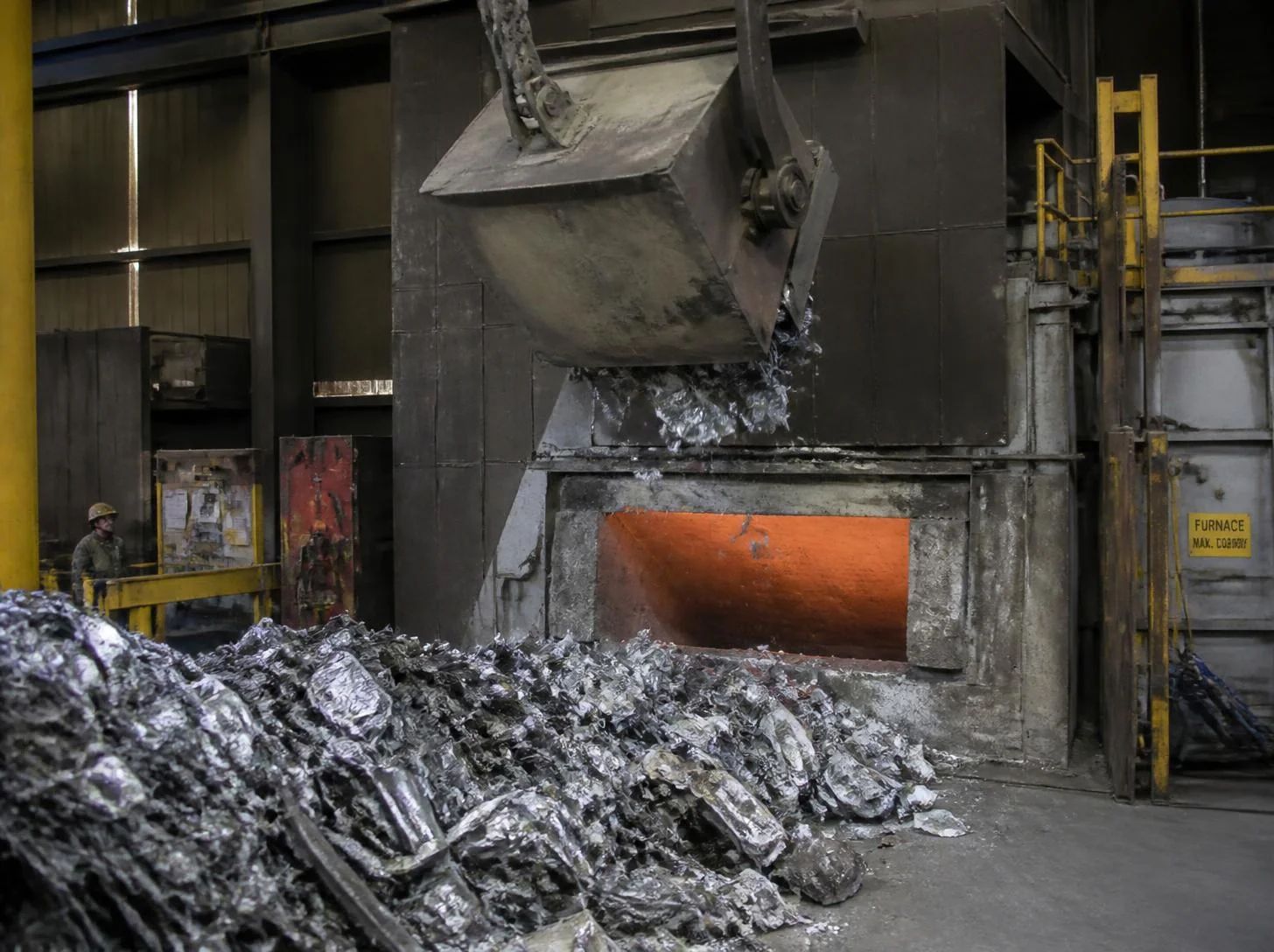
For secondary aluminium remelt and cast house teams that already keep charge and spectrometer records. Delivered through OptiStudio as charge-blend decision support. Expert Services can help with data assessment and back-test design. Element limits stay hard constraints. No closed-loop charging. No new sensors for the core use case.
Related for metals
Scrap charge advice sits beside pot-line energy and CBAM documentation on the same metals value chain.
Scrap composition varies lot to lot, and most tramp elements cannot be removed once molten. This use case recommends which lots to charge and how much primary dilution is genuinely needed against alloy limits.
At least 12 months of furnace charge records with matching spectrometer results, scrap lot records with any available composition analysis, alloy specifications, and primary metal and master alloy usage.
Not for the core use case, which runs on spectrometric analysis the plant already performs. Incoming-scrap sorting such as LIBS or XRF can improve results, but that hardware comes from a sorting technology partner.
No. It evaluates more charge options than anyone can check by hand. Melt and metallurgical staff approve every charge, and no control system is replaced.
No. Closed-loop charging is out of scope. An out-of-spec heat costs the whole heat, and metallurgical approval stays required.
Through OptiStudio as constrained charge optimisation and decision support. Expert Services can support data assessment, back-testing and validation with your metallurgical team.
Prediction quality depends on scrap lot records and how representative the heat history is. No model removes tramp elements thermodynamically. Outcomes are measured against your own spectrometer results, not promised saving percentages.
Secondary aluminium and remelt
A back-test on heats you have already poured will show how much of the dilution was necessary and how much was margin. That is the honest place to start.