Strength drives the decision.The break often arrives late.

INSUS applies ASTM C1074 maturity to your mix designs, temperature history and break-test records so QC can review an earlier strength estimate. The physical cylinder test stays the system of record.

  • 01

    The break test stays the system of record.

  • 02

    Calibrated to this plant's mixes and breaks.

  • 03

    Built on ASTM C1074 maturity, not a generic curve.

The problem

Decisions run on strengthbefore strength is confirmed.

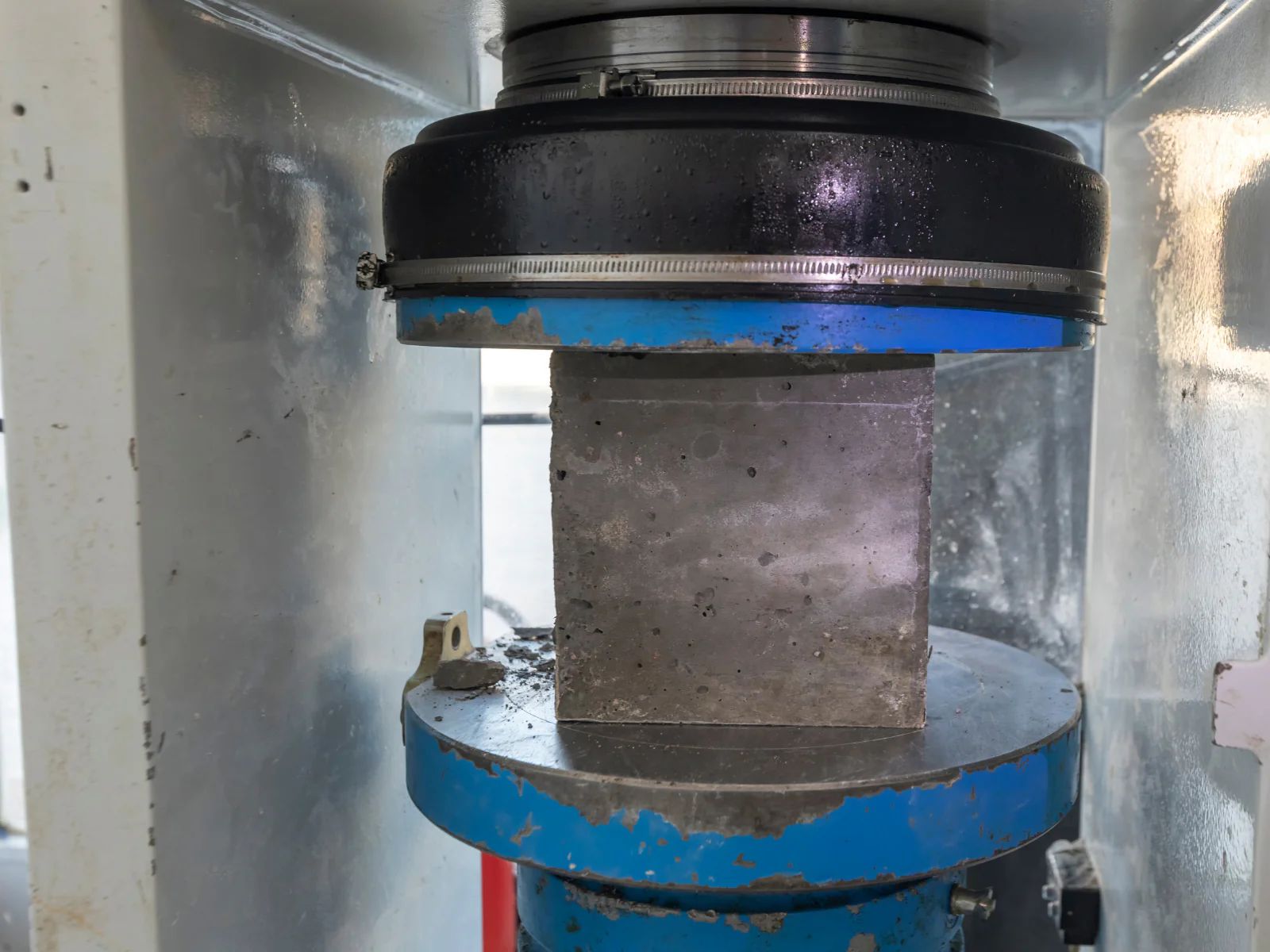
Compressive strength sets mix design, form-strike and job sequencing. Confirmation still depends on cylinders broken at set ages. By the time the 28-day result is in, those choices are often already made. Teams then rely on conservative margins or elapsed curing time instead of an estimate tied to that placement's temperature history.

Concrete quality technician recording compressive strength test results
01
02
03
  • 01Late strength confirmation
  • 02Mix margin used as insurance
  • 03Age-based strike and schedule

The shift

From waiting on the breakto an earlier QC signal.

Maturity is already an accepted way to relate temperature history to strength. The gap is applying it consistently and calibrating the strength-maturity curve against this plant's mixes and measured breaks.

Today

Strength after the decision

  • Break tests at 2, 7 and 28 days confirm strength after batching and placement choices.
  • Mix designs carry margin because future strength is unknown at the batch.
  • Form-strike and scheduling often follow calendar age, not estimated in-place strength.

With INSUS

Earlier estimate, same break test

  • Estimated strength updates as temperature history accumulates for a placement.
  • QC and mix design review plant-calibrated estimates beside existing lab data.
  • New break results feed back to check and recalibrate the plant-specific relationship.

How it works

From temperature historyto a strength estimate.

Delivered through BatchVision as ready-mix quality decision support beside LIMS and QC records. Access is advisory. It does not replace cylinder testing or change mix designs automatically.

  1. Connect

    Bring mix, lab and temperature data together

    Connect read-only to LIMS or QC records, historical mix designs and break results, batch or placement tickets, and maturity-meter or temperature-logger data where the plant already has it.

  2. Understand

    Calibrate strength to maturity per mix family

    Learn how each mix design's temperature-time history has related to measured compressive strength on this plant's history, not from a generic industry template.

  3. Predict

    Estimate strength before the confirming break

    For an active placement, use mix identity and accumulated temperature history to estimate in-place compressive strength ahead of the later lab result.

  4. Advise

    Flag margin and underperformance for review

    Surface trajectories that may indicate excess design margin or strength tracking below specification so QC and mix design can investigate. No automatic mix changes.

  5. Verify

    Check estimates against measured breaks

    Compare each estimate with its eventual cylinder result and use new breaks to recalibrate. The physical test remains the definitive quality record.

Concrete quality team reviewing plant-calibrated strength analytics

Getting started

Start with one plantand the breaks you already keep.

For ready-mix producers with mix, QC and break history. Delivered through BatchVision as quality decision support. Expert Services can help with discovery and validation. Advisory only. The cylinder test stays the system of record.

  • What we need. Historical mix designs, compressive-strength results, batch or placement records, and temperature history from maturity meters or loggers where available.
  • What you see first. A plant-calibrated strength-maturity view, earlier estimates for active placements, and flags for QC review. No promise to certify compliance without your existing test process.
  • Where the limits are. Advisory only. Does not replace the 28-day break or change mix designs automatically. Maturity needs temperature history. Models are mix-family specific and do not transfer unchanged.
Explore BatchVision

Questions concrete quality teams ask us

Many strength-dependent choices are made before the 28-day break confirms them. This use case estimates in-place strength from maturity and plant history so QC can review an earlier signal while cylinder testing stays the record.

Historical mix designs, compressive-strength break results, batch or placement records, and temperature history from maturity meters or loggers where available.

No. Cylinder breaks remain the system of record. Estimates are checked against eventual measured results and do not certify compliance on their own.

No. It is advisory. QC managers and mix engineers review estimates and decide whether to adjust design, hold product or order additional testing.

Through BatchVision as ready-mix quality decision support. Expert Services can help with discovery, integration and validation against your breaks.

Maturity needs temperature history. Existing maturity meters or embedded loggers can be used when the plant already has them. If not, a small logger scope may be part of the pilot plan.

Models are mix-family specific and do not transfer unchanged. Without temperature history, maturity estimates cannot be formed. Estimates do not replace statutory test tickets.

Concrete · Ready-mix · Quality

Review strength earlier. Keep the break test as record.

A back-test on one plant and the breaks you already keep will show how plant-calibrated maturity could give QC an earlier signal to review, without replacing the cylinder test that defines strength on your tickets.