Today
A fixed profile sized for the hardest case
- Zone setpoints are fixed per product family for the toughest product.
- Evaporation load varies while the profile stays put.
- Bond risk is managed by keeping the hot zone conservatively cool.

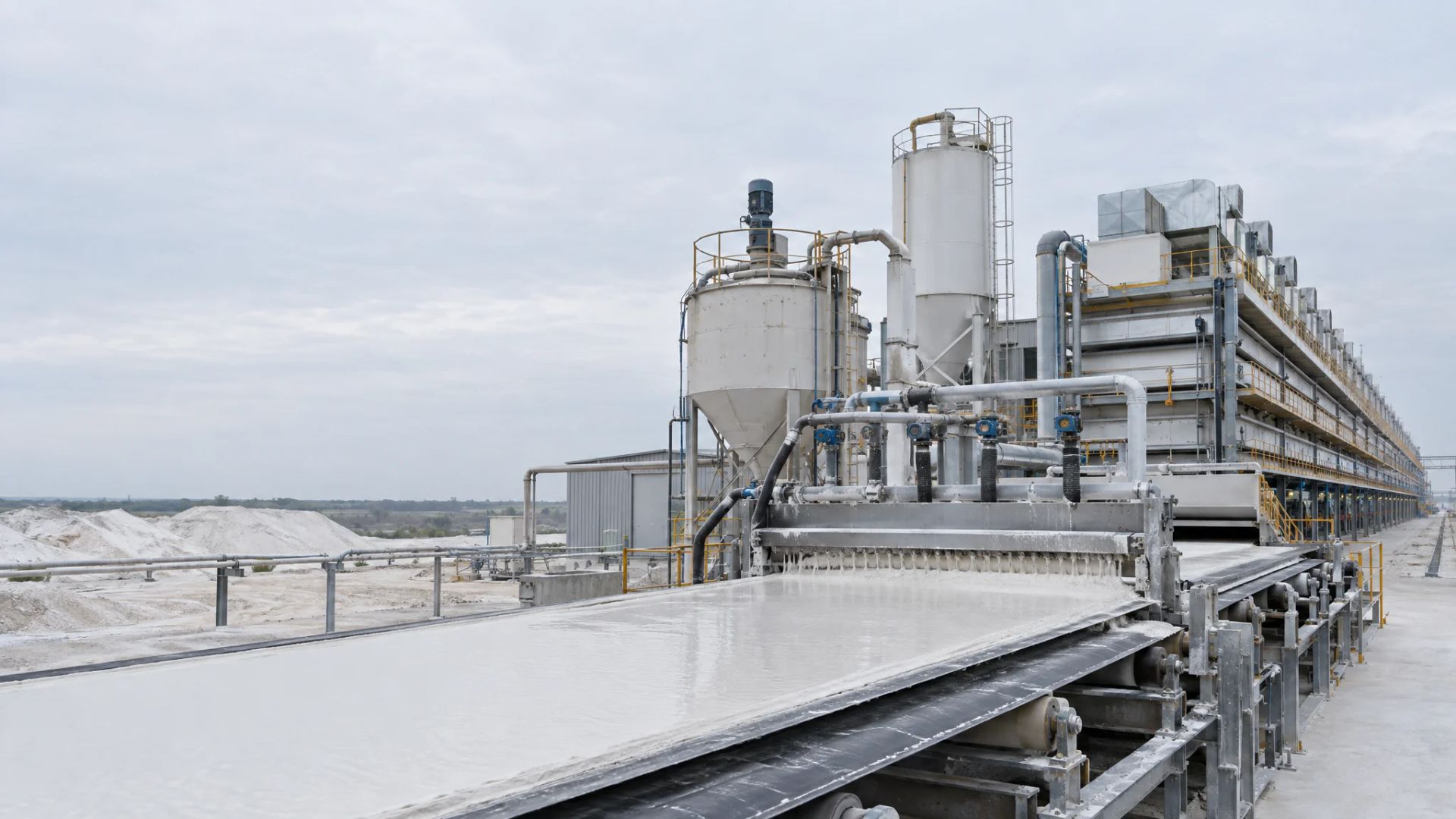
The wallboard dryer is often the largest gas consumer in the plant, and it usually runs a fixed zone profile sized for the hardest product on the schedule. INSUS models exit moisture and paper bond risk per product and recommends multi-zone temperature, humidity and airflow profiles that meet the evaporation load with less heat. Engineers review every change.
01
Wet board and bond failure bound the operating window.
02
Evaporation load shifts; fixed profiles often do not.
03
Bond risk stays a hard constraint.
The problem
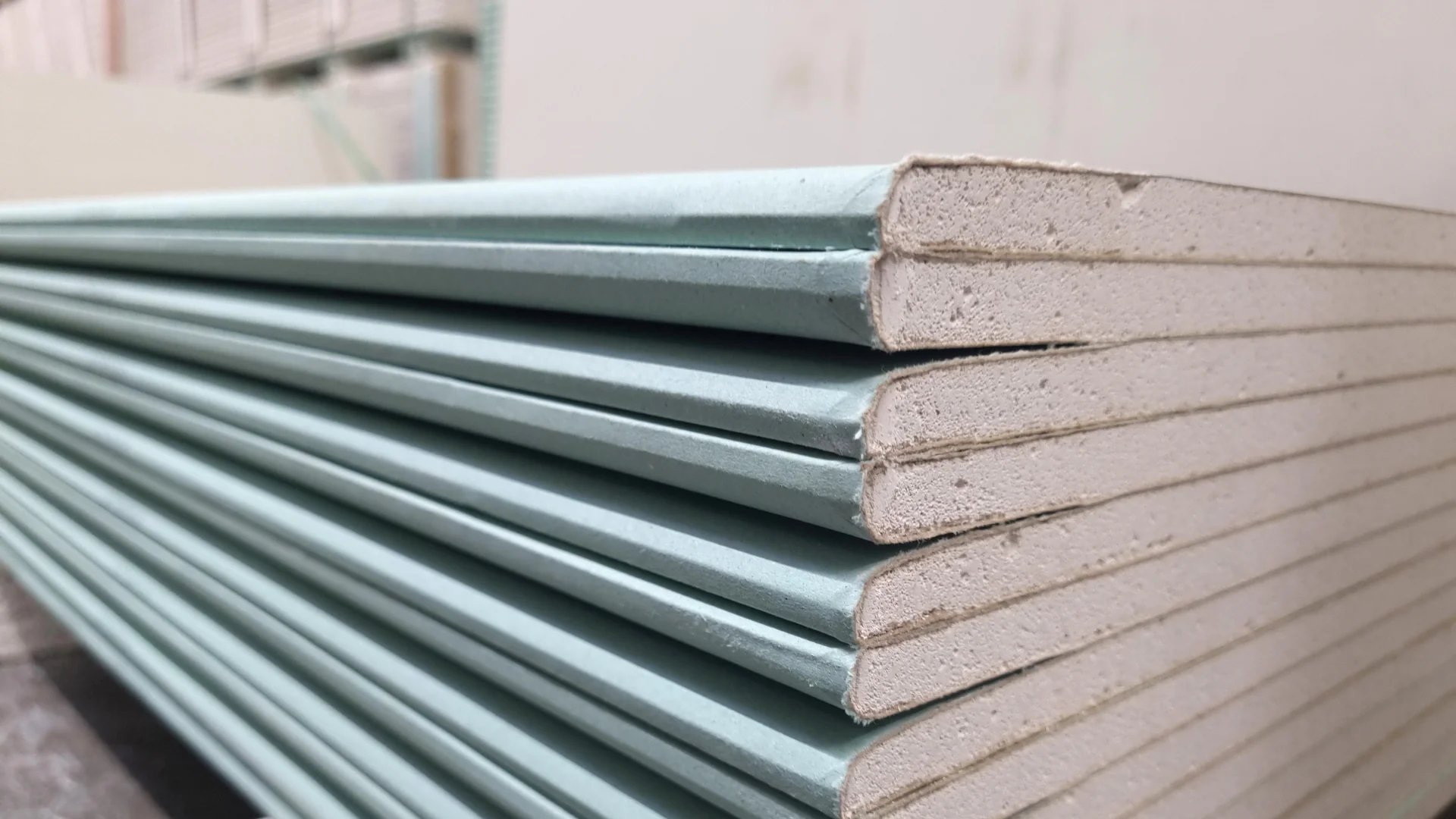
Board drying is bounded on both sides. Under-dry and the board is unsaleable; over-dry and the gypsum crystals that bond paper to core can dehydrate and the paper peels. Evaporation load moves with water-to-stucco ratio, thickness, product mix, line speed and gaps in the board stream, while zone setpoints often stay flat. Most lines therefore run hot enough for the worst case, spending gas on margin.

The shift
Dryer and process engineers stay in charge of every profile change. What changes is whether zone advice matches the board and load currently in the dryer, with bond risk modelled from this plant's history.
Today
With INSUS
How it works
This fits OptiStudio as operational decision support layered above the existing dryer control system. Day one is advisory: engineers approve every profile change. Boards with different water contents can sit in the dryer at once, so tracking comes before thermal advice.
Connect
Read-only links to zone temperature, humidity, airflow and burner input, board tracking from the forming line, mixer water per segment, MES board spec and line speed, gas metering, exit moisture where fitted, and QC including bond failures and wet-board rejects.
Understand
Learn how exit moisture and bond outcomes have depended on zone profiles, residence time, thickness and incoming water on this dryer. Bond risk is defined from the plant's own failure history.
Predict
Track each board segment through the zones and estimate exit moisture and modelled bond risk under candidate profiles before a change is applied.
Advise
Rank zone temperature, humidity and airflow options that meet the exit-moisture target at lower gas input, with bond risk as a hard constraint. Show the bond-risk margin with every recommendation.
Verify
Compare predicted exit moisture and gas with actual results. Any recommendation that saves gas and produces a bond failure is treated and reported as a model failure.

Getting started
For wallboard plants with zone-level dryer instrumentation and board tracking. Delivered through OptiStudio as advisory process decision support. Expert Services can help with discovery and shadow-mode validation. Headroom above an incumbent dryer control system is plant-specific and should be checked before anything is promised.
Related for gypsum
Dryer zone thermal advice sits beside mixer water ratio and calciner consistency on the same board line.
Fixed dryer profiles sized for the hardest product spend gas on margin while evaporation load shifts through the shift. This use case recommends zone profiles for the board actually in the dryer, with paper bond risk as a hard constraint.
Zone historian tags for temperature, humidity, airflow and gas; board tracking and mixer water per segment; line speed and board spec; and QC including bond failures and wet-board rejects. Exit-moisture measurement strengthens validation where fitted.
No. It layers advisory recommendations above the existing dryer control. Engineers approve every profile change. Discovery should check what the incumbent system already covers.
Not where the dryer has zone-level instrumentation and the line tracks board segments. Missing exit-moisture measurement weakens validation and is a separate plant decision.
Bond risk is a hard constraint learned from your failure history, with the margin shown on every recommendation. Shadow mode comes first. A recommendation that saves gas and causes a bond failure is treated as a model failure.
Water-to-stucco optimization works at the mixer and decides how much water enters the board. This use case works at the dryer and decides how efficiently that water is removed. They pair well, but each can run on its own.
Through OptiStudio as operational decision support for multi-zone dryers. Expert Services can support discovery, data readiness and shadow-mode validation against your own gas and bond-failure baseline.
Gypsum · Dryer thermal optimization
See what dryer and QC records say about the margin between how hot you run and how hot you need to, with paper bond risk kept as a hard limit.