Today
The plant sees the result after the variation
- Lambda is measured from periodic physical samples.
- Drivers of spread are hard to see between tests.
- Extra density often becomes the safety margin for the declared value.

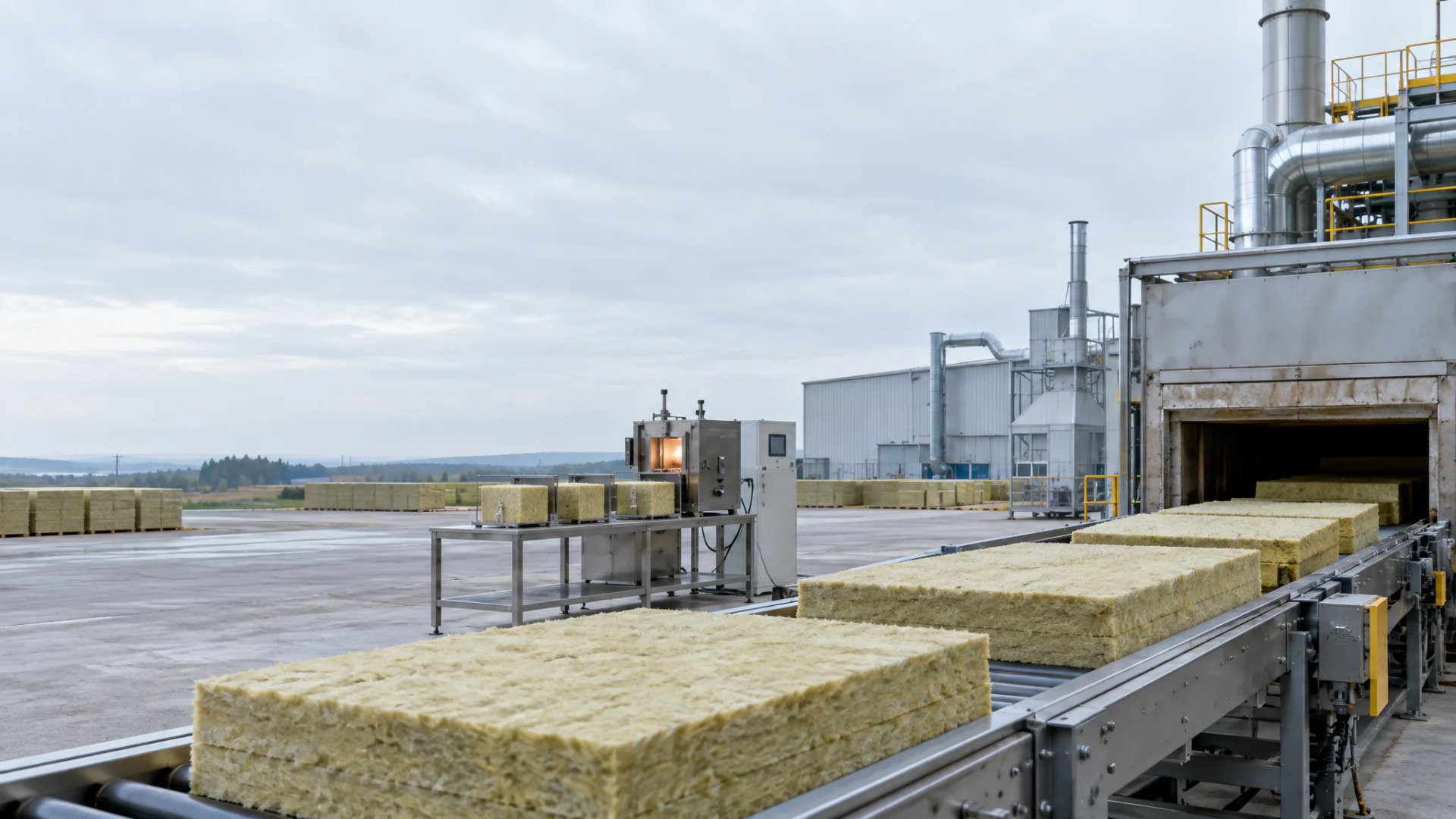
Under EN 13162, declared thermal conductivity is a statistical value, not the production average. INSUS models the process conditions that widen lambda on your line so teams can review where tighter control might support the same declared performance with less material margin. Physical heat-flow-meter testing stays the basis for declaration.
01
Declared lambda is a fractile, not the mean.
02
Production spread widens the margin.
03
Physical tests stay the declaration record.
The problem
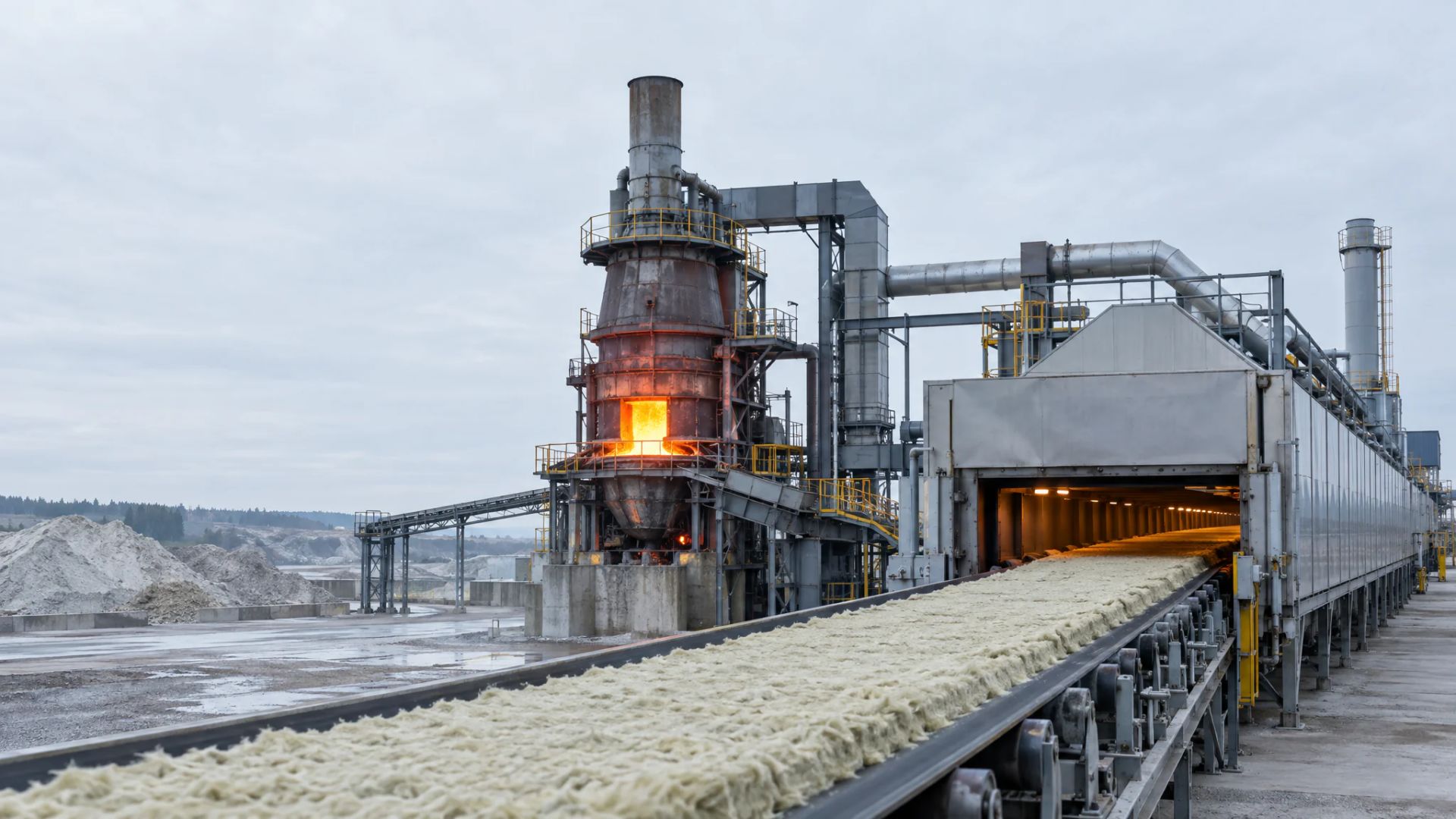
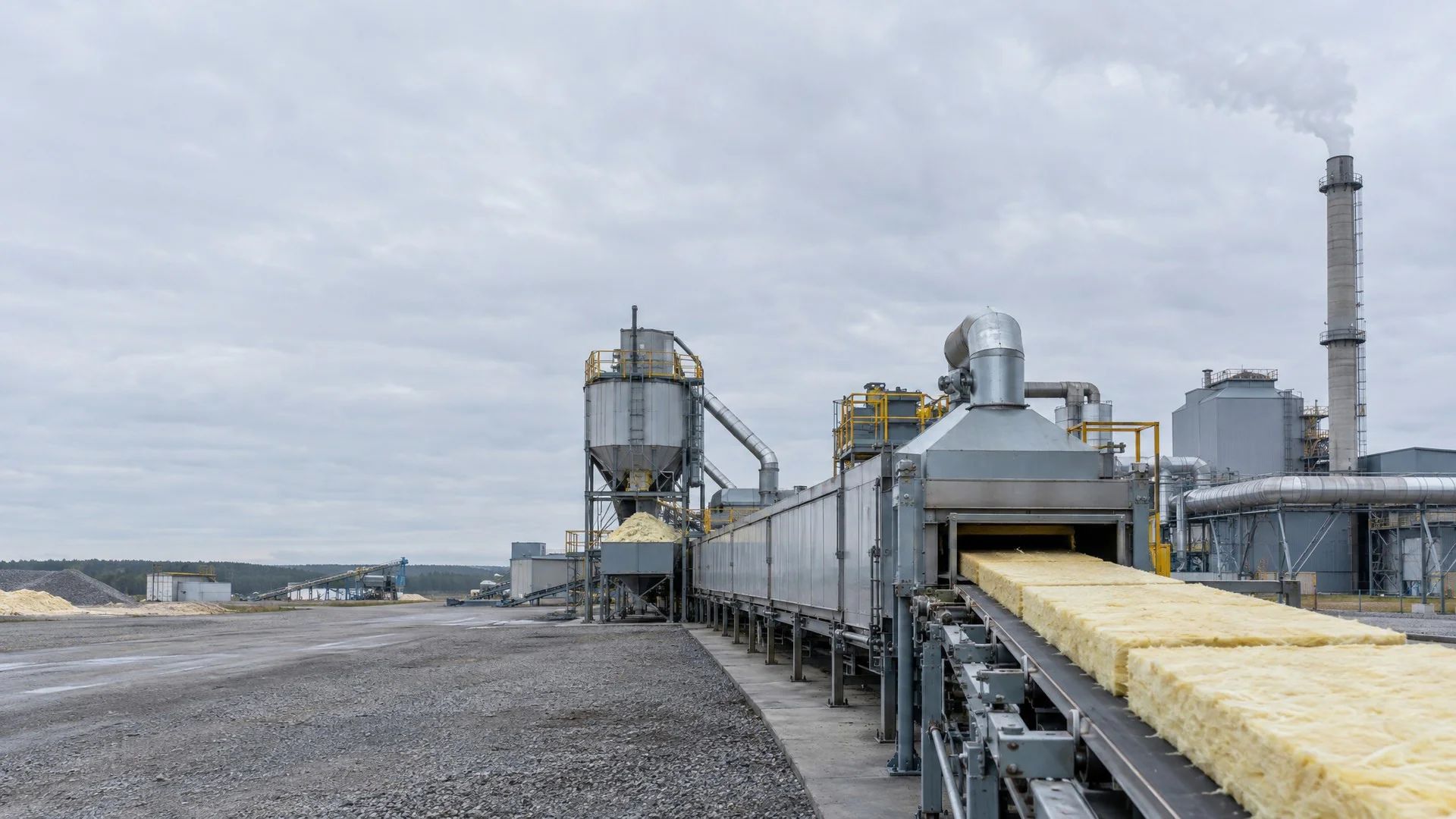
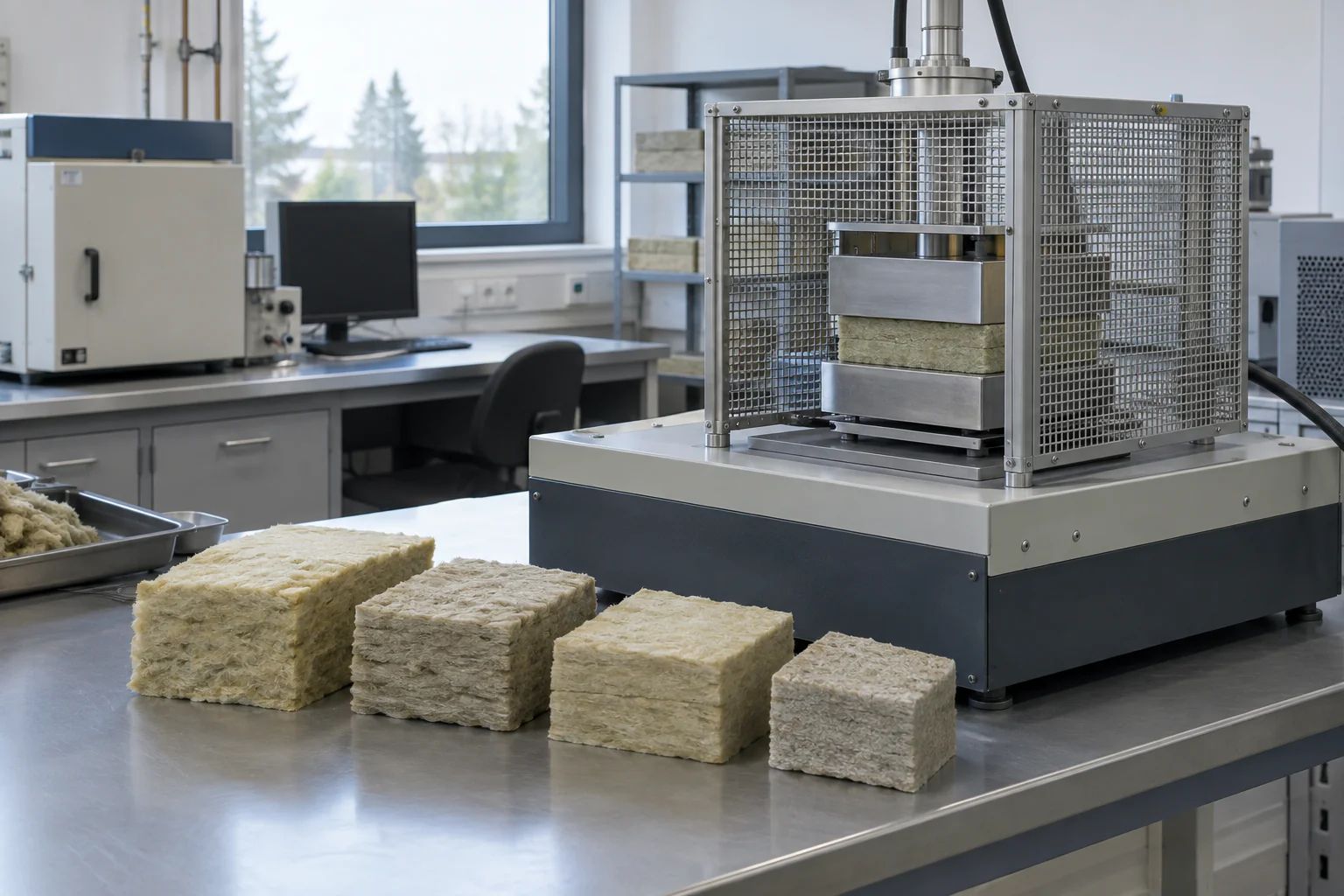
For factory-made mineral wool, the declared thermal conductivity is statistically conservative rather than the average measured lambda. Process variation becomes performance margin the manufacturer has to carry. When the line is held in specification but not managed for variance, extra density often becomes the practical insurance for the declared value.
The shift
Quality and process teams stay responsible for declaration and production changes. What changes is earlier visibility into process drivers that widen the thermal-conductivity distribution between physical tests.
Today
With INSUS
How it works
This fits OptiStudio as operational decision support beside the existing QC process. Soft-sensor estimates are for monitoring and advice only. Heat-flow-meter results remain the basis for the declared value.
Connect
Read-only links to SCADA or historian tags, production records, weight and thickness measurements, binder dosing, process parameters and LIMS or QC lambda results linked to runs.
Understand
Learn which process variables move with measured thermal conductivity by product family on this plant's history, separating useful drivers from correlated noise.
Predict
A plant-calibrated soft sensor estimates lambda from current line conditions and flags potential drift in mean or spread. The estimate is not a declared value.
Advise
Rank candidate adjustments such as density or compression, curing conditions, binder distribution and line speed by modelled contribution to spread, inside product and process constraints. People approve any change.
Verify
Compare each soft-sensor estimate with the corresponding physical result. Track model performance by product family. Measured rolling standard deviation remains the operational proof that variation is falling.

Getting started
For factory-made mineral wool producers that already link production and heat-flow-meter history. Delivered through OptiStudio as advisory process decision support. Expert Services can help with discovery and shadow-mode validation. The aim is tighter process control of variation, not inventing a new declaration method.
Related for insulation
Declared lambda margin sits beside melting and curing energy and retrofit compliance triage on the same insulation business.
Declared lambda under EN 13162 reflects statistical variation, not only the mean. Wider production spread can force more density as margin. This use case surfaces process drivers of that variation for quality and process review.
Heat-flow-meter lambda results linked to production runs, SCADA or historian data, density and thickness measurements, and process variables such as line speed, curing, compression and binder dosing.
No. Physical testing remains the basis for declaration. Soft-sensor estimates are for monitoring and advice only and are not treated as declarable results.
Not by default. Lines that already have production monitoring, gauging and a heat-flow-meter QC process can start from those sources. Missing continuous gauging is a separate plant decision.
No. Recommendations are advisory. Process and technical teams approve production changes and declaration decisions.
Each estimate is compared with the corresponding heat-flow-meter result. Measured rolling standard deviation of lambda remains the operational proof that variation is falling.
Through OptiStudio as operational decision support for lambda variation. Expert Services can support discovery, data linkage and shadow-mode validation against your own QC baseline.
Insulation · Declared performance
See what production and heat-flow-meter history say about the spread behind your declared value, and where tighter process control could create room for better margin or lower density at the same declared performance.