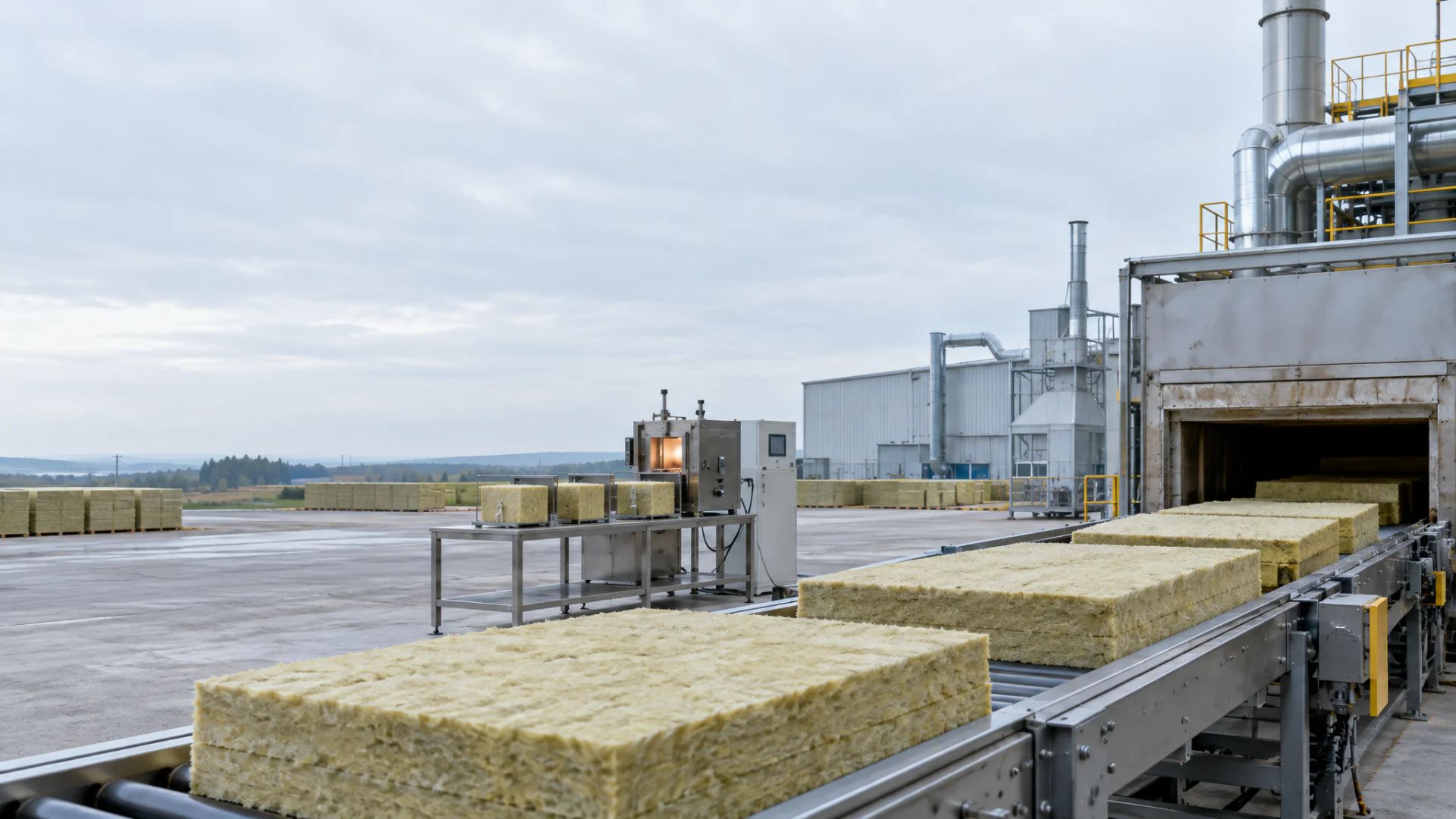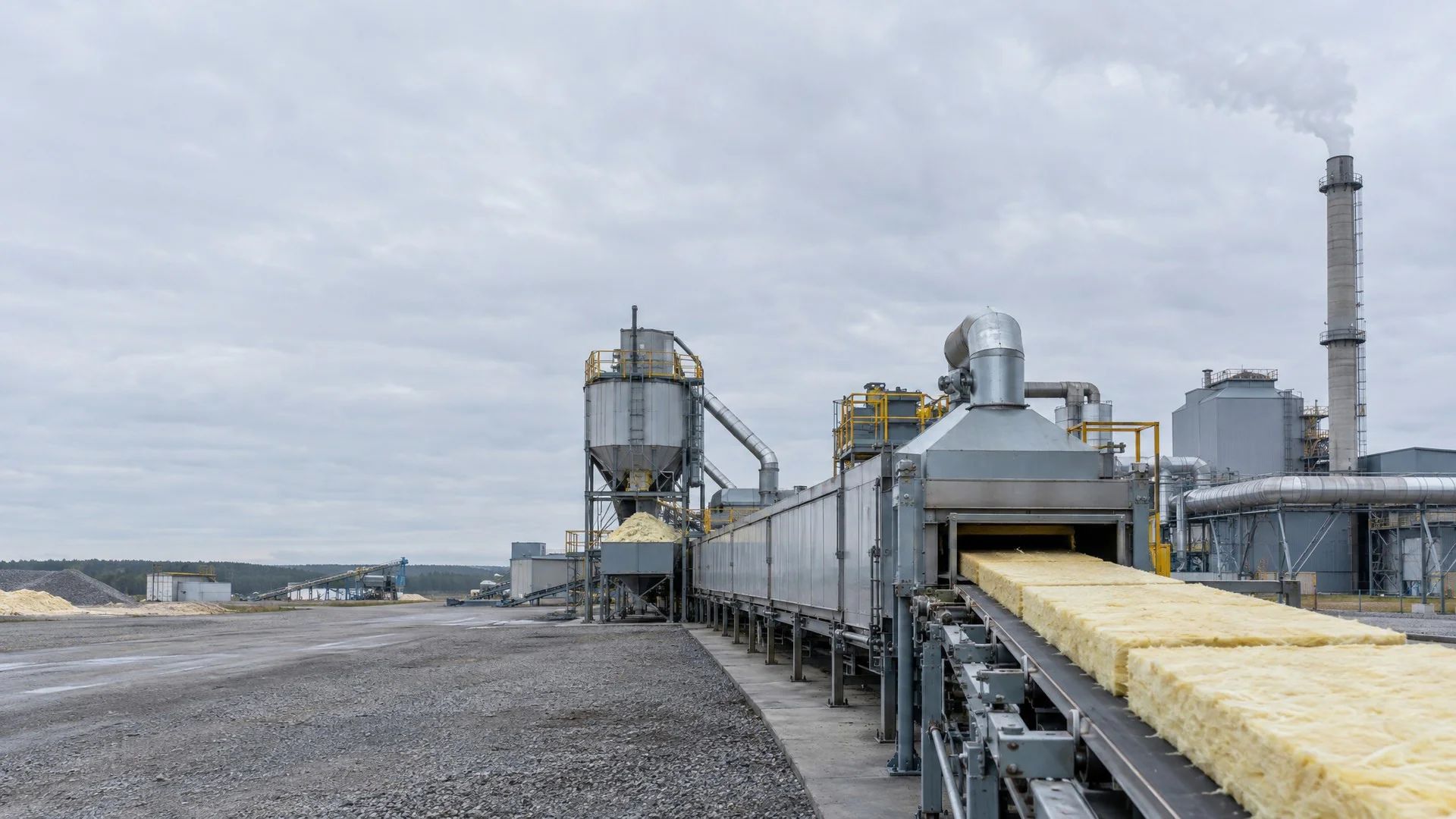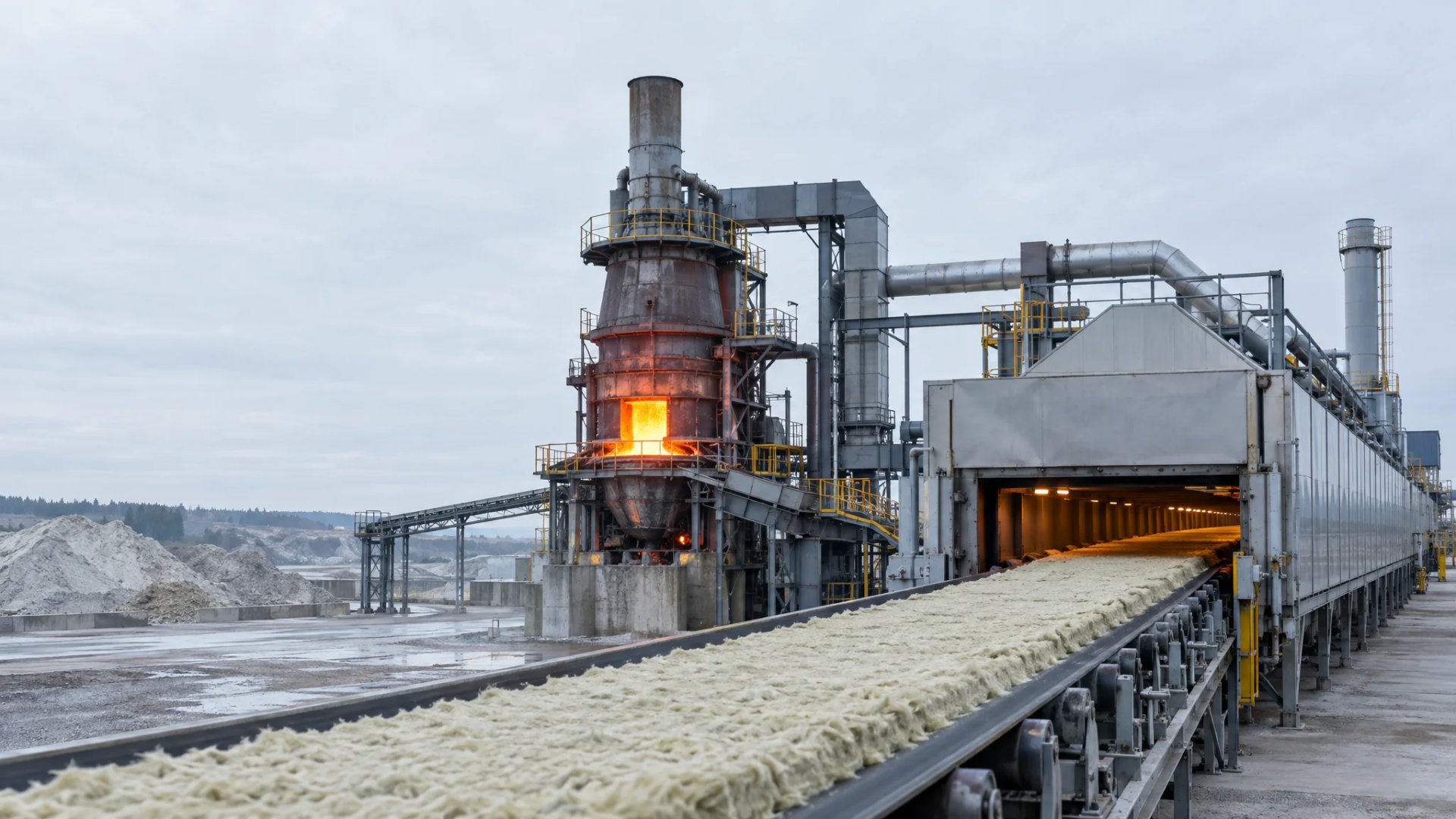
Today
Conservative settings protect stability
- Furnace settings are held to protect melt regularity.
- Oven profiles are often sized for the toughest product case.
- Energy and emissions are reviewed mainly as period totals.

Mineral wool lines run conservatively to protect melt regularity and cure completeness. INSUS models furnace and oven behaviour from plant data you already keep and recommends settings against energy, cost and CO2 per tonne, without relaxing the process and product constraints that keep the line stable.
01
Furnace and oven on one energy view.
02
Stability and cure stay as hard constraints.
03
Recommendations stay with process engineers.
The problem
Stable melt and a complete cure come first, so operators often hold conservative settings they know will work. The energy gap between that safe point and a more efficient point inside the same envelope is hard to see without a plant-specific model of furnace, oven, product mix and quality constraints.
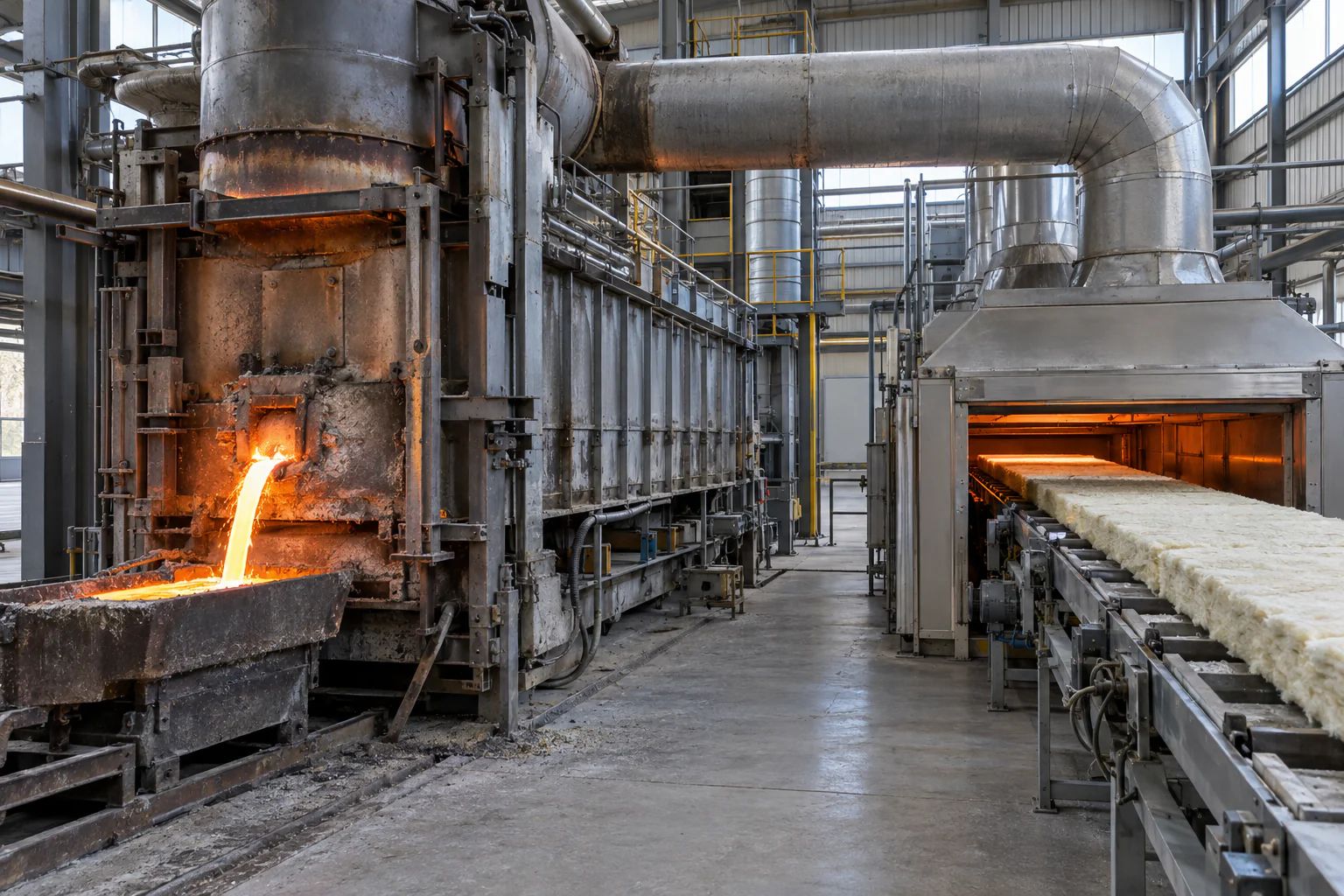
The shift
Process engineers stay in charge of every setpoint change. What changes is whether furnace and oven are reviewed together against energy and carbon for the product actually running.
Today
With INSUS
How it works
This fits OptiStudio as operational decision support beside existing furnace and oven controls. Day one is advisory: recommendations do not write setpoints to the DCS.
Connect
Read-only links to furnace and curing-oven controls, historian tags, MES, energy metering, production schedules, product records and quality results used as constraints.
Understand
Learn how charge, combustion, melt behaviour, oven zones, product family and line speed have related to energy and carbon intensity on this plant's history.
Predict
Hybrid physics-and-data models estimate near-term melt stability, cure-completion margin and expected energy and CO2 for candidate operating conditions.
Advise
Rank furnace charge and combustion options and oven profiles against cost, energy and carbon while keeping melt stability, cure completeness and product performance as hard constraints.
Verify
Compare recommendations with actual energy, production, emissions and quality outcomes, then recalibrate to the asset. Shadow mode comes before any operating change.

Getting started
For mineral wool producers that already collect furnace, curing, production, energy and quality data. Delivered through OptiStudio as advisory process decision support. Expert Services can help with discovery and shadow-mode validation. No new sensors are assumed where telemetry and energy metering already exist.
Related for insulation
Melting and curing energy sits beside declared lambda margin and retrofit compliance triage on the same insulation business.
Conservative furnace and oven settings protect stability but can hide efficiency margin. This use case recommends lower-energy conditions inside plant-specific melt and cure constraints.
Furnace and oven historian signals, fuel and electricity consumption, production schedules, product mix, process conditions and quality records used as constraints.
No for the core pilot where process telemetry and energy metering already exist for operating and reporting on the furnace and oven.
No. Integration is read-only decision support. Process engineers approve operating changes on the existing control system. There is no closed-loop setpoint write on day one.
Yes. Melt stability, cure completeness, density and thermal performance can be treated as constraints rather than traded away for energy savings.
Recommendations first run in shadow mode and are compared with metered energy, production, emissions and quality outcomes before any change enters the operating workflow.
Through OptiStudio as operational decision support for melting and curing. Expert Services can support discovery, data readiness and shadow-mode validation against the plant's own baseline.
Insulation · Mineral wool energy
Use production, energy and process data you already keep to review lower-energy settings while melt stability, cure completeness and product performance stay protected.