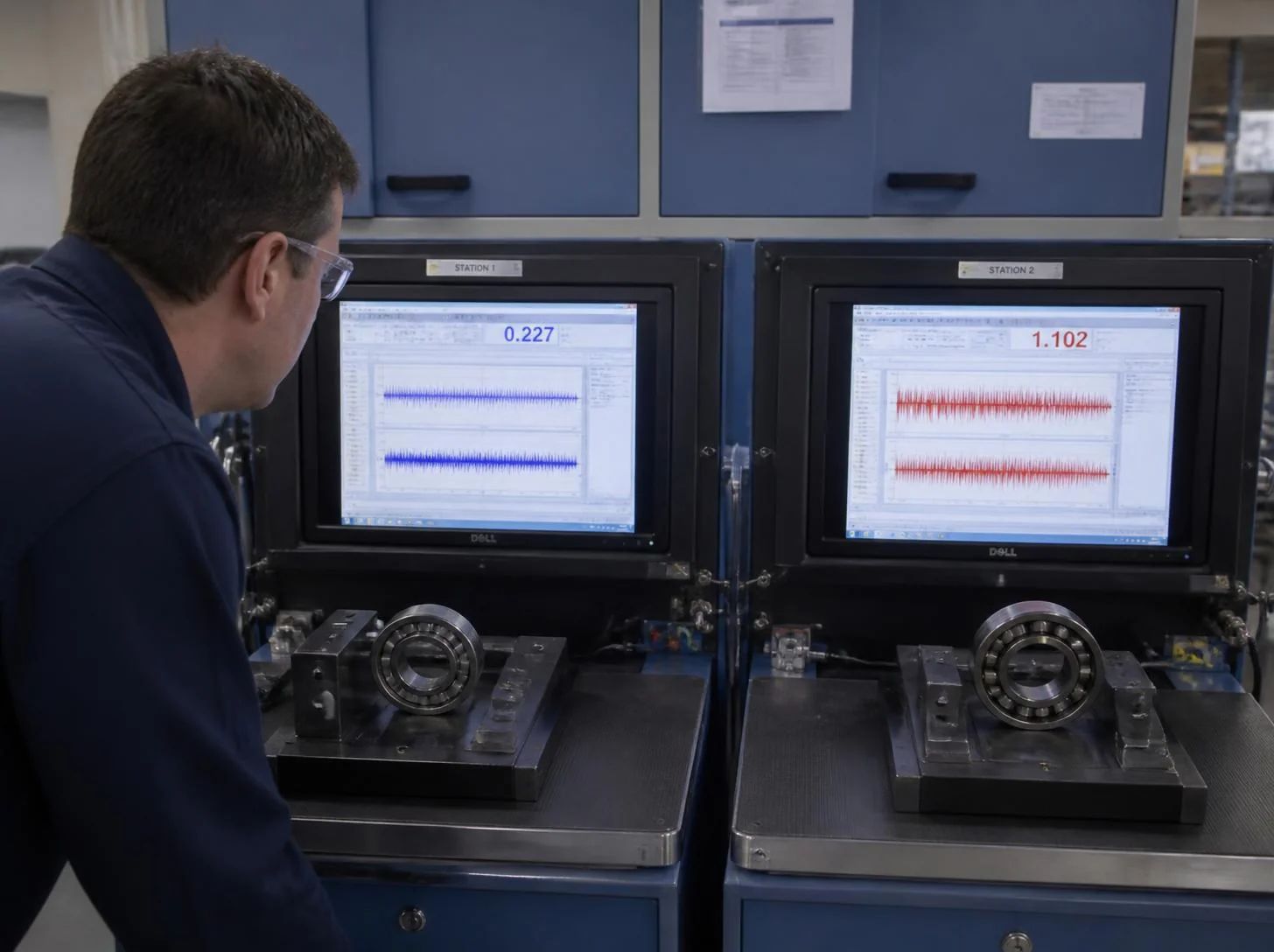
The same bearingcan test differently on different stations.

Bearing vibration measurements can vary across test-station designs and frequency bands. INSUS analyzes your plant's own multi-station test history to identify where results disagree and flag borderline decisions that may warrant corroborating measurement. Quality teams keep the pass/fail decision.

  • 01

    Results compared across test stations.

  • 02

    Station-sensitive measurements identified.

  • 03

    Borderline results flagged for review.

The problem

A quality gate is only as consistentas the measurements behind it.

Bearing vibration testing can be the final quality gate before shipment. The same bearing can produce different measurement variation depending on test-station design and frequency band, and no single station design is best across every band. Without a cross-station view, borderline results are hard to judge and station disagreement stays invisible.

Bearing quality engineer comparing vibration measurements from multiple test stations
01
02
03
  • 01Test station A
  • 02Frequency-band variation
  • 03Borderline quality result

The shift

From trusting each station separatelyto seeing cross-station agreement.

Quality teams stay responsible for pass/fail and calibration review. What changes is whether historical disagreement across stations is visible enough to prioritize corroboration.

Today

Every station is treated independently

  • Each station's pass/fail result is treated as independently authoritative.
  • Borderline results may not be evaluated in the context of station-specific disagreement.
  • Quality teams lack a standing view of which models or frequency bands are most station-sensitive.

With INSUS

Station consistency becomes visible

  • Historical results are compared across stations for the same bearing models.
  • Frequency bands with higher cross-station disagreement are surfaced.
  • Borderline results can be flagged for corroborating measurement.

How it works

From multi-station test historyto a consistency view.

This fits OptiStudio as quality analytics over results existing stations already produce. Access is read-only. It does not perform the vibration test, modify test equipment or replace the quality gate.

  1. Connect

    Bring test results together

    Connect read-only outputs from existing vibration test stations with QMS test records and bearing model or batch identifiers.

  2. Understand

    Measure station-to-station agreement

    Compare results for the same bearing model across different stations and frequency bands, looking for recurring disagreement patterns in the plant's own historical data.

  3. Detect

    Find where results diverge

    Identify bearing models, frequency bands and stations where historical measurements show elevated disagreement or variation.

  4. Advise

    Surface borderline results

    When a borderline result occurs on a station with elevated disagreement for the relevant bearing model or frequency band, flag it for corroborating measurement or quality review.

  5. Verify

    Track consistency over time

    Quality teams review flagged cases and, where downstream or field outcomes are available, use them as additional validation. Cross-station agreement can then be tracked over time for the plant's bearing models.

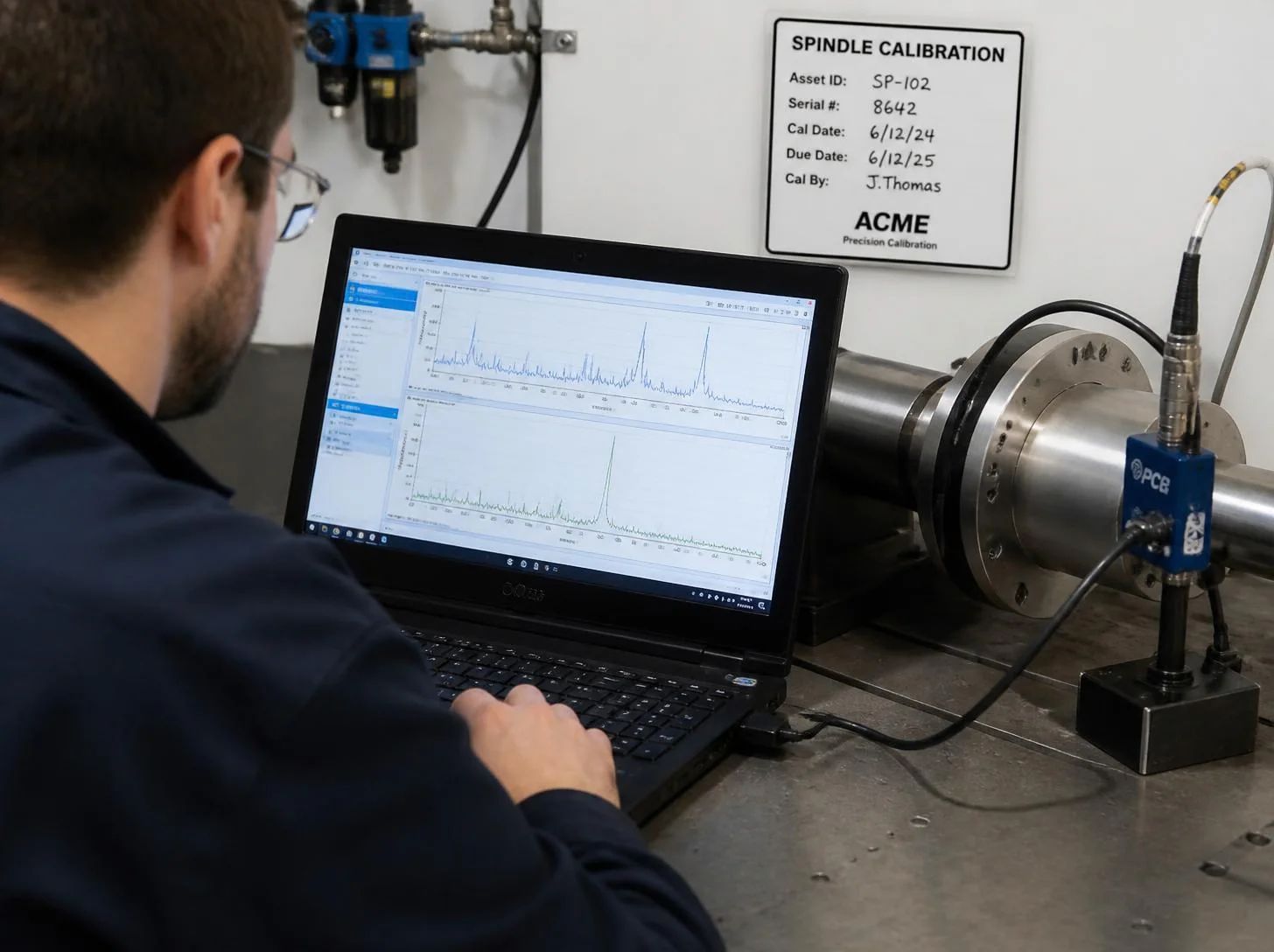
Analytics layer comparing bearing vibration test station results

Getting started

Start with one bearing modeland the stations you already run.

For bearing plants that already run multiple vibration test stations and keep historical results. Delivered through OptiStudio as cross-station consistency analytics. Expert Services can help with data assessment and validation. INSUS does not provide or calibrate physical test stations. Advisory and read-only.

  • What we need. Historical vibration test results by frequency band, test-station identifier, bearing model or batch, and corresponding pass/fail decisions. Station design or vintage information helps where available.
  • What you see first. One bearing model and historical vibration-test data from multiple stations: station agreement by frequency band and a borderline-result flagging view for the quality team.
  • Where the limits are. Does not perform vibration testing, replace pass/fail decisions, or calibrate physical stations. Does not claim to independently predict bearing failure or resolve the industry's reference-standard gap.
Explore OptiStudio

Questions bearing quality teams ask us

The same bearing model can measure differently across stations and frequency bands. This use case compares multi-station history, surfaces disagreement and flags borderline results for quality review.

No. It analyzes results produced by existing vibration test stations. Physical testing remains the responsibility of the plant's existing equipment.

No. It is an analytics layer over existing test stations. INSUS does not supply or calibrate vibration test hardware.

Not directly. The primary purpose is to identify measurement disagreement and station-sensitive results. It does not claim to independently predict physical bearing failure.

No. The quality team retains responsibility for final pass/fail and calibration-review decisions. The system provides evidence and flags cases for review.

Through OptiStudio as quality analytics over multi-station test history. Expert Services can support data assessment, integration and validation with your quality team.

This is narrowly scoped decision support. Cross-station inconsistency is a known industry challenge, and the absence of a universal reference standard remains an open issue. The system does not resolve that standardization problem.

Industrial Equipment · Bearing quality

Know when a test result depends on which station ran it.

Compare your own vibration-test history across stations, identify where measurements disagree and give quality teams evidence for reviewing borderline results and prioritizing station calibration.