More recycled contentshouldn't mean guessing at performance.

INSUS uses your formulation and film-property test data to predict how recycled-content blend ratios are likely to perform and recommend combinations that target mechanical and processability specifications. Formulation teams keep the decision.

  • 01

    Blend-ratio prediction before a full production trial.

  • 02

    Recycled content weighed against application specs.

  • 03

    Existing formulation data. No new hardware.

The problem

Recycled content hasa non-linear performance trade-off.

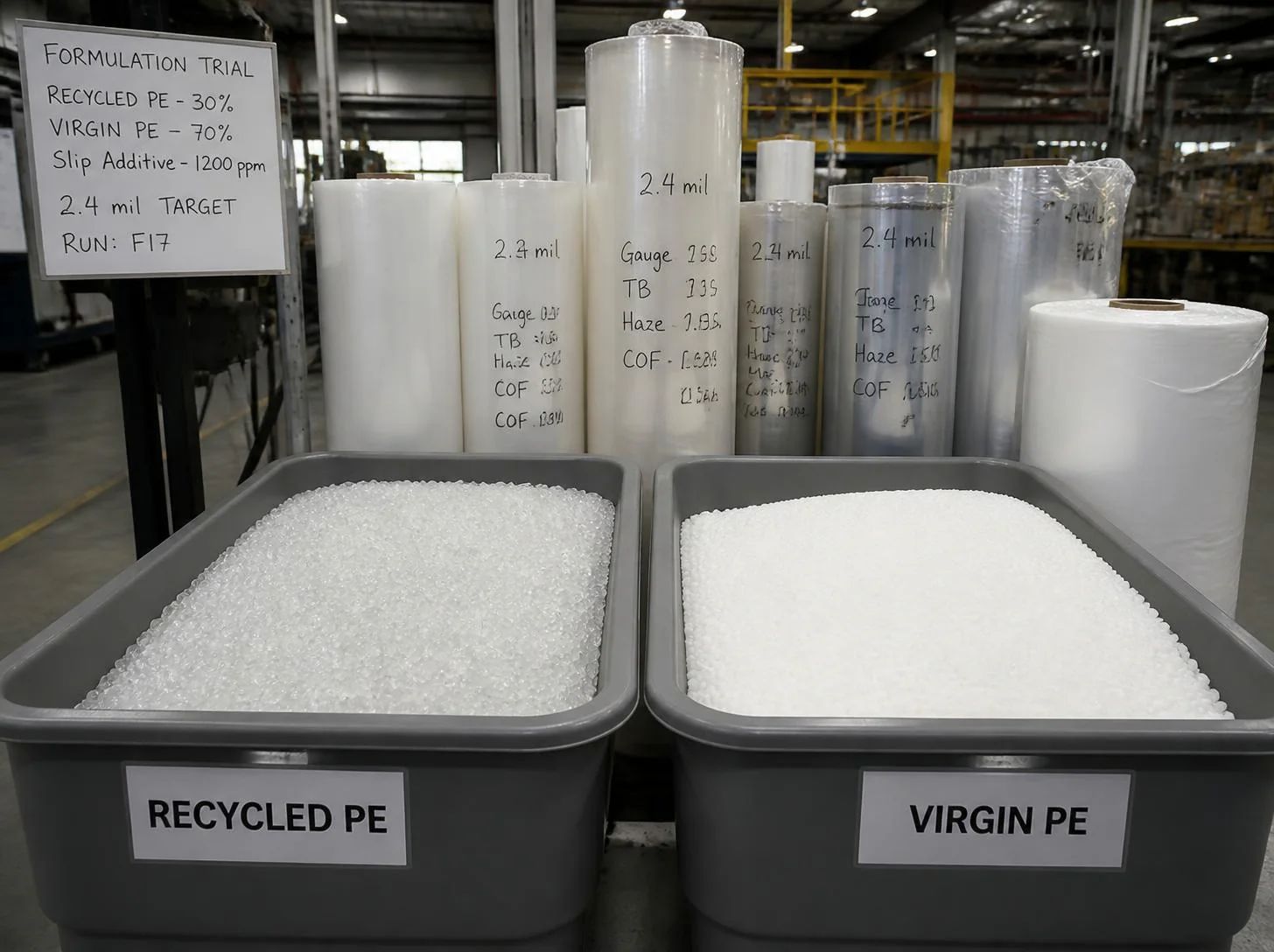
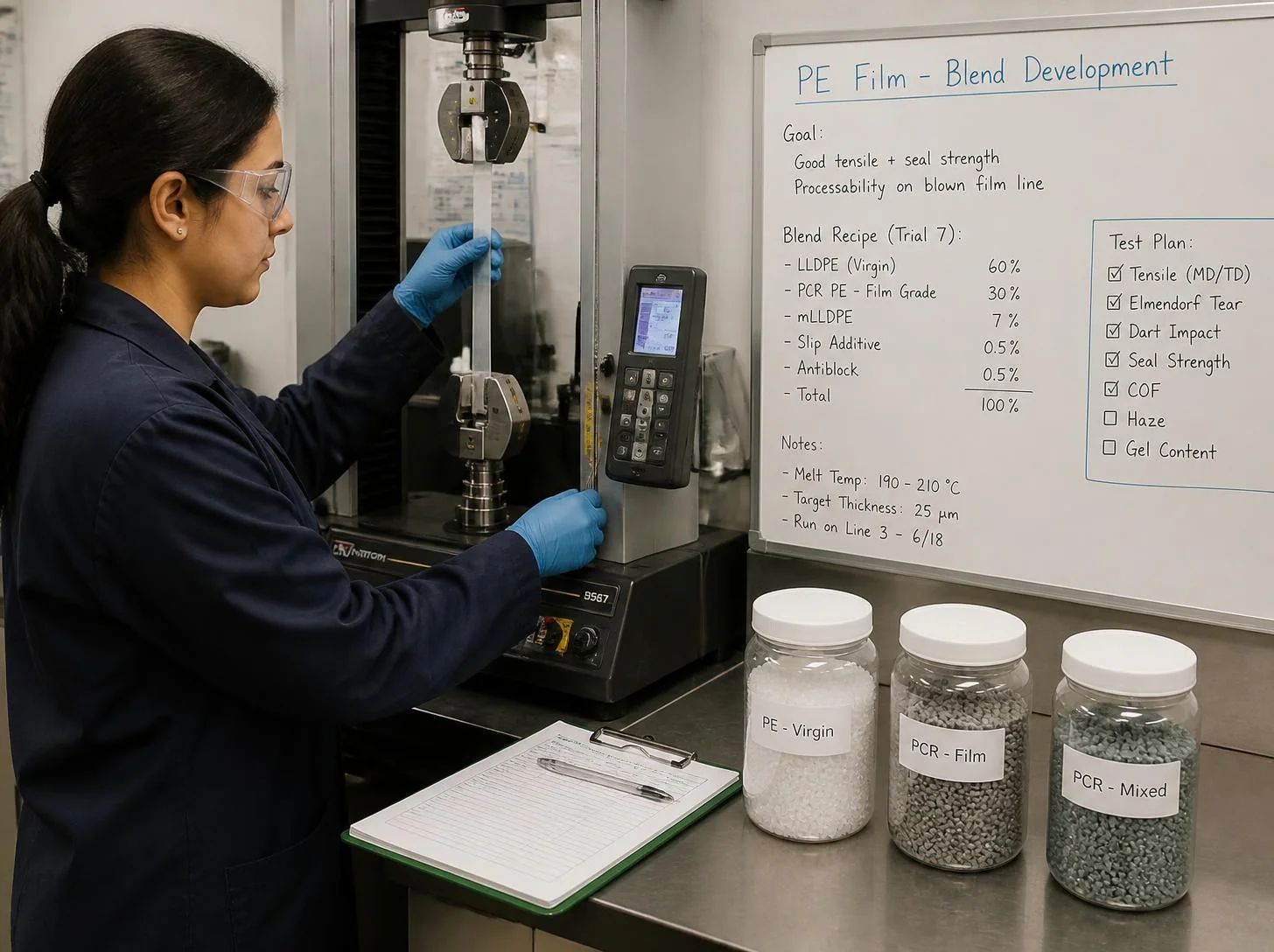
Raising recycled content is not simply choosing the highest recyclate percentage. The relationship between recycled content, resin type, blend ratio and film performance varies by formulation and application. Manufacturers need to know where a specific blend still meets mechanical and processability specifications.

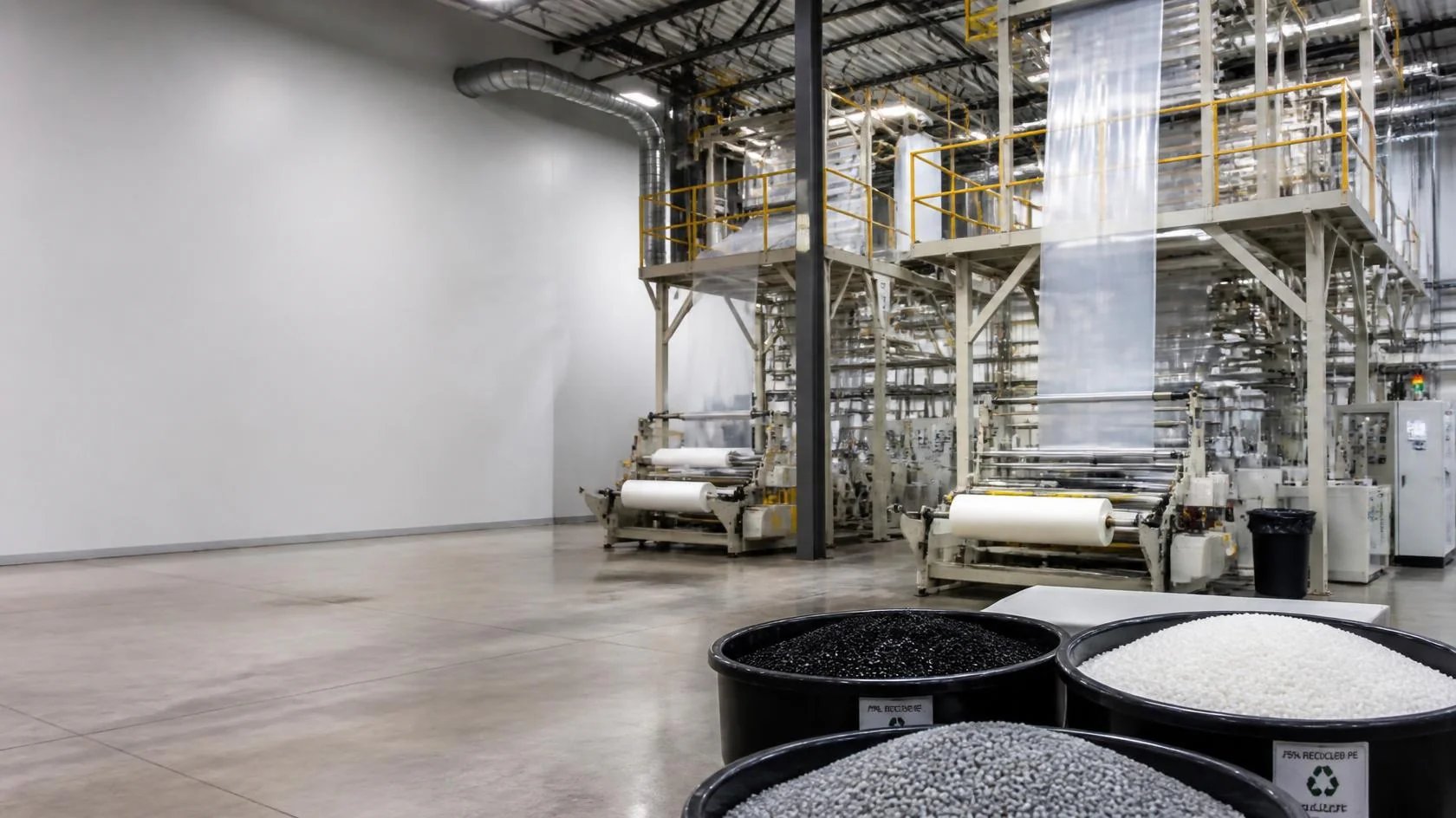
Packaging film testing recycled PE content and mechanical properties
01
02
03
  • 01Recycled-content ratio
  • 02Mechanical properties
  • 03Processability

The shift

From guessing at a safe ratioto a data-informed blend recommendation.

Formulation and process teams stay responsible for every qualification decision. What changes is whether a candidate blend's likely film performance is visible before a full production trial.

Today

Trial-and-error formulation

  • Blend ratios are chosen from conservative defaults or formulation experience.
  • Performance trade-offs for a specific recyclate and virgin-resin combination are not fully mapped.
  • Moving toward a higher recycled-content target can mean repeated qualification trials.
With INSUS

Data-informed formulation

  • Candidate blend ratios are evaluated against the plant's own formulation and test history.
  • Likely mechanical and processability outcomes are predicted before a full trial.
  • Formulation teams get a repeatable starting point for qualification.

How it works

From formulation historyto a recycled-content blend recommendation.

This fits OptiStudio as predictive and optimization decision support beside existing formulation and qualification workflows. Access is read-only. It does not replace physical film testing.

  1. Connect

    Bring together formulation and test data

    Connect formulation records covering recyclate source, blend ratio and virgin resin grade with film-property test results and target application specifications.

  2. Understand

    Learn the blend-to-performance relationship

    Analyze how recycled-content ratio, recyclate source and virgin resin characteristics relate to measured film properties for the plant's own formulations and applications.

  3. Predict

    Predict candidate blend performance

    Given a candidate blend ratio, predict the likely mechanical and processability outcome before a full production qualification trial.

  4. Advise

    Recommend a target-hitting blend

    Recommend a blend ratio expected to meet the target application's specification while increasing recycled content within the range supported by available plant data.

  5. Verify

    Validate against actual film tests

    Compare predictions with actual film-property test results so the model can be validated and refined against the plant's recyclate sources, formulations and applications.

Recycled-content formulation view for flexible packaging film

Getting started

Start with one resin systemand the tests you already run.

For flexible-film manufacturers that already collect formulation and film-property test data. Delivered through OptiStudio as formulation decision support. Expert Services can help with data assessment and validation. Advisory and read-only. Does not replace physical qualification testing.

  • What we need. Historical blend ratios, recyclate sources, virgin resin grades and corresponding film-property test results such as tensile properties and melt flow rate. Target application specifications provide context.
  • What you see first. One resin system and a defined target application: a back-test of predicted film properties against historical test results before any live recommendation enters the qualification workflow.
  • Where the limits are. Does not automatically change extrusion settings or production formulations. Source evidence is based on PE flexible-film blends; other resin systems need their own data. The formulation team validates every candidate blend.
Explore OptiStudio

Questions packaging formulation teams ask us

Raising recycled content can mean trial-and-error qualification. This use case predicts likely film performance and recommends blend ratios for formulation-team review.

Historical blend ratios, recyclate sources, virgin resin grades and corresponding film-property test results such as tensile properties and melt flow rate. No new sensors when those records already exist.

No. It is decision support. The formulation or process team reviews every recommendation and validates the candidate blend through existing qualification testing.

Yes. The model can identify candidate ratios expected to meet the target specification while increasing recycled content within the range supported by plant history.

The source evidence is based on PE flexible-film blends. Other resin systems or packaging formats need their own formulation and test data.

Through OptiStudio as predictive and optimization decision support. Expert Services can support data assessment, integration and validation with your formulation team.

Performance depends on reliable formulation and film-property records. Recommendations are plant-, recyclate- and application-specific; they do not transfer to other resin systems without calibration and validation.

Packaging · Recycled-content film formulation

Find the blend ratio that meets spec before you run the trial.

Use your own formulation and film-test data to predict candidate recycled-content blends and give formulation teams a data-informed starting point for qualification.