Be ready beforethe reporting clock starts.

INSUS maps NIS2 risk-management and incident-reporting obligations to your classification, surfaces documentation gaps and prepares the reporting workflow before an incident starts the clock. Compliance and legal teams keep every determination.

  • 01

    Obligations and documentation gaps in one structured view.

  • 02

    Incident-reporting workflow prepared before the clock starts.

  • 03

    Advisory. Compliance and legal teams retain determination.

The problem

Two cybersecurity obligation layers.One fast reporting clock.

Utilities face a growing cybersecurity documentation burden. NIS2 introduces risk-management and incident-reporting requirements, and electricity entities may also need the EU Network Code on Cybersecurity. The hard part is keeping applicable obligations, evidence and the reporting workflow ready when an incident starts the clock, rather than assembling them under pressure.

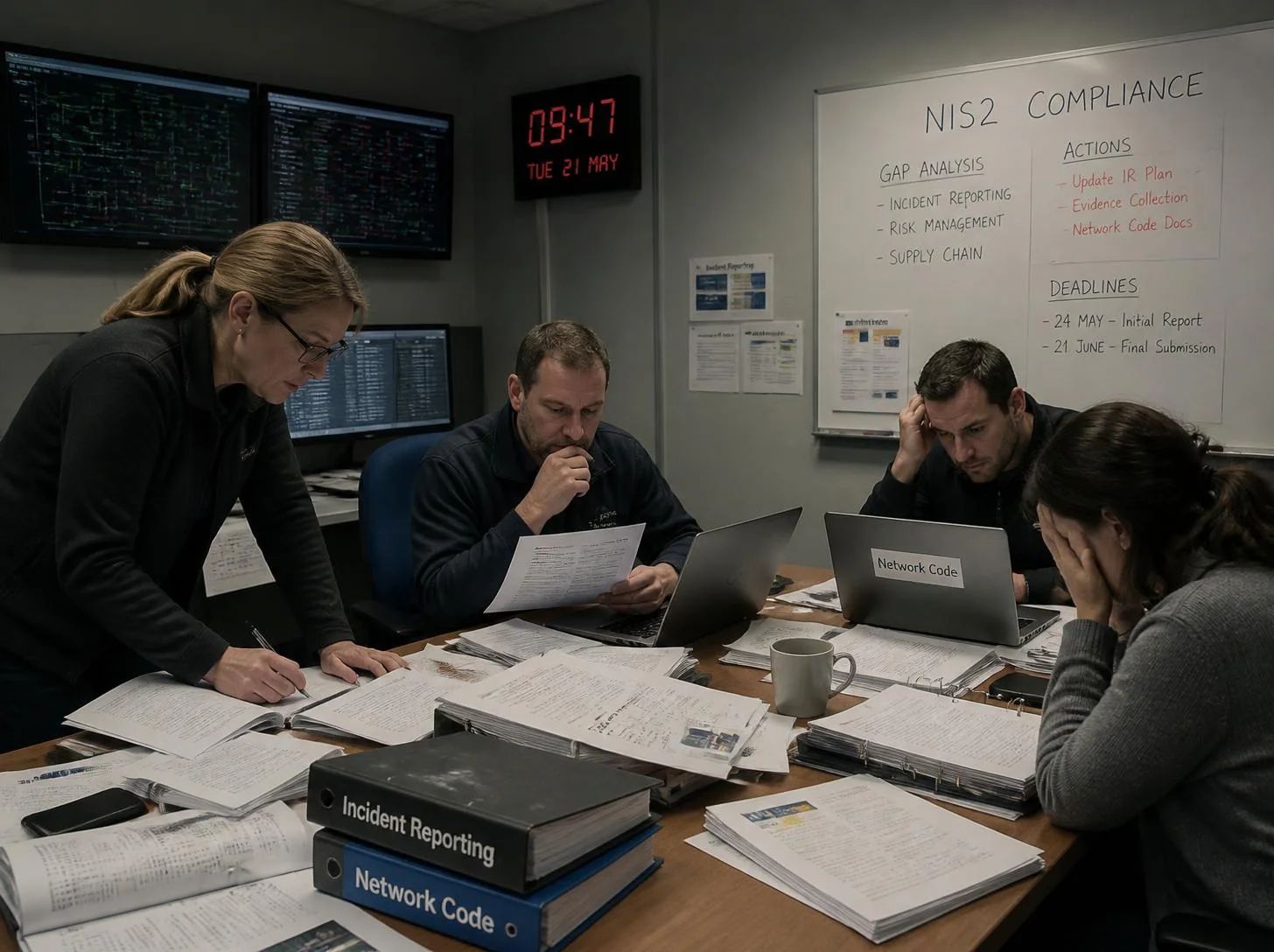
Cybersecurity team tracking NIS2 obligations and incident reporting deadlines
01
02
03
  • 01NIS2 obligations
  • 02Incident reporting clock
  • 03Electricity-specific rules

The shift

From ad hoc incident responseto a ready-to-execute workflow.

Compliance and security teams stay responsible for every determination and report. What changes is whether classification, obligations and evidence are ready before an incident occurs.

Today

Compliance under time pressure

  • Incident-reporting workflows are refined reactively after an incident.
  • NIS2 risk-management documentation is tracked apart from incident response.
  • Entity classification and applicable obligations lack a single source of truth.

With INSUS

Compliance readiness before the incident

  • Incident-reporting workflows are documented before the reporting clock starts.
  • Risk-management documentation is mapped against applicable NIS2 requirements.
  • Classification, obligations, evidence and readiness gaps sit in one structured view.

How it works

From regulatory textto a ready compliance workflow.

Delivered through ExpertFlow AI as document intelligence over regulatory, compliance and incident-management records. It organizes and flags gaps. It does not make a binding legal determination or file reports.

  1. Connect

    Bring regulations and utility data together

    Connect NIS2 and Network Code requirements and official guidance with entity classification information, risk-management documentation and existing incident-management systems.

  2. Understand

    Map the applicable obligations

    Map which requirements apply based on the utility's sub-sector, entity classification and, where relevant, electricity-specific cybersecurity impact criteria.

  3. Identify

    Find documentation and readiness gaps

    Compare existing risk-management and incident-response documentation against applicable requirements and identify areas that need further preparation.

  4. Advise

    Prepare the incident-reporting workflow

    Structure the early-warning, incident-notification and final-report workflow so compliance and security teams can assemble required information when an incident is identified.

  5. Verify

    Review and keep requirements current

    Compliance and security teams review generated outputs and update the map as official guidance and national transposition requirements evolve.

Document intelligence connecting NIS2 requirements with utility compliance documentation

Getting started

Start with one entityand the records you already keep.

For utility cybersecurity and compliance teams. Delivered through ExpertFlow AI as document intelligence and readiness support. Expert Services can help with discovery and validation. Advisory only. Exact obligations must be verified against the Directive, national transposition and the competent authority.

  • What we need. NIS2 and Network Code text and guidance, entity classification, current risk-management and incident-response documentation, and access to existing incident-management workflows. No new hardware.
  • What you see first. One utility entity or business unit: classification mapped, documentation and incident-reporting workflow assessed, then readiness reviewed by the compliance team.
  • Where the limits are. Does not monitor or control OT systems, file regulatory reports or make a binding compliance determination. Legal, compliance and security teams remain responsible for applicability and decisions.
Explore ExpertFlow AI

Questions cybersecurity and compliance teams ask us

NIS2 and related electricity cybersecurity rules create documentation and reporting obligations that are hard to keep ready. This use case maps obligations, flags gaps and prepares the incident-reporting workflow for compliance-team review.

Industry summaries commonly cite a three-stage workflow of early warning, fuller notification and final report, often described as 24 hours, 72 hours and one month. Verify exact obligations against the Directive, national transposition and your competent authority.

No. It focuses on regulatory document intelligence and readiness. It may reference OT or ICS information in documentation, but it does not monitor or control OT systems.

No. It can help assemble documentation and track elapsed time against the reporting workflow when integrated with incident management. Security and compliance teams remain responsible for response and reporting.

No. It can structure applicable requirements and identify potential documentation gaps, but it does not make a binding legal or regulatory determination.

Through ExpertFlow AI as document intelligence over compliance and incident records. Expert Services can support discovery, integration and validation with your compliance team.

Requirements can change through guidance and national transposition. Exact applicability must be verified by legal, compliance and security teams. The system supports that work; it does not replace it.

Utilities · Cybersecurity compliance

Be ready before the reporting clock starts.

Start with one entity or business unit. The useful first answer is whether your classification, documentation and incident-reporting workflow are already connected, or still assembled under pressure.