Today
Good accuracy can hide a bad blind spot
- Healthy transformer records dominate the historical dataset.
- Rare Poor and Very Poor assets have limited representation.
- Overall accuracy can look strong while high-risk assets are under-detected.

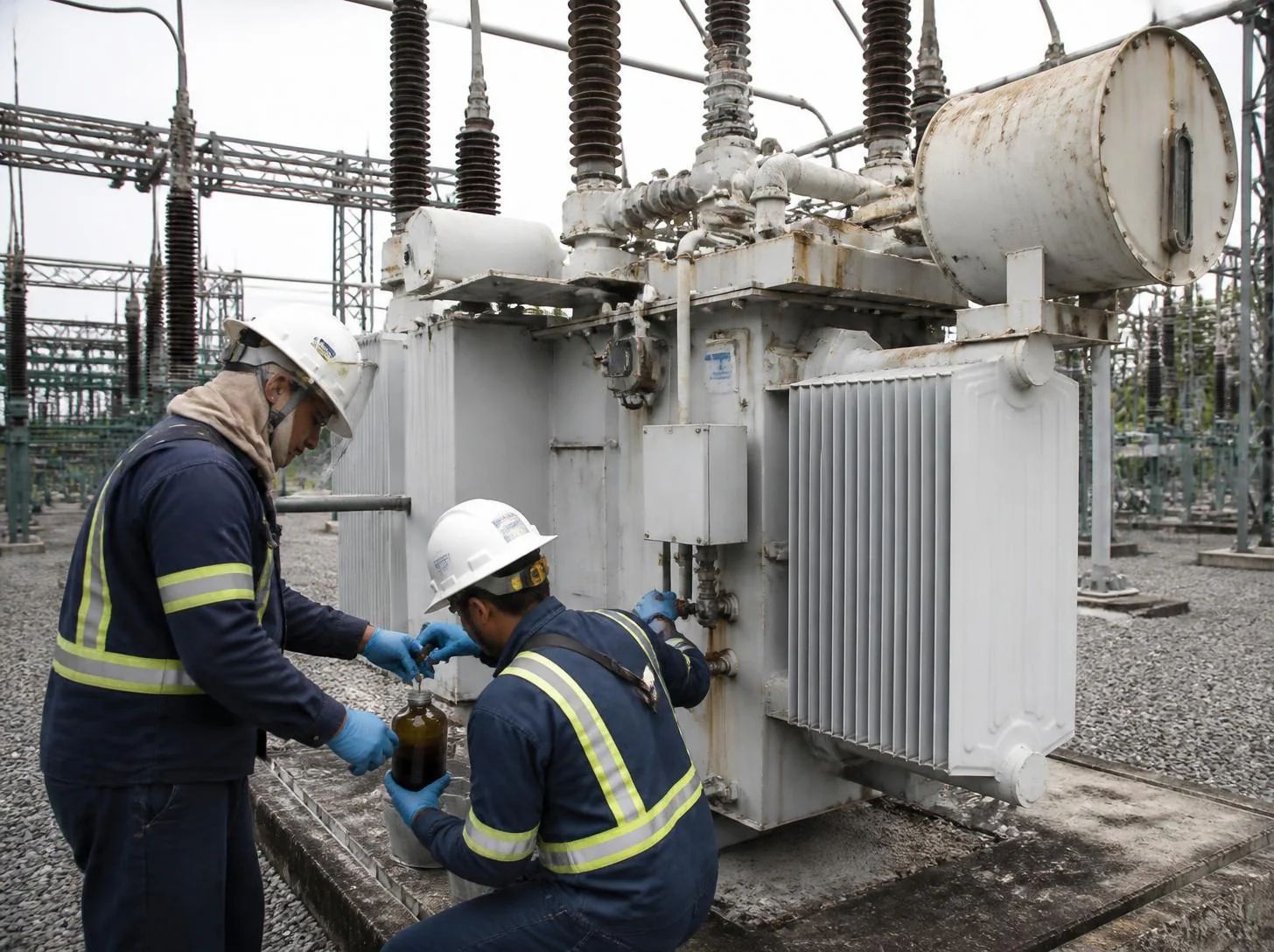
INSUS predicts health index from oil quality, dissolved gas analysis and paper-condition data your utility already collects, with class rebalancing so Poor and Very Poor units are not buried under overall accuracy. Asset teams keep the decision.
01
Health index from oil, DGA and paper data you already collect.
02
Trained to find rare high-risk classes, not just overall accuracy.
03
Advisory. Asset teams decide maintenance and capital action.
The problem
Healthy transformers dominate historical test datasets, while Poor or Very Poor units are rare. A model can post strong overall accuracy while missing the assets a utility most needs to identify. Oil, DGA and paper parameters may also be read separately or through rule-based scoring, so the joint pattern that marks a high-risk unit is easy to miss.
The shift
Asset and maintenance teams stay responsible for every maintenance and capital decision. What changes is whether rare high-risk classes get enough weight in the model.
Today
With INSUS
How it works
This fits Predictive Maintenance as asset-health decision support beside existing test and asset-management systems. Access is read-only. It does not replace testing or automatically trigger maintenance.
Connect
Connect oil-quality results, dissolved gas analysis, paper-condition indicators and historical health assessments from existing asset and test-history systems, read-only.
Understand
Learn the historical relationship between available test parameters and confirmed health-index classifications across this utility's transformer population.
Predict
Predict the health-index category from Very Good through Very Poor, using a class-rebalanced model designed to reduce overlooking of rare high-risk conditions.
Advise
Surface Poor and Very Poor transformers for maintenance and capital-planning review, giving asset teams a consistent fleet-level view of where further attention may be required.
Verify
Compare predictions with subsequent confirmed health assessments and relevant failure or outage events so the model can be refined for this utility's fleet.

Getting started
For utilities that already collect oil, DGA and paper-condition results. Delivered through Predictive Maintenance as transformer asset-health decision support. Expert Services can help with data assessment and validation. Advisory only. No new sensors.
Related for utilities
Transformer health index prediction sits beside electricity theft detection and NIS2 cybersecurity compliance on the same network.
High-risk transformers are rare in test history, so overall accuracy can hide weak detection. This use case predicts health-index categories with attention to Poor and Very Poor classes for asset-team review.
Existing oil-quality results, DGA, paper-condition indicators and confirmed health-index classifications. No new sensors when the utility already runs that testing program.
No. It uses the existing testing program. Asset teams review the predicted health index before deciding what action is appropriate.
Class-rebalancing methods give rare health classes greater representation during training so overall accuracy is not the only success measure.
No. External peer-reviewed results on other fleets are not INSUS performance guarantees. Any model must be calibrated and validated on your own test history.
Through Predictive Maintenance as transformer asset-health decision support. Expert Services can support data assessment, integration and validation with your asset team.
Performance depends on the quality, history and class distribution of your own transformer test data. Predictions are fleet-specific and do not replace engineering judgement or capital decisions.
Utilities · Transformer asset health
Start with one fleet segment and the test history behind it. The useful first answer is whether a class-rebalanced model improves high-risk detection on your own records.