Today
Loading set by caution and last week's lab result
- Organic loading set conservatively and changed cautiously.
- VFA, alkalinity and pH known from periodic laboratory analysis.
- Feedstock changes absorbed by reducing loading as a precaution.

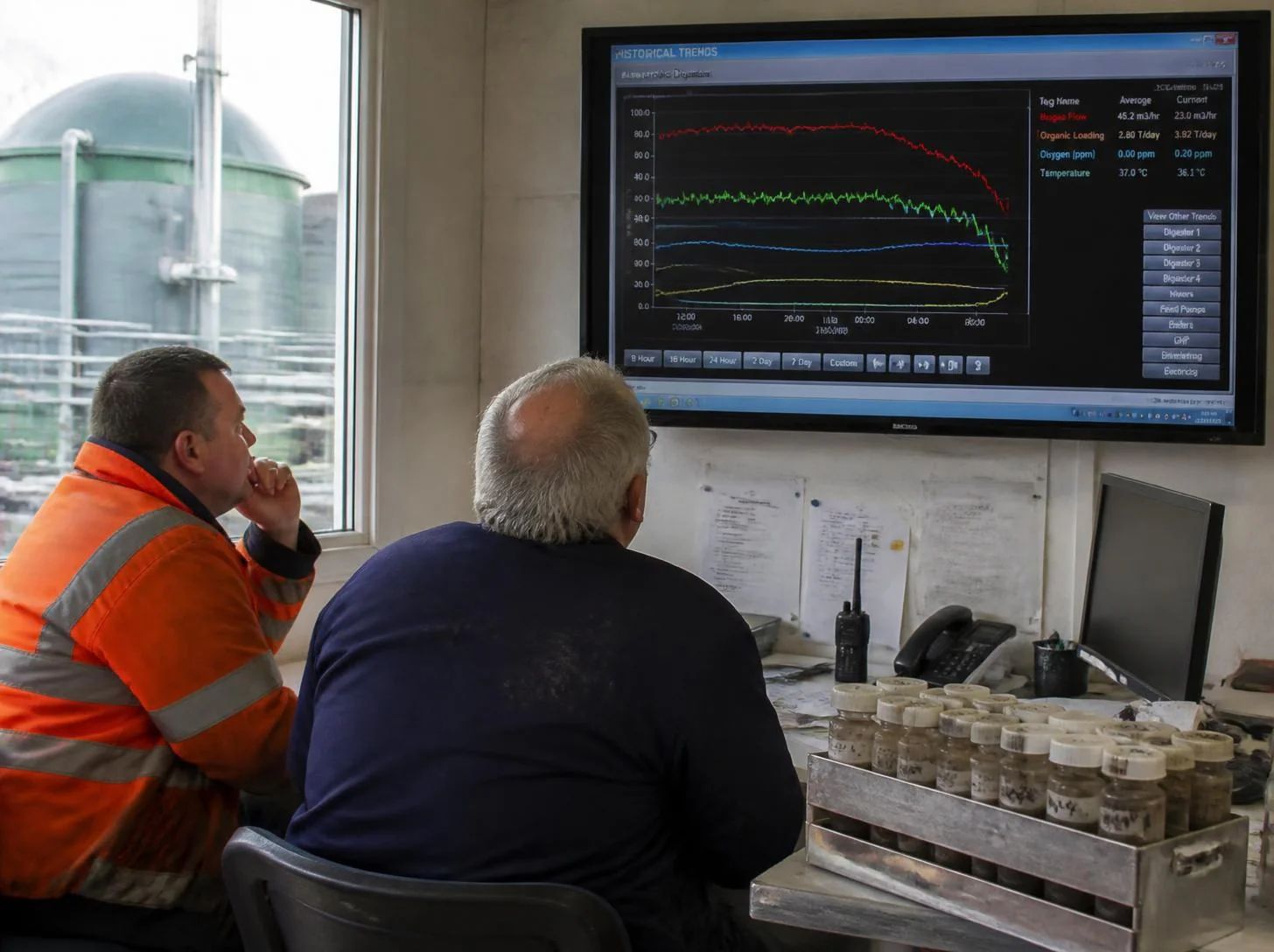
INSUS reads feed, SCADA and lab history the digester already keeps, estimates VFA accumulation risk between lab results, and predicts biogas yield for a planned feed. Operators approve every loading change.
01
Stability indicators arrive days later from the lab.
02
Margin shown with uncertainty, not a single confident number.
03
Advisory only. Operators approve every loading change.
The problem
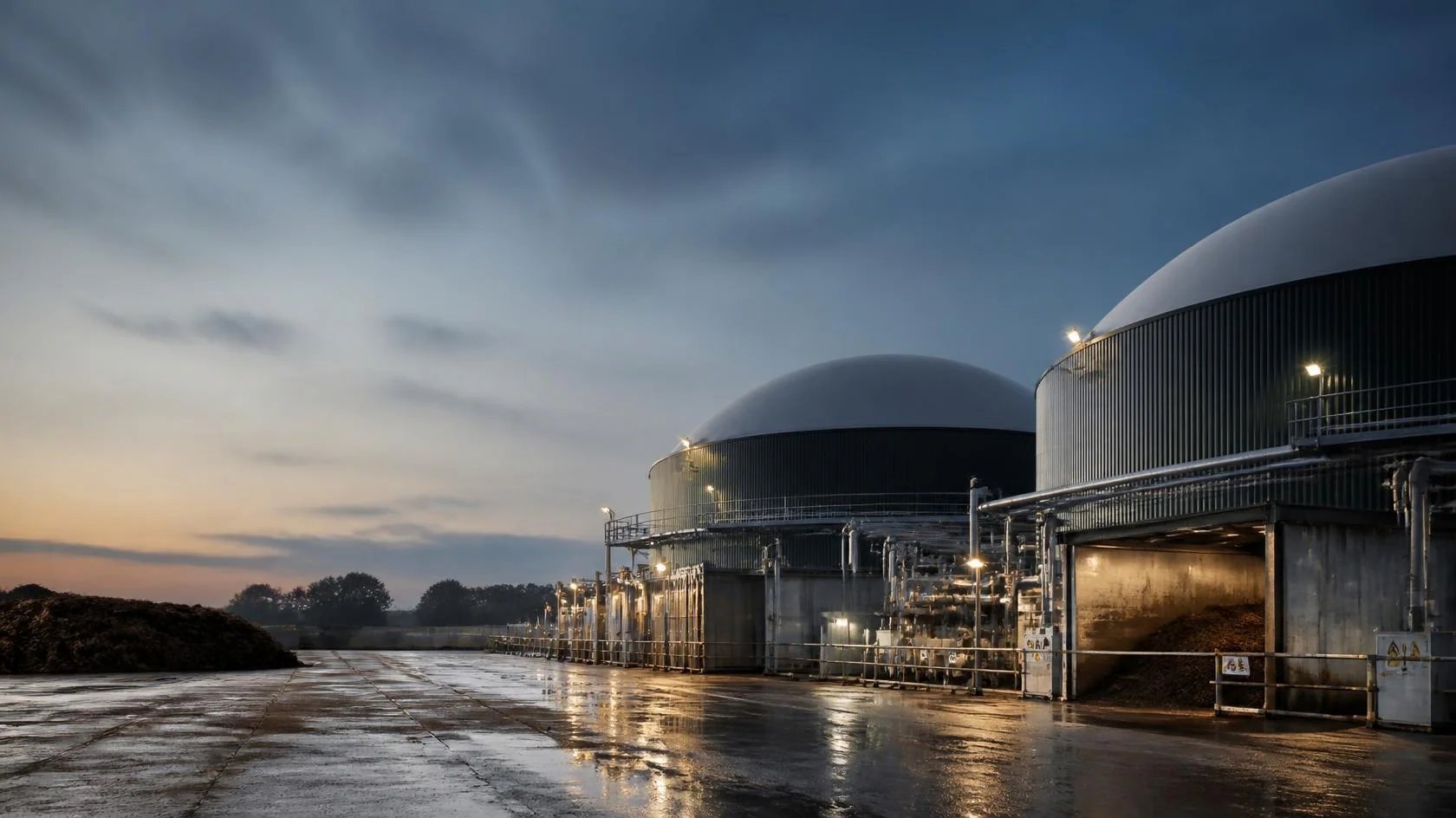
Anaerobic digestion depends on two microbial groups working at compatible rates. Push loading too hard and acid producers outrun the methane producers: volatile fatty acids accumulate, pH falls and the digester sours. An overload is slow to undo. Waste-derived feedstocks change with season and contract, so most digesters run well inside the boundary. That leaves gas yield unclaimed, while an acidification event still costs extended degraded output.
The shift
The stability constraint is real and should be respected. The question is how much margin is being carried because nobody can see it between lab results.
Today
With INSUS
How it works
This fits OptiStudio as digester decision support beside SCADA and LIMS. Access is read-only. The lab stays the system of record. Operators approve every loading change.
Connect
Connect read-only to feed records (substrate type, quantity, timing and co-digestion mix), digester SCADA (temperature, level, mixing), biogas flow and composition, laboratory results for VFA, alkalinity, pH and solids, digestate records, and CHP or upgrading output.
Understand
The model learns how this digester's gas production, composition and measured chemistry have historically responded to loading, substrate mix and temperature, including any past excursions.
Predict
Estimate VFA accumulation risk between lab results, and predict biogas yield and methane content for a planned feed. Risk is expressed as a stability margin with an uncertainty band, because that width should govern how hard loading is pushed.
Advise
Advise the feed rate and substrate mix that aim to raise methane inside a hard stability constraint, with early warning when the trajectory heads toward acidification. Operators see the margin with every recommendation and approve every loading change.
Verify
Every prediction is checked against the next laboratory result, and the model is corrected by the lab, never the reverse. Yield achieved without stability events is tracked together.

Getting started
For anaerobic digestion plants where organic loading is held back by delayed VFA and alkalinity results. Delivered through OptiStudio as digester decision support. Expert Services can help with data assessment and validation. Advisory and read-only. Closed-loop loading is out of scope.
Related for waste
Anaerobic digestion stability sits beside WtE combustion for residual waste and biogenic and fossil carbon MRV on the evidence trail.
VFA, alkalinity and pH arrive infrequently from the lab, so loading is often held back by caution. This use case estimates digester stability between lab results and predicts biogas yield for a planned feed, for operator review.
At least twelve months of feed records, digester SCADA, biogas flow and composition, and laboratory history for VFA, alkalinity and pH. No new hardware for a plant with standard gas measurement and routine lab analysis.
No to both. Operators approve every loading change, and the lab remains the system of record that corrects the model.
No. A wrong loading decision can cost weeks of degraded output; operator approval costs minutes. The stability constraint is hard, and the margin is shown with every recommendation.
Through OptiStudio as digester decision support. Expert Services can support data assessment, integration and validation with your process team.
Peer-reviewed work has shown that biogas yield and related digester indicators can be predicted from industrial plant data. Those accuracy figures belong to the studied plants, not to every digester, and not to us. Value is measured on your own yield and stability events.
Digester biology is site-specific, so models do not transfer between plants. Lab sampling frequency limits how well the soft sensor can be validated. Where feed records are poor, fixing them is the first job.
Waste · Anaerobic digestion
A shadow run on one digester through a feedstock change will show the size of the margin you have been carrying, and whether any of it is safe to use.