Today
Corrections start after the swing does
- Control responds to steam and oxygen after the swing has started.
- Calorific value known from periodic analysis, after the fact.
- Support fuel fired whenever temperature margin is threatened.

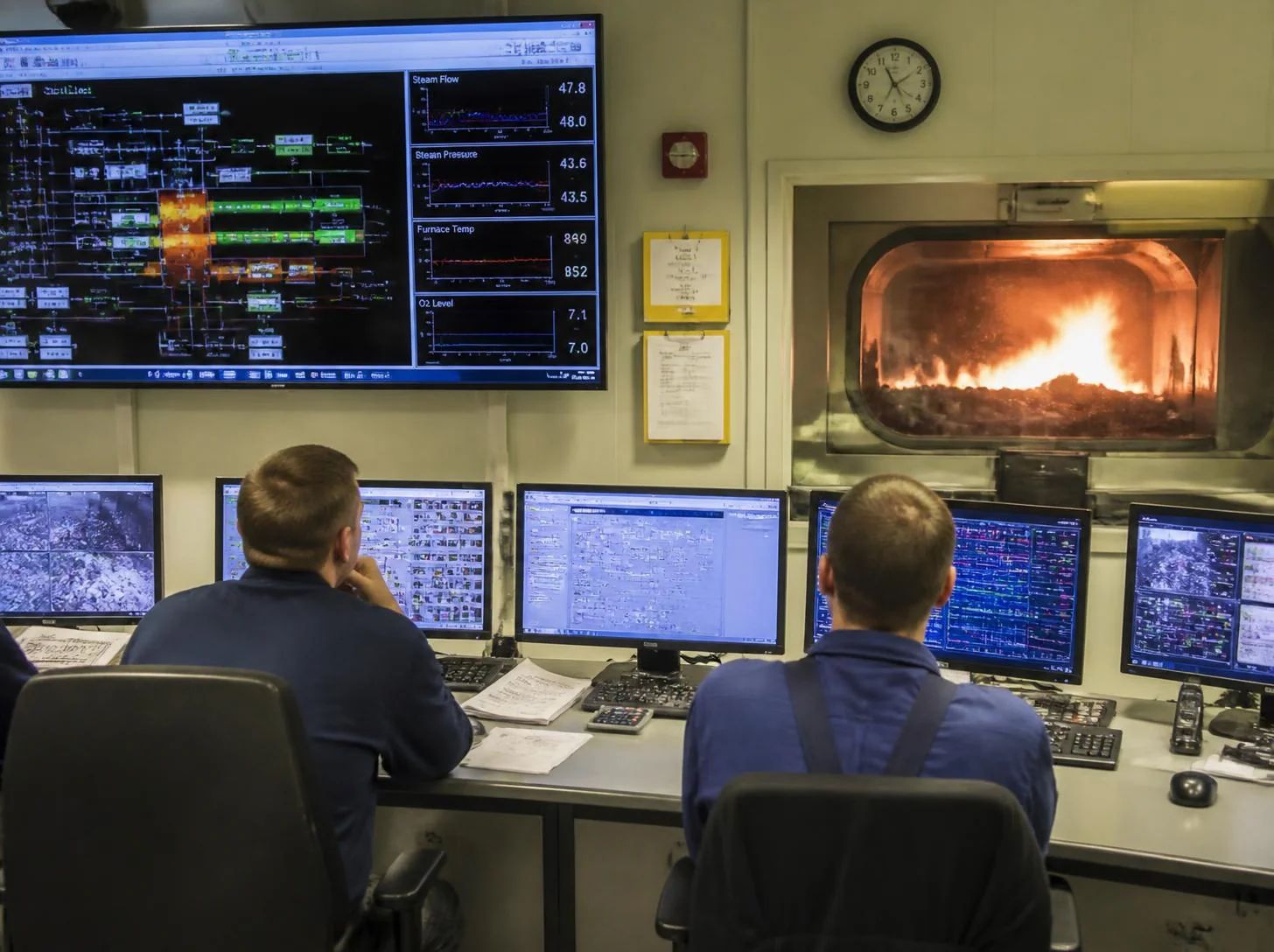
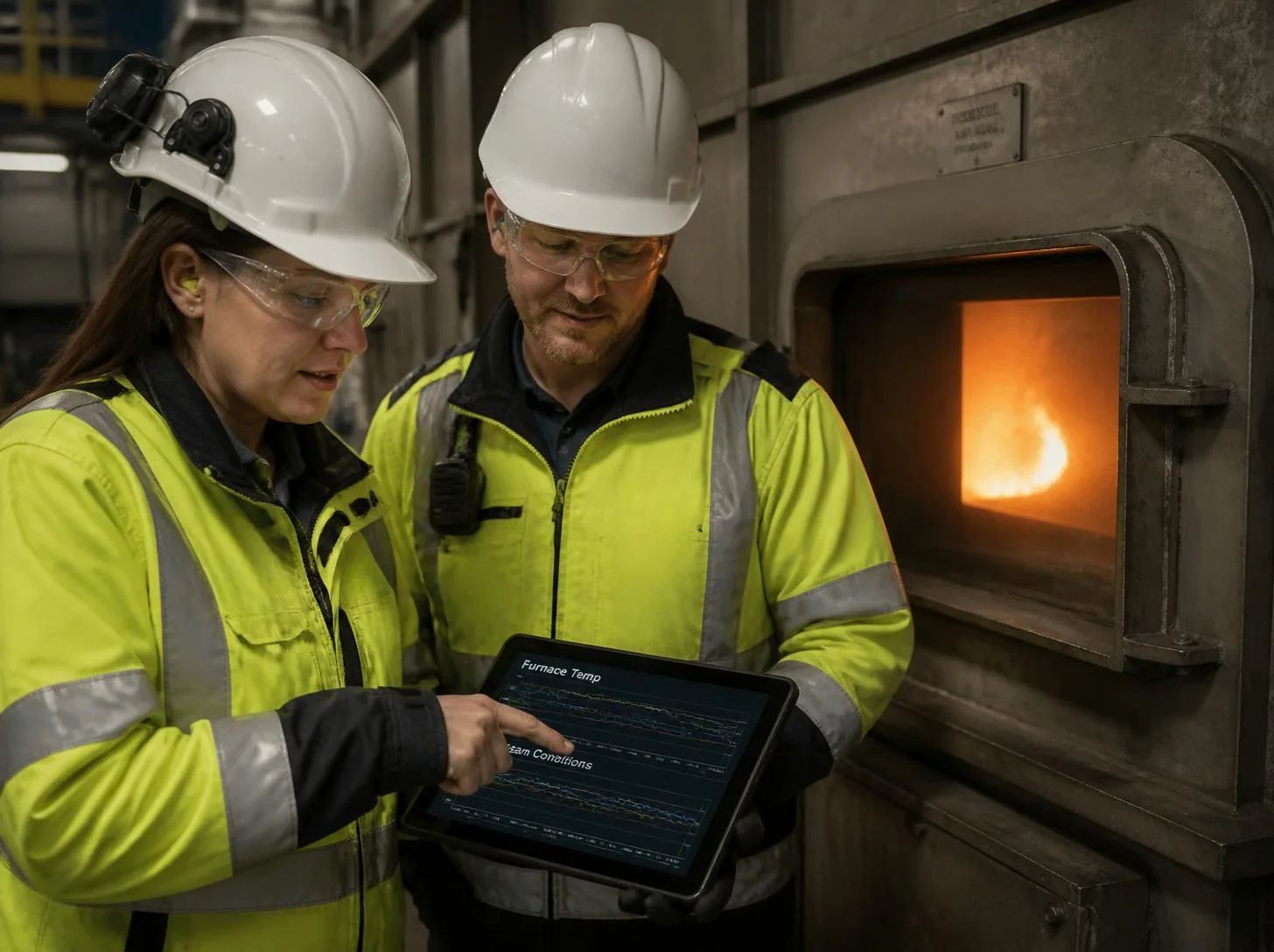
INSUS reads furnace, steam and air response the plant already logs, infers the effective calorific value of the waste currently burning, and advises grate, feed and air earlier in the swing. Control room staff approve every change.
01
Calorific value inferred from furnace response, not lab analysis.
02
Permit temperature and emissions stay hard constraints.
03
Advisory only. Control room staff approve every change.
The problem
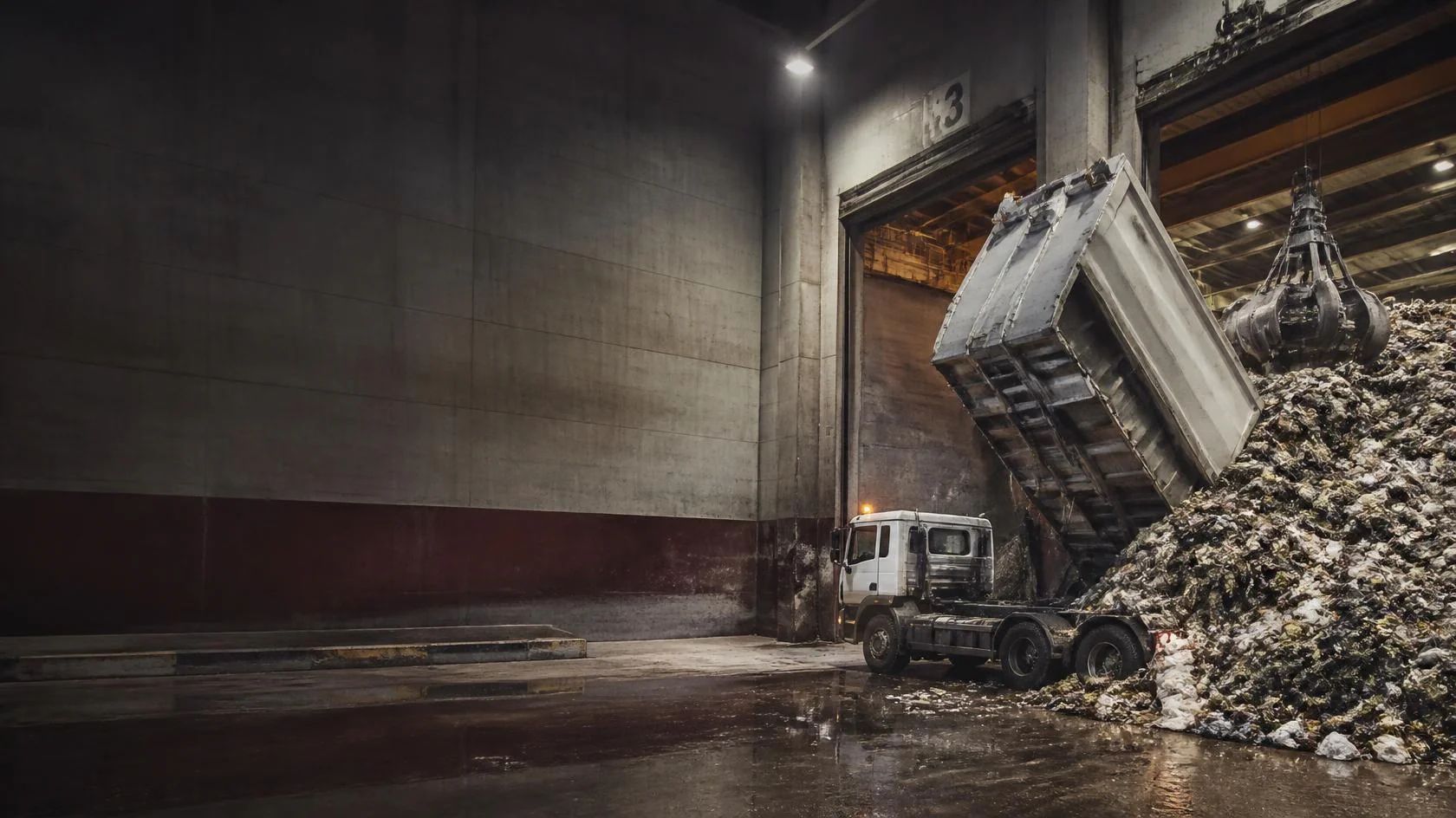
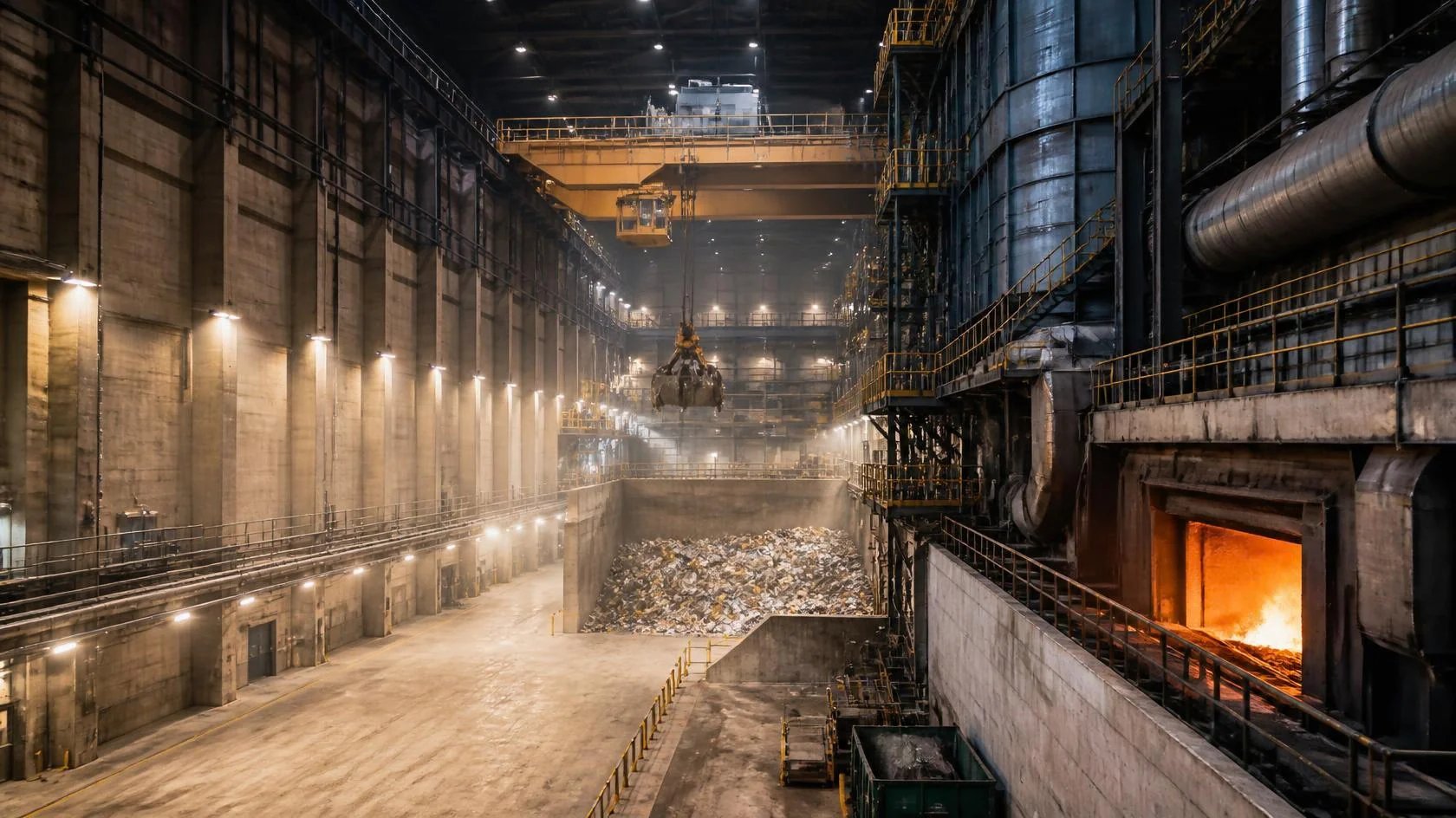
An energy-from-waste plant receives whatever its catchment produced, mixes it in a bunker, and still has to deliver steady steam. Wet organic fractions lower effective energy content while plastics and paper raise it, so operators continuously adjust air, grate speed and feed. Fuel heat input cannot be measured accurately when quality keeps changing. When control moves feed and primary air together from steam alone, moist, low-calorific waste can end up with incomplete combustion. Fossil support fuel then holds furnace temperature, adding cost and emissions, while steam instability reaches electricity or heat revenue.
The shift
The plant already reacts well. The question is how much earlier the same correction could have been made, and whether it was made in the right direction.
Today
With INSUS
How it works
This fits OptiStudio as combustion decision support above the existing DCS. Access is read-only. It does not write setpoints during the pilot. Permit temperature and emissions limits stay hard constraints.
Connect
Connect read-only to grate speed and zone positions, primary and secondary air, furnace temperatures, flue gas O₂ and CO, steam conditions, feeder positions, crane and bunker records, weighbridge receipts, CEMS data, support fuel firing and ambient conditions.
Understand
The model learns how this furnace responds to feed and air changes, and how those responses differ with fuel condition, so variation caused by the waste is separated from variation caused by control actions.
Predict
Infer the effective calorific value of the material currently burning from the boiler energy balance and oxygen consumption. Project short-horizon steam output and furnace temperature under current settings.
Advise
Advise grate speed, feed rate and air distribution that hold steam and furnace temperature at the lowest support fuel and least excess air, including cases where feed and air need to move in opposite directions. Temperature residence and emissions limits are hard constraints: advice that would approach them is refused.
Verify
Compare inferred calorific value with any periodic waste analysis. Track steam stability, support fuel use and emissions margin, with furnace temperature compliance and burnout quality reported alongside every efficiency figure.
Getting started
For energy-from-waste plants with moving grate furnaces where steam swings and support fuel follow waste composition. Delivered through OptiStudio as combustion decision support. Expert Services can help with data assessment and validation. Advisory and read-only. Discovery should establish what incumbent combustion control already achieves.
Related for waste
WtE combustion stability sits beside biogenic and fossil carbon MRV on the same plant and anaerobic digestion for the organic fraction.
Waste calorific value cannot be measured live, so steam swings and support fuel often follow composition changes after the fact. This use case infers effective calorific value from furnace response and advises grate, feed and air for control room review.
At least twelve months of DCS and historian data, emissions records, support fuel history, waste receipt and weighbridge records, and any waste analysis already performed. No new sensors: EfW plants are already densely instrumented, partly because permits require it.
Possibly a plant-specific learned model and earlier inference of fuel condition. Discovery should establish the remaining headroom honestly. If your incumbent control is strong, the headroom may be small.
No to both. Control room staff approve every change, and access stays read-only above the existing DCS and combustion control during the pilot.
No. Emissions limits and temperature residence requirements are hard constraints the advice will not approach, and compliance margin is reported as a KPI. Closed-loop is only a later earned stage, with those constraints still hard.
Through OptiStudio as combustion decision support. Expert Services can support data assessment, integration and validation with your process team.
Incumbent control is often good, so headroom is plant-specific. The soft sensor infers rather than measures and can degrade when plant behaviour changes for reasons other than fuel. Nothing here changes what arrives in the bunker.
Waste · Energy-from-waste
A shadow run on one incineration line across a seasonal composition swing will show that split from your own historian, before any setpoint advice is applied.