Today
One conservative setpoint for every condition
- Blowers run to a fixed or conservatively high DO setpoint.
- Flow, MLSS, BOD₅ and nitrogen are not used to set oxygen need.
- BOD₅ arrives from the lab too late to guide live aeration.

INSUS reads flow, MLSS, nitrogen and lab BOD₅ the plant already logs, estimates oxygen demand for current conditions, and advises a dissolved oxygen setpoint for the blowers. Operations stays in charge.
01
Aeration is usually the plant's largest energy line.
02
BOD₅ is estimated alongside the setpoint, not ignored.
03
Advisory only. Operators stay in charge of the blowers.
The problem
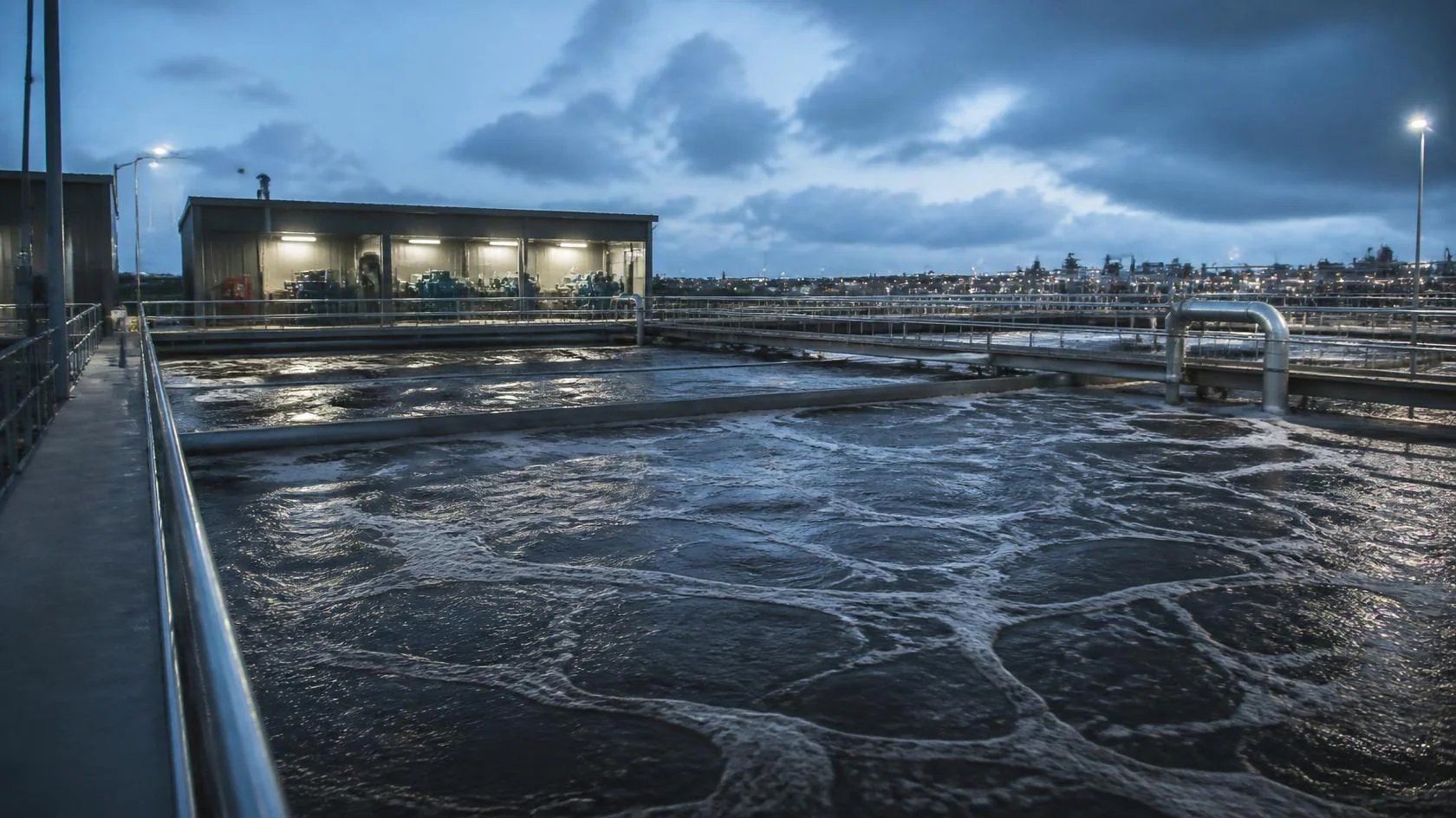
Aeration blowers are typically the largest energy consumer at a wastewater plant. To hold treatment across variable loading, most plants run a fixed or conservatively high dissolved oxygen setpoint. Influent flow, mixed liquor solids, BOD₅ and nitrogen change through the day, and BOD₅ itself is a five-day lab test, so it arrives too late to guide the blowers live. Whenever the load is lighter than the case the setpoint was chosen for, the plant supplies oxygen the process did not need.
The shift
Effluent requirements stay where they are, and so does the operator's authority over the blowers. What changes is that the setpoint is predicted from the plant's own process data.
Today
With INSUS
How it works
This fits OptiStudio as aeration decision support beside blower SCADA. Access is read-only. It does not write setpoints or change blower control during the pilot.
Connect
Connect read-only to flow meters, DO sensors and aeration blower SCADA, mixed liquor suspended solids, conductivity and ammonia where logged, the plant historian, and LIMS results for influent and effluent BOD₅ and total nitrogen.
Understand
The model learns the historical relationship between influent and process conditions, treatment performance and the dissolved oxygen this aeration tank actually required, across the loading conditions and seasons in its history.
Predict
Estimate BOD₅ from faster indicators such as conductivity, ammonia and total nitrogen, since the lab test takes five days. Predict the optimum DO setpoint from flow, MLSS, BOD₅ and total nitrogen for current conditions.
Advise
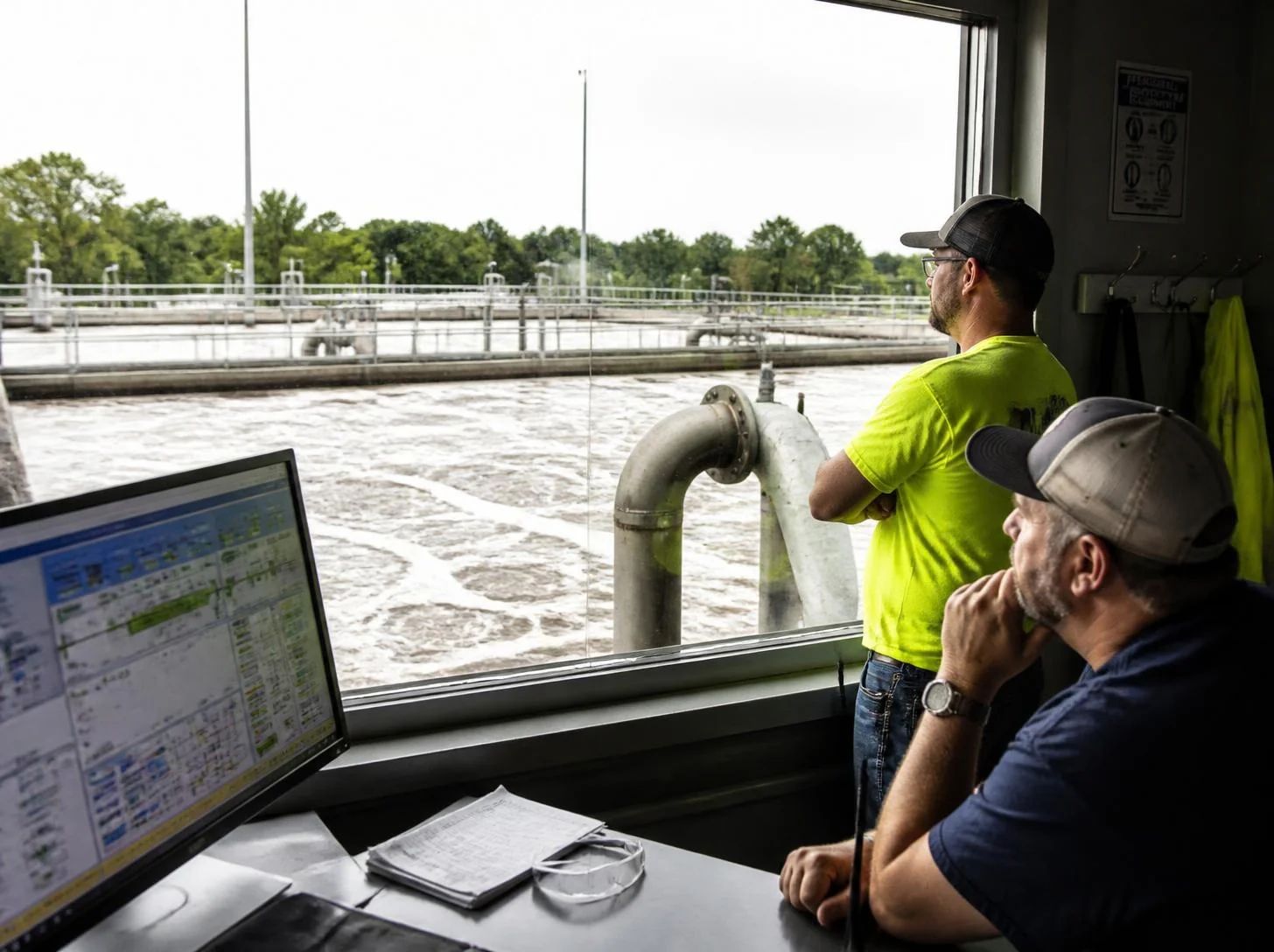
Recommend a dissolved oxygen setpoint for the blower control system that aims to hold treatment while cutting unnecessary aeration energy. Operators review every recommendation and decide whether to apply it.
Verify
Compare each advised setpoint with actual DO, blower energy and effluent quality against permit limits. Prediction accuracy is tracked and the model is refined against this plant's own history.

Getting started
For wastewater plants where aeration dominates energy use. Delivered through OptiStudio as DO setpoint decision support. Expert Services can help with data assessment and validation. Advisory and read-only. Automatic blower control is considered only after treatment performance is validated.
Related for water
Aeration DO optimization sits beside coagulant dosing on the drinking water side and the UWWTD roadmap for portfolio compliance.
Aeration blowers often run to a fixed, conservative dissolved oxygen setpoint, so energy stays high when the load is light. This use case advises a DO setpoint matched to current process conditions for operator review.
Historical flow, MLSS, BOD₅, total nitrogen, conductivity, ammonia and DO covering representative loading and seasons. No new sensors: it uses process and lab data a modern wastewater plant already generates.
No during the pilot. Operators review every recommended setpoint. Automatic control is considered only after validation confirms treatment performance, with operator override retained and permit limits governing the change.
BOD₅ is estimated alongside the DO setpoint rather than ignored, effluent quality against permit limits is tracked next to energy, and operators review every recommendation before it is applied.
Through OptiStudio as aeration decision support. Expert Services can support data assessment, integration and validation with your process team.
Peer-reviewed work has shown that BOD₅ and optimum DO can be predicted from plant operational data, with reported aeration energy reductions on the studied plants. Those are results for those plants, not a guarantee for yours, and not our result. Value is measured on your own blower energy and effluent quality.
It needs historical process and lab data covering the plant's loading and seasons. Accuracy and energy reduction are plant-specific. Because BOD₅ is a lab test, live predictions depend on the faster indicators used to estimate it.
Water · Wastewater aeration
A back-test on one aeration tank and the history behind it will show how well your own records already predict the dissolved oxygen the process needed.