Today
Dosing is adjusted after conditions evolve
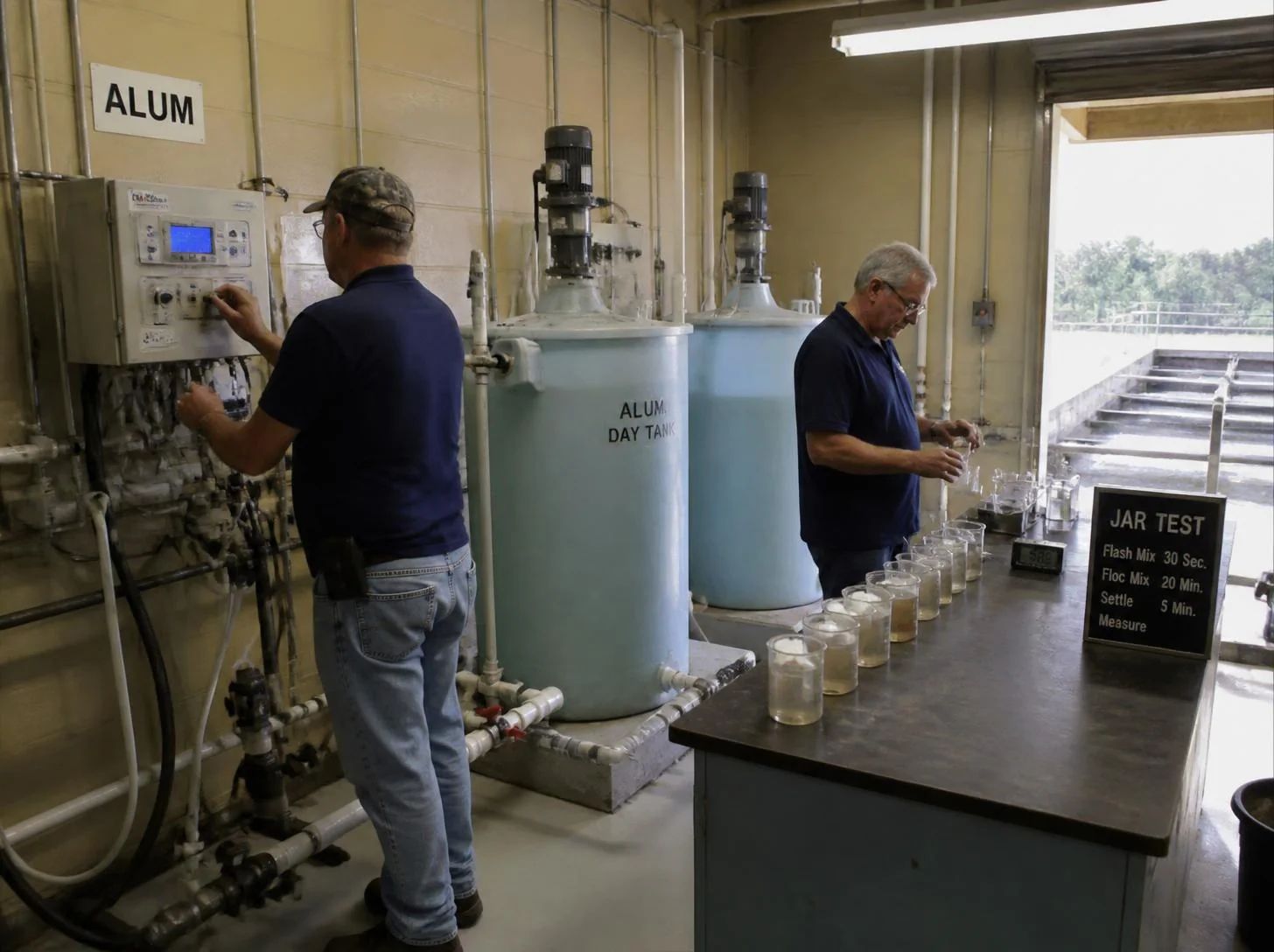
- Periodic jar testing guides dose adjustments.
- Operator experience carries much of the process knowledge.
- Non-linear quality-to-dose links are hard to model by hand.

INSUS reads turbidity, pH, temperature, conductivity and color the plant already measures, predicts coagulant dose from this plant's own history, and advises the next adjustment. Operators decide. Jar tests stay for verification.
01
Dose predicted from raw water quality the plant already measures.
02
Jar testing stays for verification, not replaced.
03
Advisory only. Operators decide every dose change.
The problem
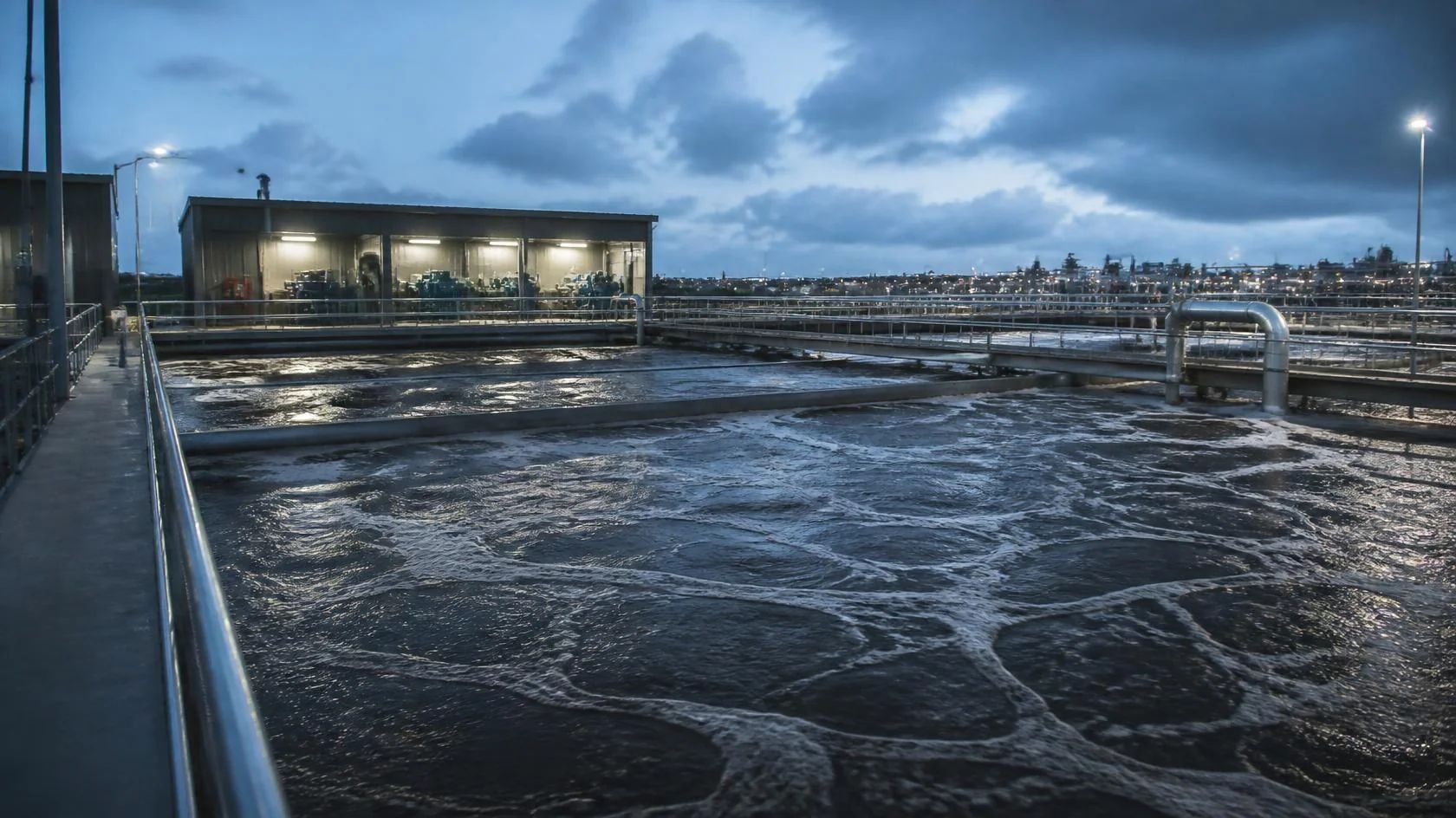
Raw water conditions change through the day, but coagulant dosing is often still adjusted through periodic jar testing and operator experience. Too little coagulant can leave turbidity in treated water. Too much spends chemical and can increase sludge. Between tests, the plant absorbs either under-dosing risk or over-dosing cost.
The shift
The plant already measures many of the variables that influence coagulation. What changes is that their relationship with historical dosing and treatment outcomes is modelled, while jar testing stays as validation.
Today
With INSUS
How it works
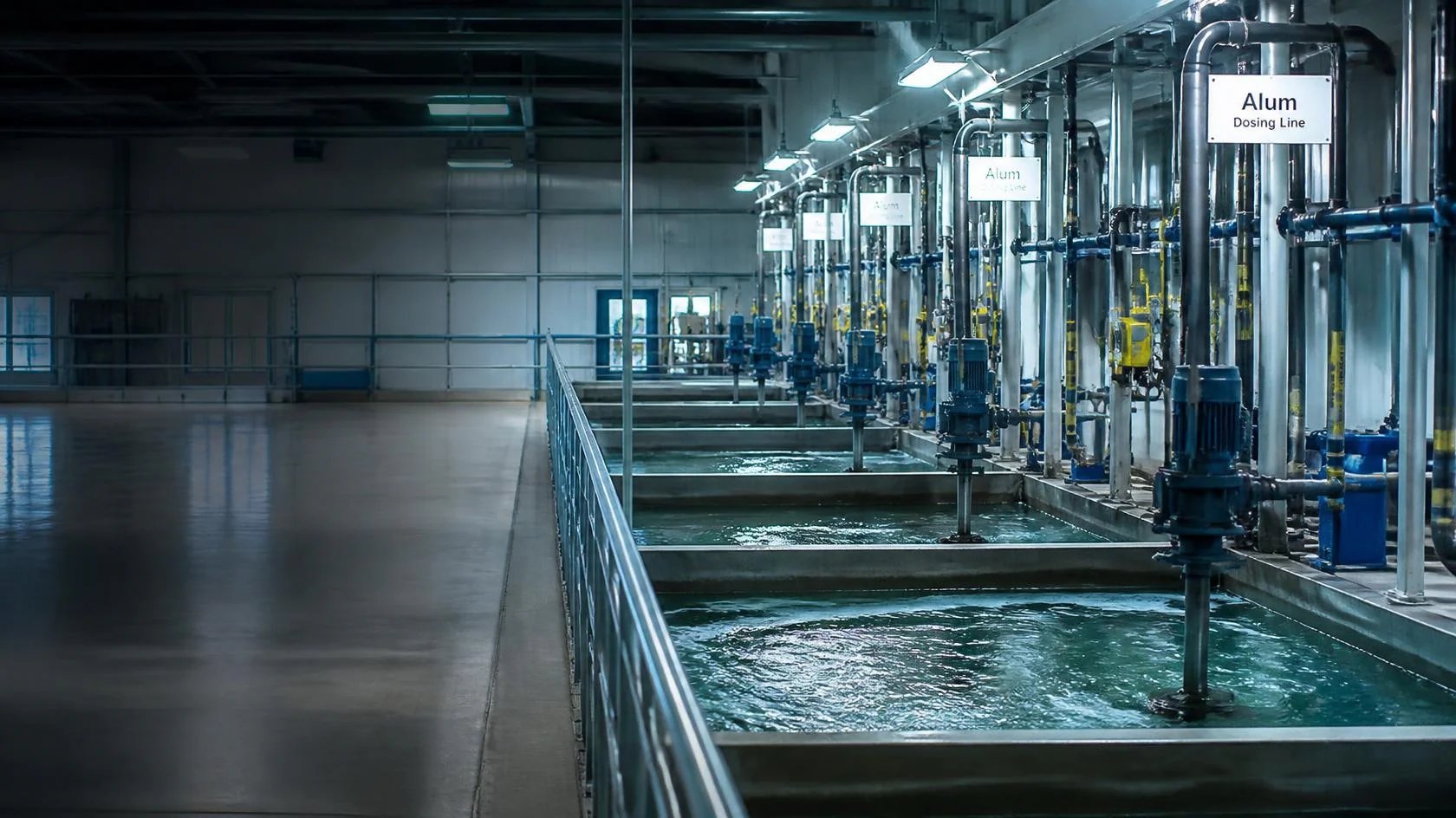
This fits OptiStudio as coagulation decision support beside the dosing system. Access is read-only. It does not write pump setpoints during the pilot.
Connect
Connect read-only to temperature, turbidity, pH, electrical conductivity and color with historical coagulant dosing rates, SCADA records and relevant laboratory results.
Understand
Analyse historical relationships between raw water characteristics, the dose applied and resulting treatment performance for this plant's own coagulation process, not transferred from another site.
Predict
Predict the appropriate dosing rate from the incoming raw water conditions and relevant dosing history for this plant, as turbidity, pH and related measures change.
Advise
As raw water conditions change, produce a dosing recommendation for the existing coagulant dosing system. The operations team remains responsible for applying it.
Verify
Compare predictions with jar-test results and actual treated-water outcomes. Those checks improve the model on this plant's own operating history.

Getting started
For drinking water plants where coagulant dose still follows jar tests and operator judgment between events. Delivered through OptiStudio as dose decision support. Expert Services can help with data assessment and validation. Advisory and read-only. Closed-loop pump control is considered only after treatment performance is validated.
Related for water
Coagulant dosing sits beside aeration DO optimization on the wastewater side and the UWWTD roadmap for portfolio compliance.
Raw water changes continuously, but coagulant dose is often still set from periodic jar tests and operator judgment. This use case advises a dose from live raw-water quality for operator review, with jar tests kept for verification.
Raw water temperature, turbidity, pH, conductivity, color and historical coagulant dosing, with treated-water quality and jar-test results for validation. No new sensors: it uses measurements modern drinking water plants already collect.
No to both. Jar testing remains a verification method, and operators stay in the decision loop. The system provides a recommendation; the operations team decides whether and how to apply it.
Closed-loop control can be considered only after the prediction has been validated against treatment outcomes and regulatory requirements. The pilot remains read-only and operator-controlled.
Through OptiStudio as coagulation decision support. Expert Services can support data assessment, integration and validation with your process team.
Peer-reviewed work has shown that coagulant dose can be predicted from raw-water quality at full-scale plants. Those accuracy figures belong to the studied plants, not to every plant, and not to us. Value is measured on your own chemical use and treated-water quality.
Model performance depends on the quality and representativeness of historical data and raw-water variability. The model must be calibrated to each plant, and any automated dosing must satisfy that plant's own water-quality and regulatory requirements.
Water · Drinking water treatment
A back-test on one coagulation train and the history behind it will show how well your own records already predict the dose that worked.