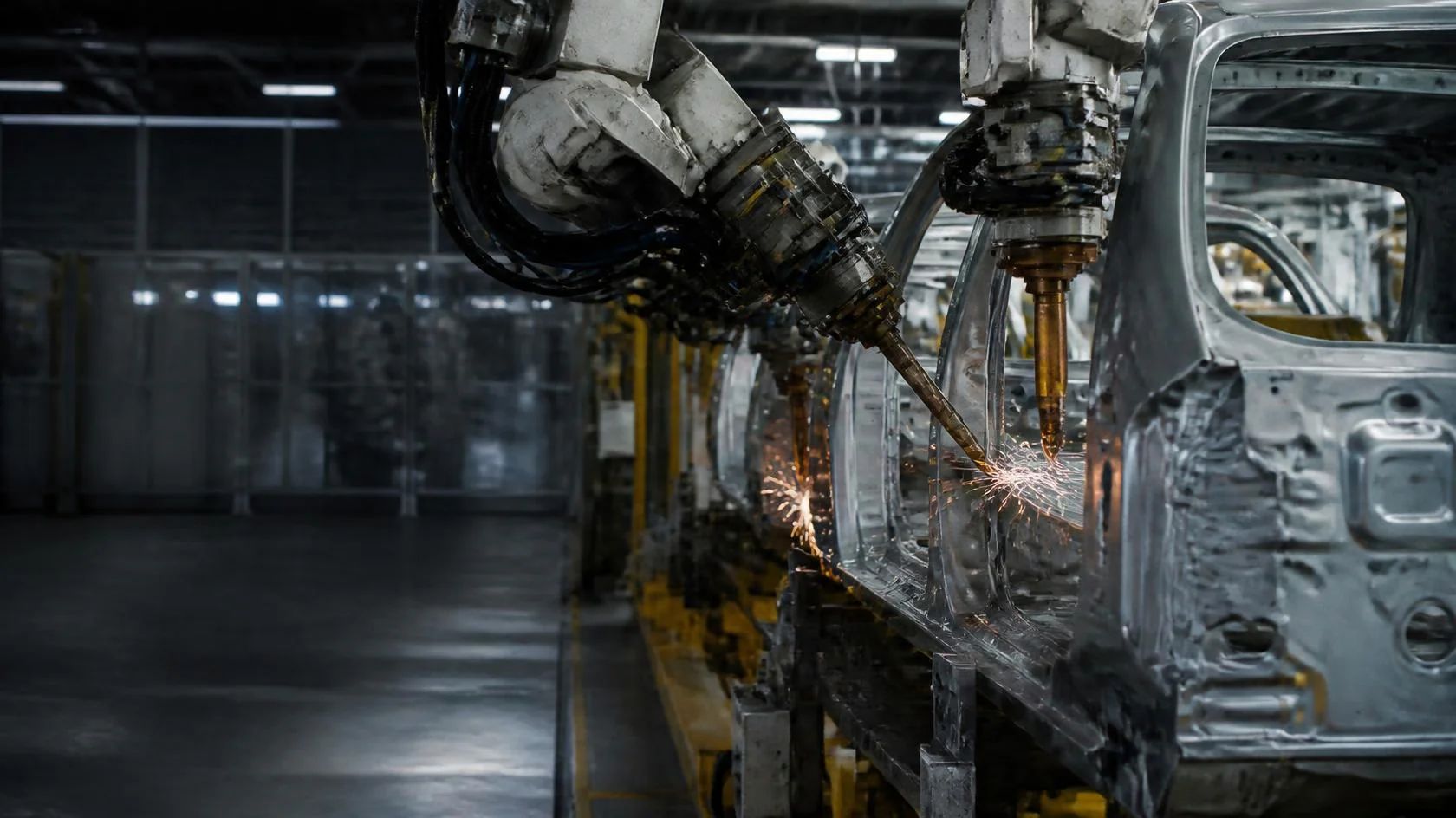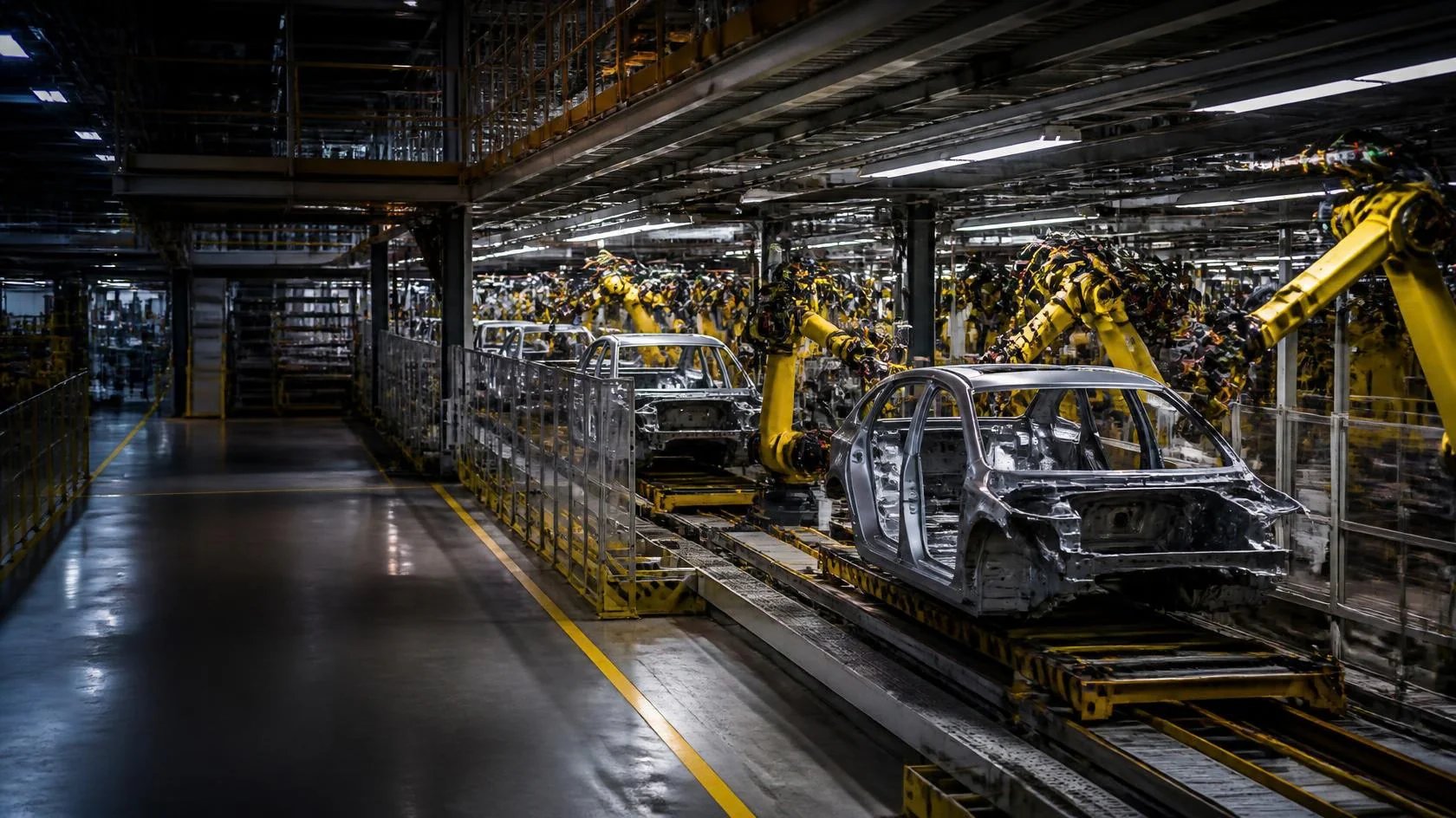
Today
Detection and diagnosis stay apart
- Failures are discovered when they stop the line or during scheduled inspection.
- Diagnosis speed depends heavily on who is on shift.
- Work-order history is difficult to search by symptom.

Knowing an asset is degrading is only useful if the next shift knows what to do about it. INSUS combines failure-risk models with retrieval over your SOPs, work orders and repair history, so early warnings arrive with the knowledge needed to investigate and respond. Advisory only.
01
Degradation flagged before a line stoppage.
02
Work orders and history become searchable knowledge.
03
Every shift gets the context behind an alert.
The problem
Predictive maintenance and maintenance knowledge are often managed as separate programmes. On an automotive line, an earlier warning does not automatically shorten downtime if diagnosis still depends on a small group of experienced technicians. Connecting asset degradation signals with procedures, work orders and repair history is what makes the warning usable.
The shift
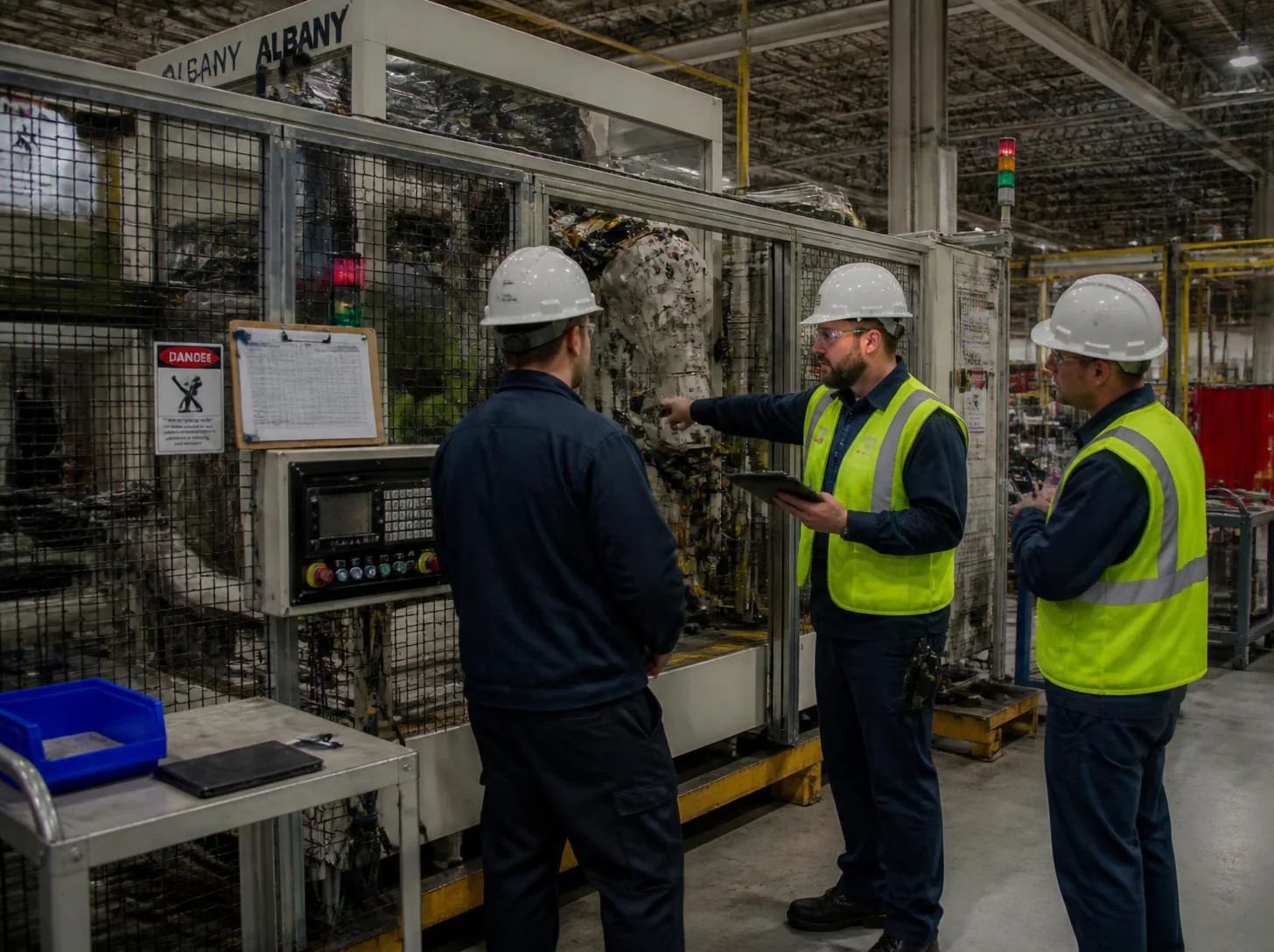
The goal is not to replace maintenance experience. It is to make the useful parts of that experience available when the failure happens, regardless of who is on shift.
Today
With INSUS
How it works
Delivered as Predictive Maintenance for degradation modelling, with ExpertFlow AI for SOP and work-order retrieval. Each capability is measurable on its own. The value comes from bringing them together. Day one is advisory and read-only.
Connect
Connect asset condition data from drives, PLCs, robot controllers and condition-monitoring systems where available, together with CMMS work orders, repair history, SOPs, manuals, spare-parts data and production schedules.
Understand
Establish normal behaviour by asset or asset class while making SOPs, manuals and historical work orders searchable by symptoms, equipment and maintenance context.
Predict
Use degradation modelling, anomaly detection and survival analysis to estimate failure risk and likely time-to-intervention for assets with sufficient condition data.
Advise
When an asset shows an emerging issue, surface the relevant procedure, historical repairs, similar symptoms and previous approaches so the maintenance team can investigate with context.
Verify
Track alert precision, intervention outcomes and whether retrieved knowledge was useful. Completed repairs add new plant-specific evidence to the maintenance knowledge base.
Getting started
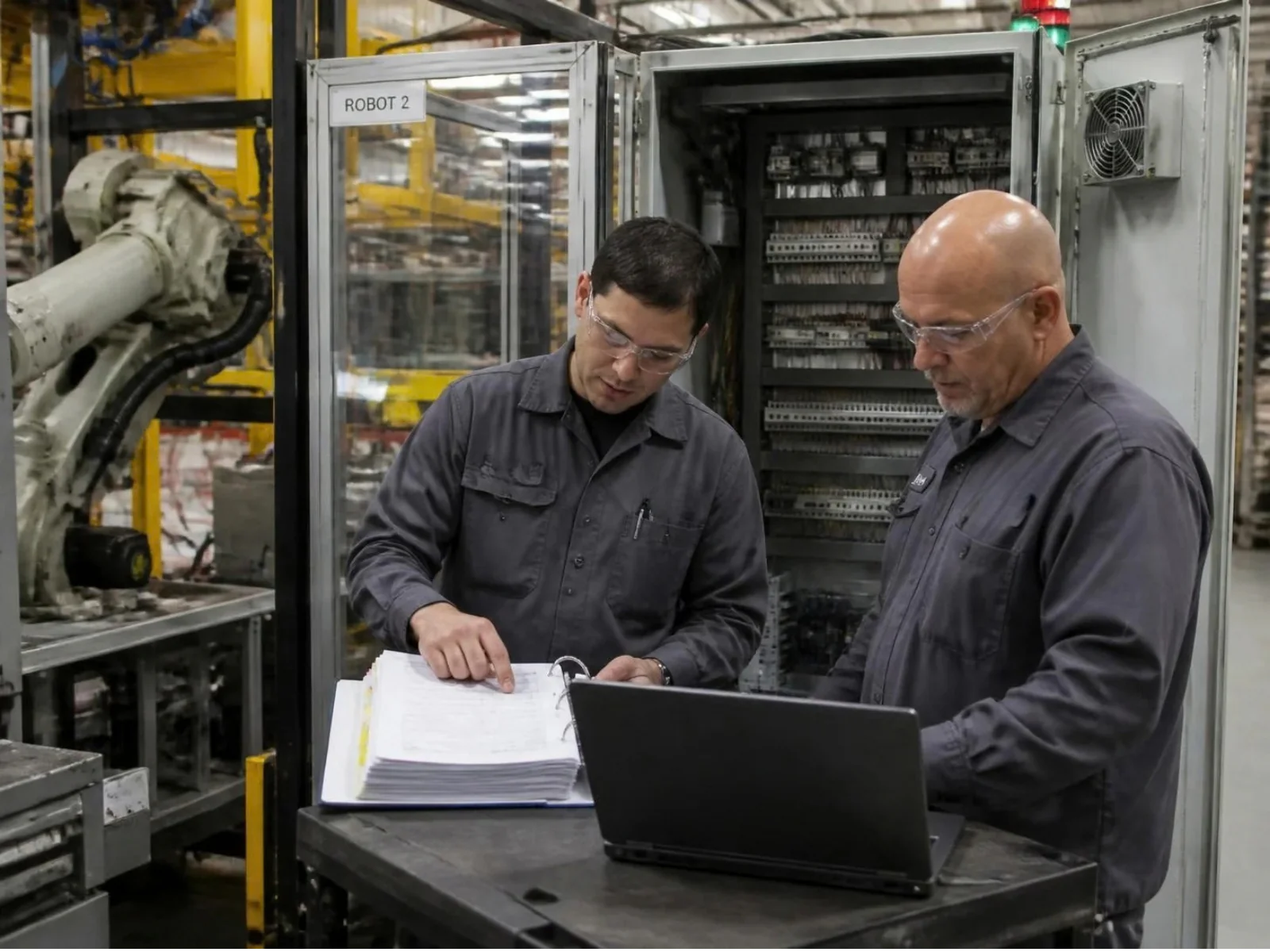
For automotive plants that already hold CMMS, SOP and available condition data. Delivered through Predictive Maintenance for failure-risk modelling and ExpertFlow AI for maintenance knowledge retrieval. Expert Services can help with coverage assessment and validation. Advisory and read-only. No PLC write-back.
Related for automotive
Line downtime and maintenance knowledge sit beside plant weld quality and warranty early detection on the same automotive operation.
Earlier degradation warnings do not shorten downtime if diagnosis still depends on a few experienced technicians. This use case pairs failure-risk prediction with searchable SOPs and repair history so alerts arrive with context.
Available asset condition and fault data for prediction; CMMS work orders, repair history, SOPs and manuals for knowledge. No new sensors for the knowledge layer. Assets without usable condition data may need additional sensing as a separate plant decision.
No. It helps technicians reach useful diagnostic context faster, especially when experience is uneven across shifts.
No. It is advisory and read-only. It does not have control authority over PLCs, drives or production equipment.
Through Predictive Maintenance for degradation modelling and ExpertFlow AI for SOP and work-order retrieval. Expert Services can support discovery, coverage mapping and validation.
Degradation models are back-tested against historical failure events using alert precision and lead time. Maintenance engineers evaluate retrieval against real technician questions for relevance and usefulness.
Predictive coverage depends on available condition data. Knowledge quality depends on what has actually been recorded in work orders and documents. Both should be assessed during discovery.
Automotive · Maintenance and reliability
Start with a coverage map: which assets can be modelled today, what your maintenance history can tell you, and where the knowledge gaps are. Then test both the predictive and knowledge layers on one line.