Today
Warranty analytics after the trend appears
- Trends detected mainly through claim volume and thresholds.
- Technician narrative stored as free text and largely unused.
- Root cause and supplier attribution assembled reactively.

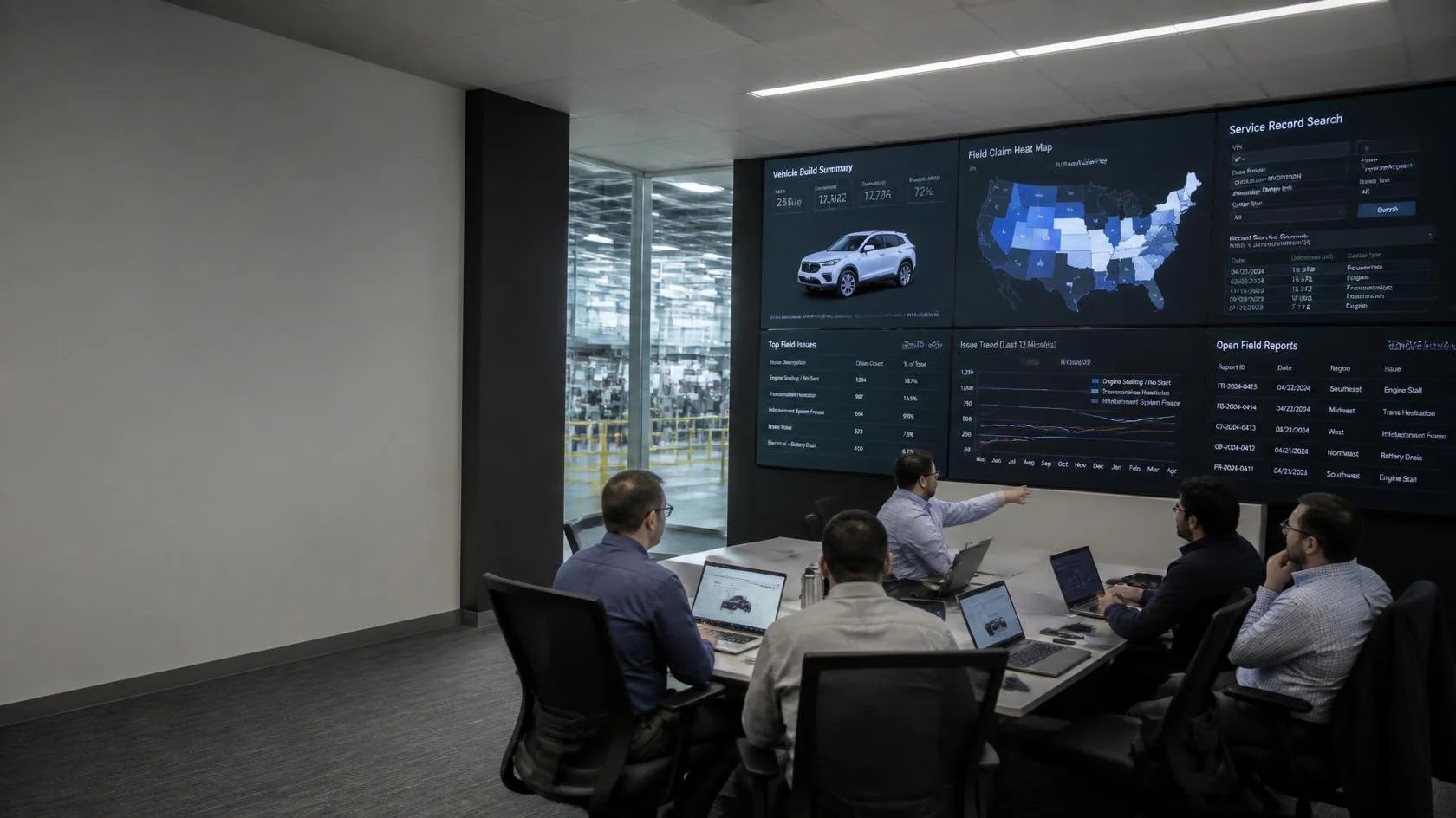
Warranty systems are built to process claims, not to read them. INSUS analyzes technician narratives, build genealogy, service history and supplier traceability to surface emerging failure patterns while the exposed population is still small. Quality teams decide what to investigate.
01
Emerging patterns hide inside claim volume.
02
Technician narratives hold signals structured fields miss.
03
Earlier detection means a smaller exposed population.
The problem
Warranty is measured downstream, often months or years after production. By the time claim volume makes a failure statistically obvious, the affected population may already be built, shipped and sold. Technician narratives can contain the earliest explanation of what is failing, but that information is often stored as inconsistent free text rather than analyzed systematically.
The shift
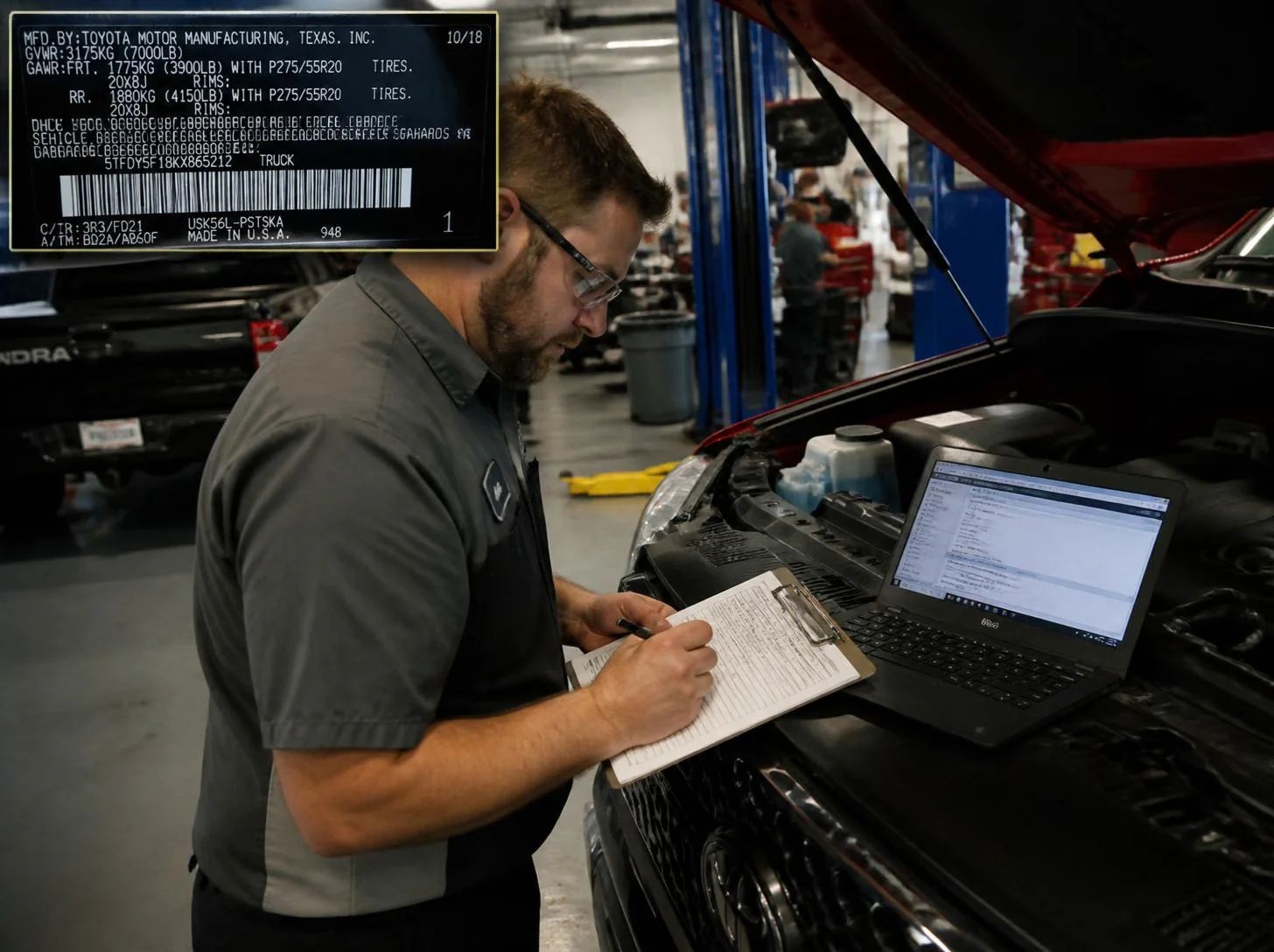
A part number tells you what was replaced. The technician narrative can tell you what actually failed. Combining that narrative with build, configuration and supplier data helps locate emerging patterns before claim volume alone makes them obvious.
Today
With INSUS
How it works
Delivered through ExpertFlow AI as document and claim intelligence over warranty, service, MES and supplier-quality records. It ranks and evidences issues for review. It does not initiate containment, recalls or claim decisions.
Connect
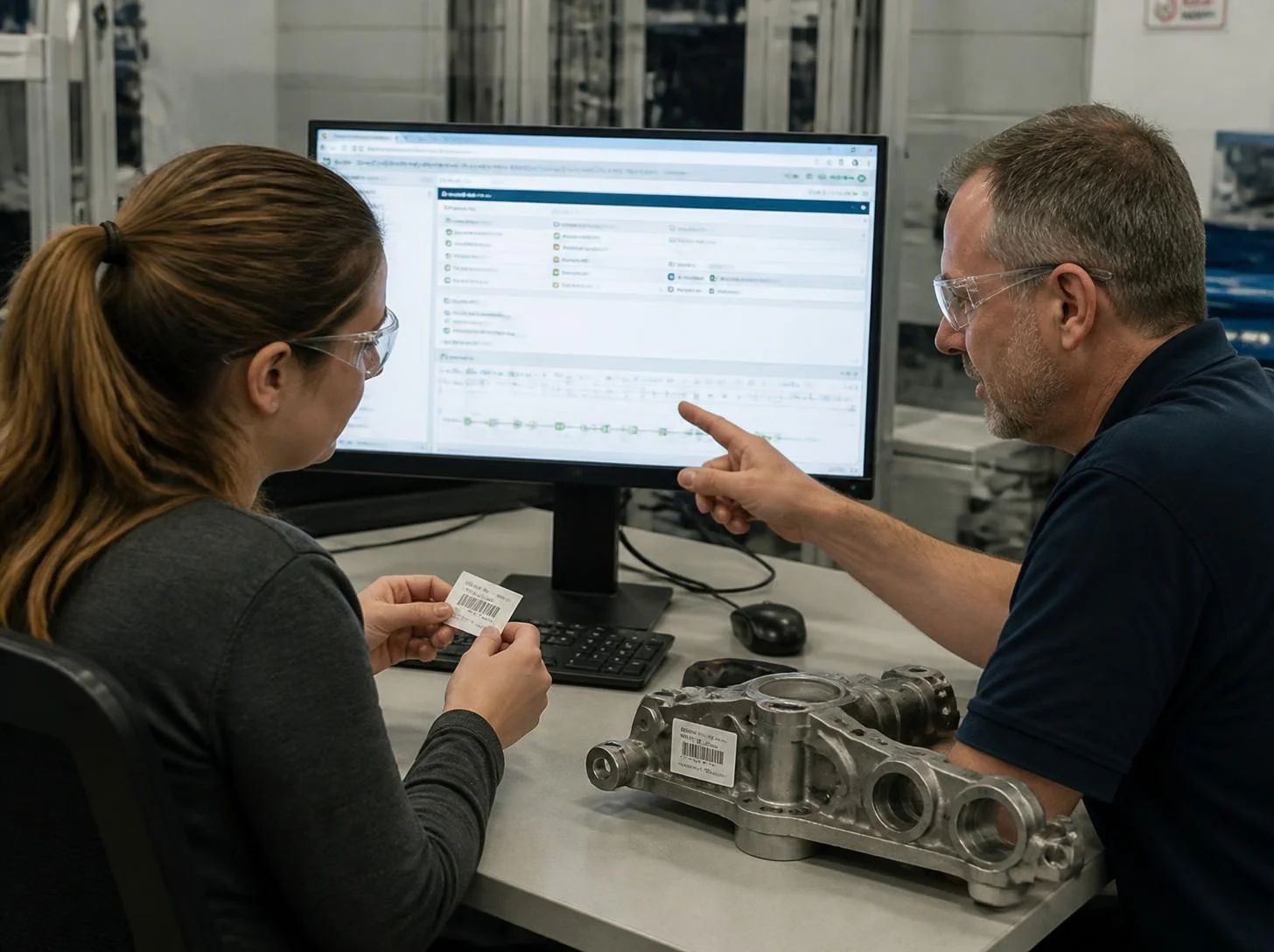
Connect warranty claims, technician narratives, dealer service records, MES build genealogy, supplier and component traceability, campaign history and, where available, telematics or diagnostic data.
Understand
Analyze technician narratives to distinguish failure modes that may otherwise appear under the same part number, then map those patterns against build windows, plants, lines, supplier lots and configurations.
Predict
Reliability and cohort models assess how emerging failure clusters are developing across months-in-service and the exposed population, with uncertainty kept visible.
Advise
Rank emerging issues by failure pattern, concentration and supporting evidence so quality teams can see where the issue is occurring and which build or supplier dimensions deserve investigation.
Verify
Every flagged cluster is tracked against what happened next. Known issues, missed issues and false positives become part of validation so the system is measured on detection lead time, not alert volume alone.
Getting started
For OEM and Tier-1 teams that already hold warranty, service, MES and supplier-quality records. Delivered through ExpertFlow AI as claim and document intelligence for early field-failure detection. Expert Services can help with discovery and back-test design. Advisory only. No new field hardware.
Related for automotive
Warranty early detection sits beside plant weld quality and line downtime knowledge on the same automotive operation.
Emerging field failures often become obvious only after claim volume rises. This use case clusters technician narratives with build and supplier data so quality teams can investigate while the exposed population is still smaller.
Warranty claims with narrative text, build genealogy, supplier traceability and campaign history. Dealer service records and optional telematics can add context. No new field hardware.
No. The system ranks and evidences issues so quality teams have a stronger starting point. Engineers decide what to investigate and what action to take.
No. It is advisory decision support. It does not initiate containment, supplier notification, recalls, field actions, claim approval or supplier charge-backs.
It can surface concentrations by supplier lot and other traceability dimensions when those relationships exist in the data. Supplier attribution remains an engineering, commercial and legal decision.
Through ExpertFlow AI as claim and document intelligence over warranty, service, MES and supplier-quality records. Expert Services can support discovery, back-testing and validation.
The system can only detect failures that generate claims or other available field records. Narrative quality varies by market and dealer, and the narrative layer is unavailable where technician narratives are not retained.
Automotive · Field quality and warranty
Pick two field issues you already understand. A retrospective back-test can show whether analyzing the claim narratives and build data would have surfaced them earlier, and what the system would have flagged incorrectly over the same period.