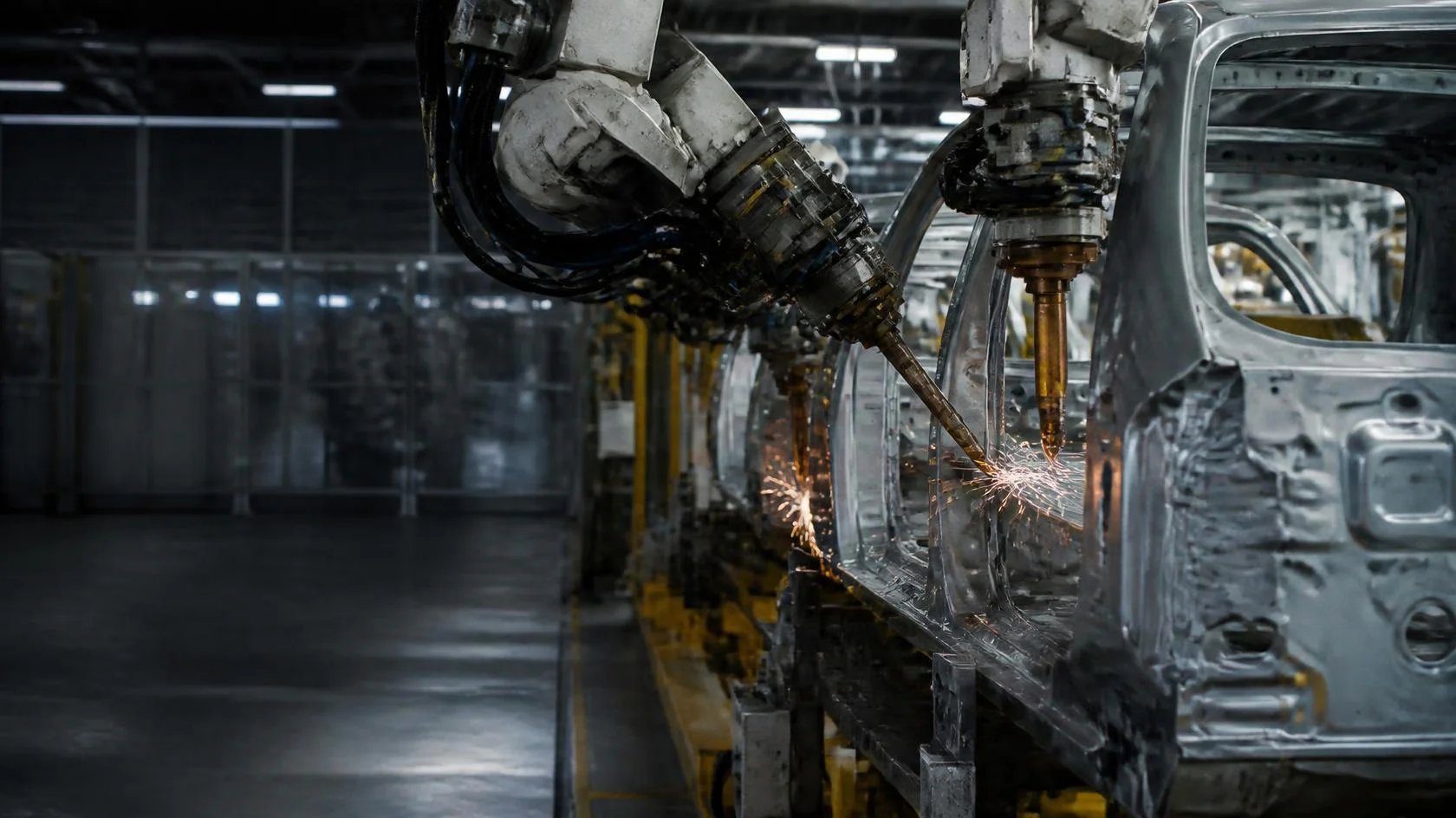
Today
Quality inferred from samples
- Destructive testing checks selected welds, not the full population.
- Fixed weld parameters provide the main process-quality reference.
- Expulsion and drift can stay hidden between teardown checks.

INSUS uses process signals your weld controllers already record to estimate nugget quality on every weld, track electrode cap condition and expulsion, and identify where destructive testing should focus. Advisory only. Quality and weld engineers keep acceptance authority.
01
Quality estimated from controller signals.
02
Electrode cap condition tracked between checks.
03
Destructive testing focused where risk is higher.
The problem
A resistance spot weld forms its nugget inside the sheet stack, so conventional verification relies on destructive testing of selected samples. Between those checks, quality is largely inferred from process parameters. Electrode wear, expulsion and material changes can introduce drift before the next teardown reveals it.
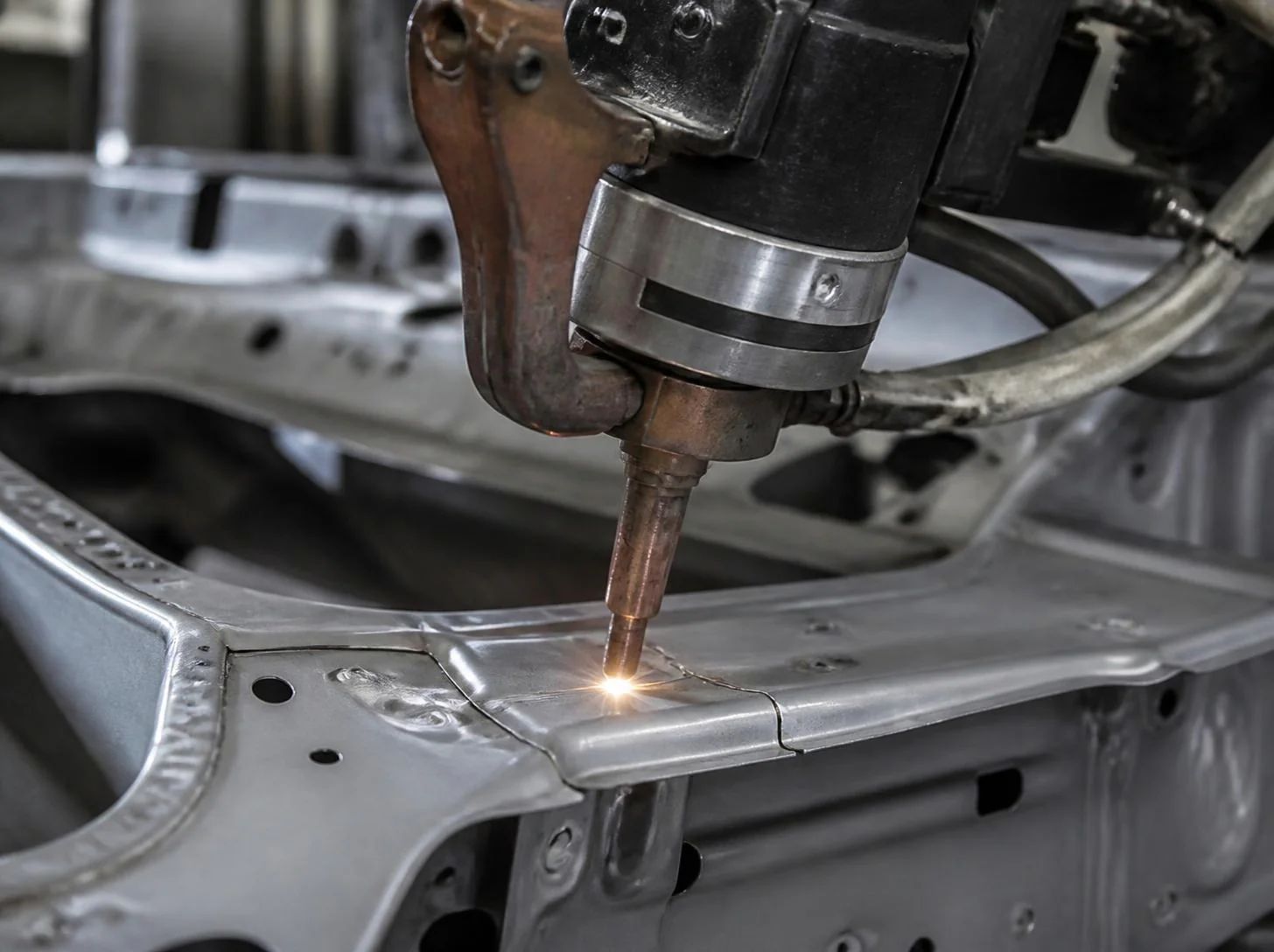
The shift
Destructive testing remains important. What changes is whether every weld between those samples is treated as an assumption or given a model-based quality estimate from signals the weld controller already captures.
Today
With INSUS
How it works
This fits OptiStudio as quality decision support above existing weld controllers. Access is read-only. It does not certify structural welds or automatically release or reject joints.
Connect
Connect per-weld controller data such as dynamic resistance, current, voltage, weld time, electrode force and displacement where available, together with weld schedule, gun, cap, robot-cell and material information.
Understand
Relate signal shapes to confirmed weld outcomes across the plant's own teardown history, accounting for joint, stack-up, steel grade, coating, gun and production context.
Predict
Generate a weld-level quality classification and a cap-condition trajectory for each gun, helping identify developing deviations before the next routine teardown.
Advise
Identify welds and joints moving outside their learned good region, detect expulsion events and attribute emerging patterns to the relevant gun, joint and material combination for quality review.
Verify
Compare model estimates against destructive tests that continue to be performed. Confirm whether the flagged population contains the failures found through physical verification.
Getting started
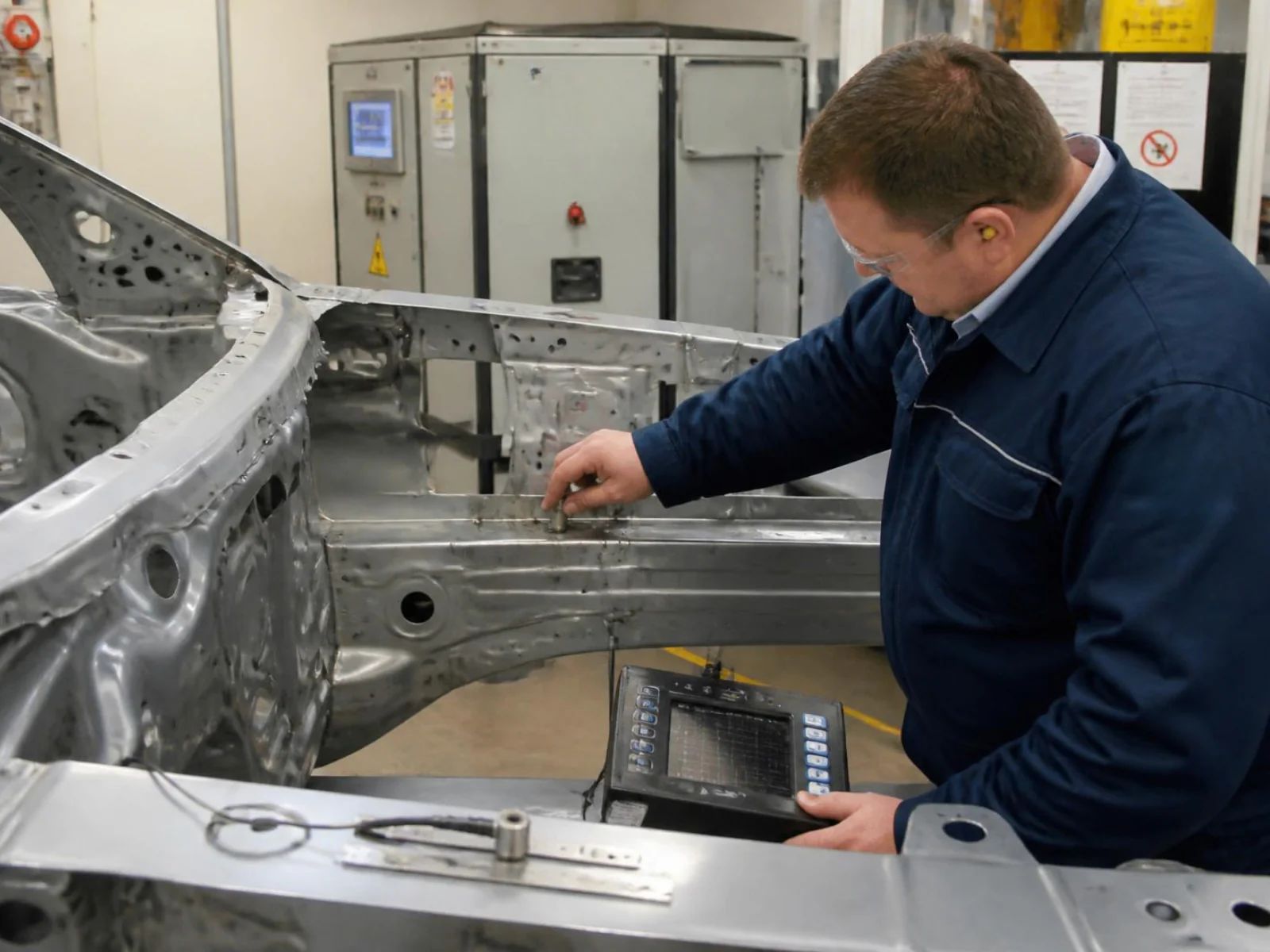
For body shops that already record weld-controller signals and teardown results. Delivered through OptiStudio as weld-level quality decision support. Expert Services can help with data assessment and back-test design. Advisory and read-only. No new sensors when controller signals already exist.
Related for automotive
Spot weld quality sits beside warranty early detection and line downtime knowledge on the same automotive plant.
The weld nugget sits inside the sheet stack, so most welds are never torn down. This use case estimates quality from controller signals between samples and helps focus destructive testing where modelled risk is higher.
Per-weld controller records, teardown and audit results, gun and cap identity, dressing history, and material, body, joint and stack-up information. No new sensors when those controller signals already exist.
No. Destructive testing remains the system of record for structural weld verification. The aim is to estimate the weld population between samples and help target future teardowns.
No. It is advisory quality intelligence. Quality and weld engineers retain authority over acceptance decisions.
Cap condition is modelled from signal drift with stroke, dressing and replacement history. Expulsion can be detected from the weld signal and trended by gun, joint and material combination.
Through OptiStudio as a read-only quality intelligence layer above existing weld controllers, MES and quality systems. Expert Services can support data assessment, back-testing and validation.
Models are gun-, joint- and material-specific. Prediction quality depends on teardown coverage and controller signal completeness. External research accuracy is not a guaranteed result for your line.
Automotive · Body-in-white quality
Use existing weld data and teardown history to estimate quality between destructive checks, identify cap-condition drift and understand where the next quality investigation should focus.