Today
Maintenance follows the schedule
- Equipment serviced by fixed calendar or run-hour intervals.
- Developing degradation hard to see between inspections.
- Temperature, pressure and current watched as separate alarms.

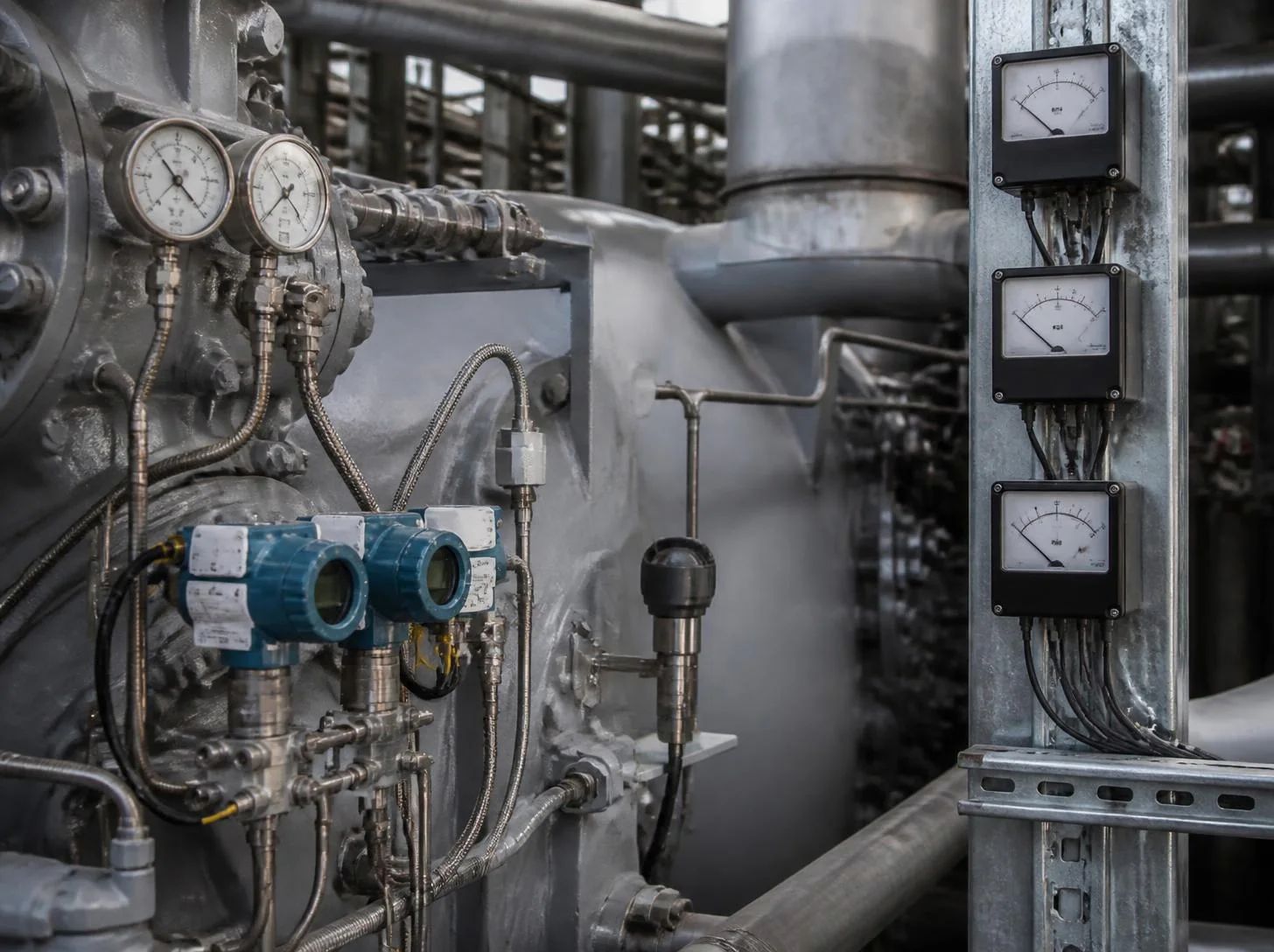
INSUS learns how temperature, pressure and electrical current move together on your compressor, then flags developing condition changes so reliability teams can investigate before degradation becomes unplanned downtime.
01
Condition predicted from operating signals.
02
Abnormal behaviour flagged earlier.
03
Advisory only. Maintenance stays yours to schedule.
The problem
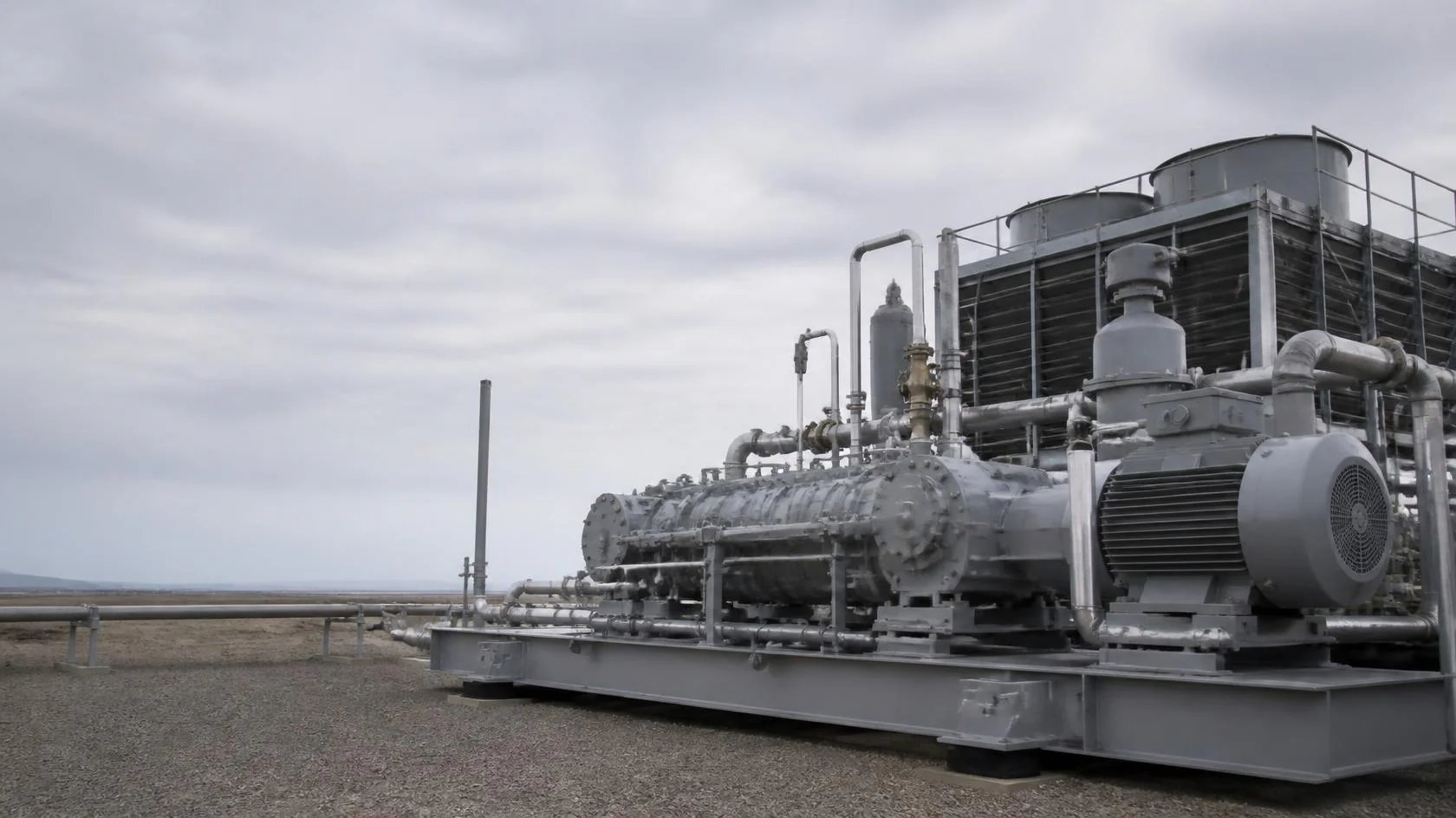
Compressors and shared rotating assets are often maintained by calendar or run-hour intervals, or repaired after failure. The machine already generates temperature, pressure and electrical-current signals that describe its changing condition. The gap is turning those signals into a condition view specific to that asset.
The shift
The opportunity is not to replace the maintenance team or the CMMS. It is to continuously interpret the process signals the machine already generates and give reliability teams a condition-based view for timing and priority.
Today
With INSUS
How it works
Delivered through Predictive Maintenance as decision support above existing SCADA and CMMS. Access is read-only. It does not trip machines or create work orders automatically.
Connect
Bring together temperature, compressor-stage pressures, electrical current, flow and existing SCADA or control-system data, alongside CMMS maintenance history for the asset.
Understand
Analyse the historical relationship between operating signals and confirmed maintenance findings, degradation events and failures for that specific equipment.
Predict
Predict compressor condition and developing-issue risk from the combined temperature, pressure and current signatures, using the equipment's own history as the reference.
Advise
Flag equipment showing elevated predicted risk and provide prioritisation guidance so reliability teams investigate the assets that warrant attention. Engineers decide.
Verify
Compare predictions with actual maintenance findings and failure events. Feedback helps refine the model around the equipment's own operating and maintenance history.

Getting started
For shared plant and industrial-operations compressors where temperature, pressure and current are already logged. Delivered through Predictive Maintenance as decision support. Expert Services can help with data assessment and validation. Advisory and read-only. No new sensors when coverage already exists.
Related for industrial operations
Compressor predictive maintenance sits beside heat exchanger fouling detection and Seveso III compliance on the same industrial-operations portfolio.
Compressors are often maintained by calendar or run-hour intervals while temperature, pressure and current already describe changing condition. This use case predicts developing risk for reliability engineer review.
Historical temperature, pressure, electrical current and flow, together with maintenance findings, failure events and downtime history. No new sensors when the compressor already captures those signals.
No. It is decision support. Reliability and maintenance engineers review predicted condition and prioritisation recommendations before taking action.
No. SCADA remains the control system and CMMS remains the system for maintenance records and work management. This use case uses that history in the feedback loop and adds predictive prioritisation.
Through Predictive Maintenance as decision support. Expert Services can support data assessment, integration and validation with your reliability team.
No fixed downtime reduction, component-life extension or prediction-accuracy figure is guaranteed. Published compressor studies belong to those assets. An INSUS deployment is validated against the customer's own equipment and baseline.
Assets without the required temperature, pressure and current coverage cannot be modelled in this scope. Predictions should be validated against maintenance findings before use as a production decision-support workflow.
Industrial Operations · Rotating equipment
A back-test on one critical compressor will turn temperature, pressure, current and maintenance history into a condition view, so reliability teams can investigate degradation before it becomes unplanned downtime.