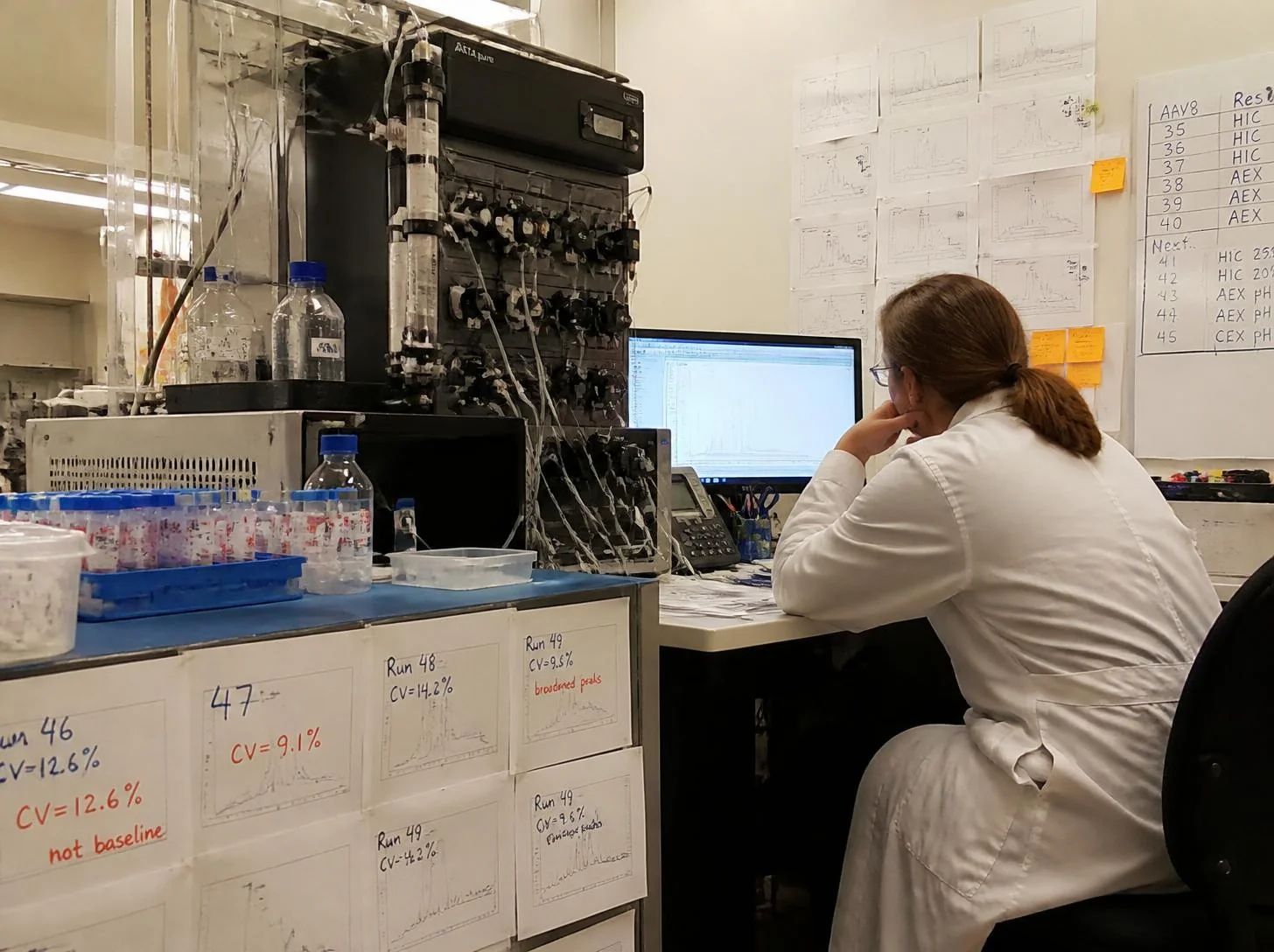
Hundreds of thousands of conditions.You only get to run a few.

AAV affinity purification depends on interacting parameters such as load volume, linear velocity, buffer pH and conductivity that create a design space too large to screen exhaustively. INSUS learns from runs you have already done, predicts recovery and purity for candidates and proposes which experiment to run next. Process development teams keep change control.

  • 01

    The goal is a strong condition in fewer runs.

  • 02

    Every completed experiment sharpens the next recommendation.

  • 03

    Scientists decide what gets run under existing change control.

The problem

A purification design spacetoo large to screen by hand.

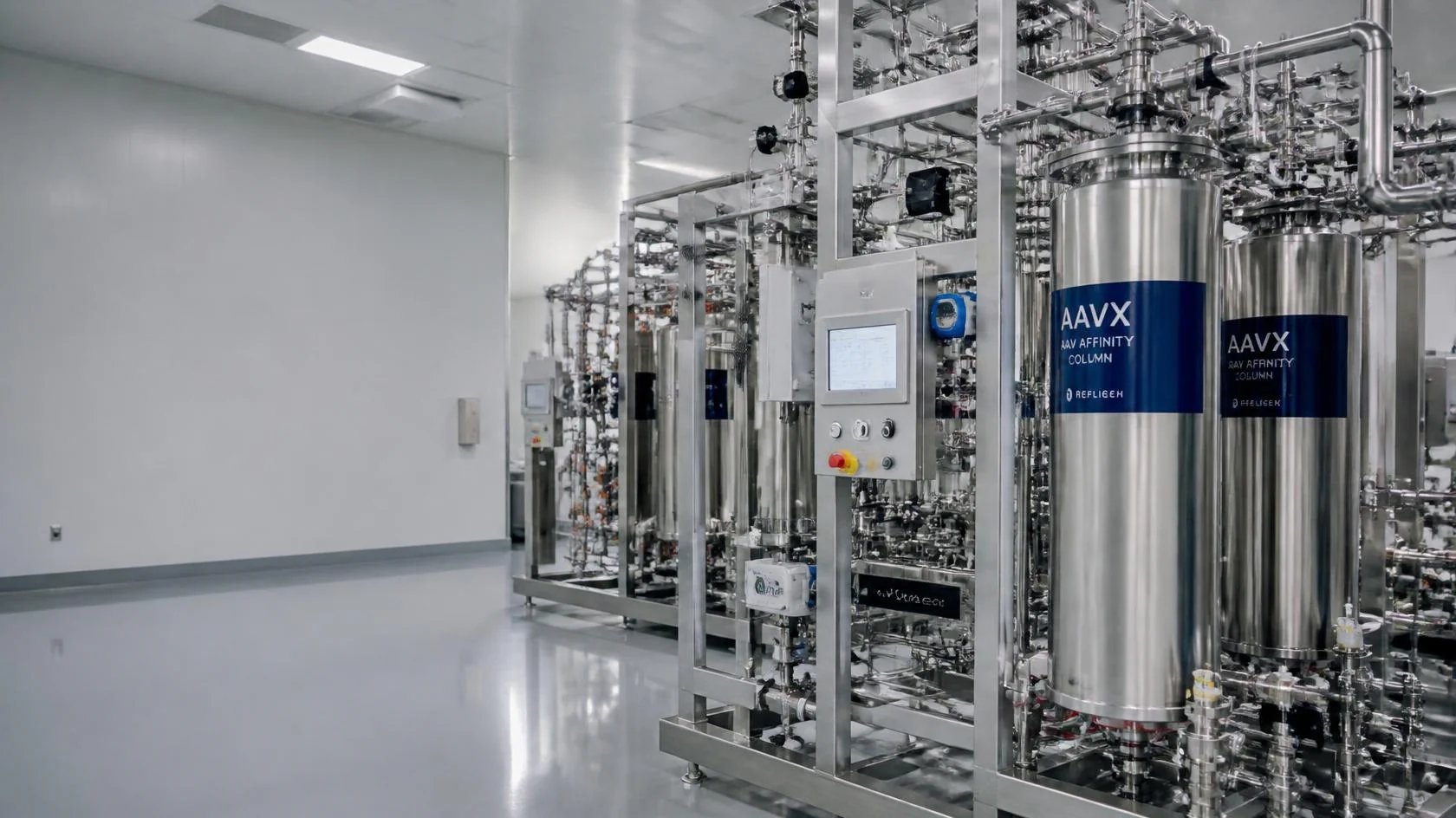
AAV affinity chromatography depends on parameters that interact: load volume, linear velocity during wash and elution, buffer pH and conductivity. With serotype-specific behaviour, the space cannot be explored exhaustively. Each run consumes material, column time and analytical capacity, and recovery and purity are known only when the run is finished. The constraint is how many experiments it takes to find a better operating region.

AAV purification parameter space narrowing toward higher recovery and purity
01
02
03
  • 01Load volume and velocity
  • 02Buffer pH and conductivity
  • 03Outcomes after the run

The shift

From screening the spaceto letting each run inform the next.

Every purification experiment you have already run is information. What changes is whether that history is used to choose the next one.

Today

Each experiment answers only for itself

  • Combinations are tested incrementally from experience and available capacity.
  • Large parts of the design space stay unexplored because testing is impractical.
  • Recovery and purity are known only once the experiment is complete.
With INSUS

Each experiment narrows the next

  • The model updates from every completed purification run.
  • Promising regions of the design space are identified rather than enumerated.
  • Recovery, purity and titer can be predicted before the next run is committed.

How it works

From purification historyto the next experiment worth running.

This fits OptiStudio as process development decision support beside existing chromatography workflows and LIMS. Access is read-only. The process development team decides which experiments are run.

  1. Connect

    Bring process parameters and QC results together

    Connect chromatography parameters such as load volume, linear velocity, buffer pH and conductivity with recovery, capsid titer and purity results, plus product and serotype context from existing workflows and LIMS or QC systems.

  2. Understand

    Learn how this process responds

    Learn how purification parameters have related to recovery, purity and titer across your experimental history, with product and serotype differences represented rather than averaged away.

  3. Predict

    Predict the outcome and the uncertainty

    Estimate likely recovery, purity and titer for candidate parameter combinations, together with uncertainty around each estimate, so the next experiment can balance promise and learning.

  4. Advise

    Propose the next experiment

    Propose the next experiment using optimization that weighs promising conditions against those that would teach the model the most. The team reviews each proposal and decides whether to run it.

  5. Verify

    Learn from the actual result

    Compare each result with what the model predicted and fold new data back in so recommendations become more specific to this product and process.

Chromatography and QC data feeding a purification optimization layer

Getting started

Start with one AAV productand the runs you already have.

For gene therapy process development teams with affinity purification and QC history. Delivered through OptiStudio as downstream decision support. Expert Services can help with data assessment and validation. Advisory and read-only. No new purification hardware.

  • What we need. Purification parameters such as load volume, linear velocity, buffer pH and conductivity, with matching recovery, capsid titer and purity results, plus serotype and product context from chromatography workflows and QC or LIMS systems.
  • What you see first. One AAV product or serotype: predicted versus actual outcomes on historical runs before any live experiment proposal enters your development workflow.
  • Where the limits are. The model depends on coverage of your experimental history. Products and serotypes generally need separate calibration. Nothing is written to chromatography systems. Regulated manufacturing changes follow your GMP and change-control requirements.
Explore OptiStudio

Questions process development teams ask us

AAV affinity purification has a large, interacting parameter space where each run is costly. This use case learns from prior runs and proposes which condition to test next for process-development review.

Purification parameters with matching recovery, capsid titer and purity results, plus product or serotype information. No new sensors when chromatography and QC workflows already capture those records.

It weighs predicted outcomes and uncertainty, favoring experiments that either move toward a better operating region or reduce uncertainty where the model knows least.

Yes, where enough process data exists. Each product or serotype generally needs its own calibration rather than assuming one model transfers unchanged.

No. It proposes experiments for the process development team. Nothing is written back to any system.

Through OptiStudio as process development decision support. Expert Services can support data assessment, integration and validation with your team.

Performance depends on experimental history and coverage. Published Bayesian optimization studies for AAV purification are not INSUS results for your product. Recovery and purity targets must still be confirmed by your own runs and QC.

Biotech · Downstream purification

Do not search the whole space. Learn from every experiment.

Start with one product or serotype and the purification history behind it. The useful first answer is what your existing runs already say about where the next one should be.