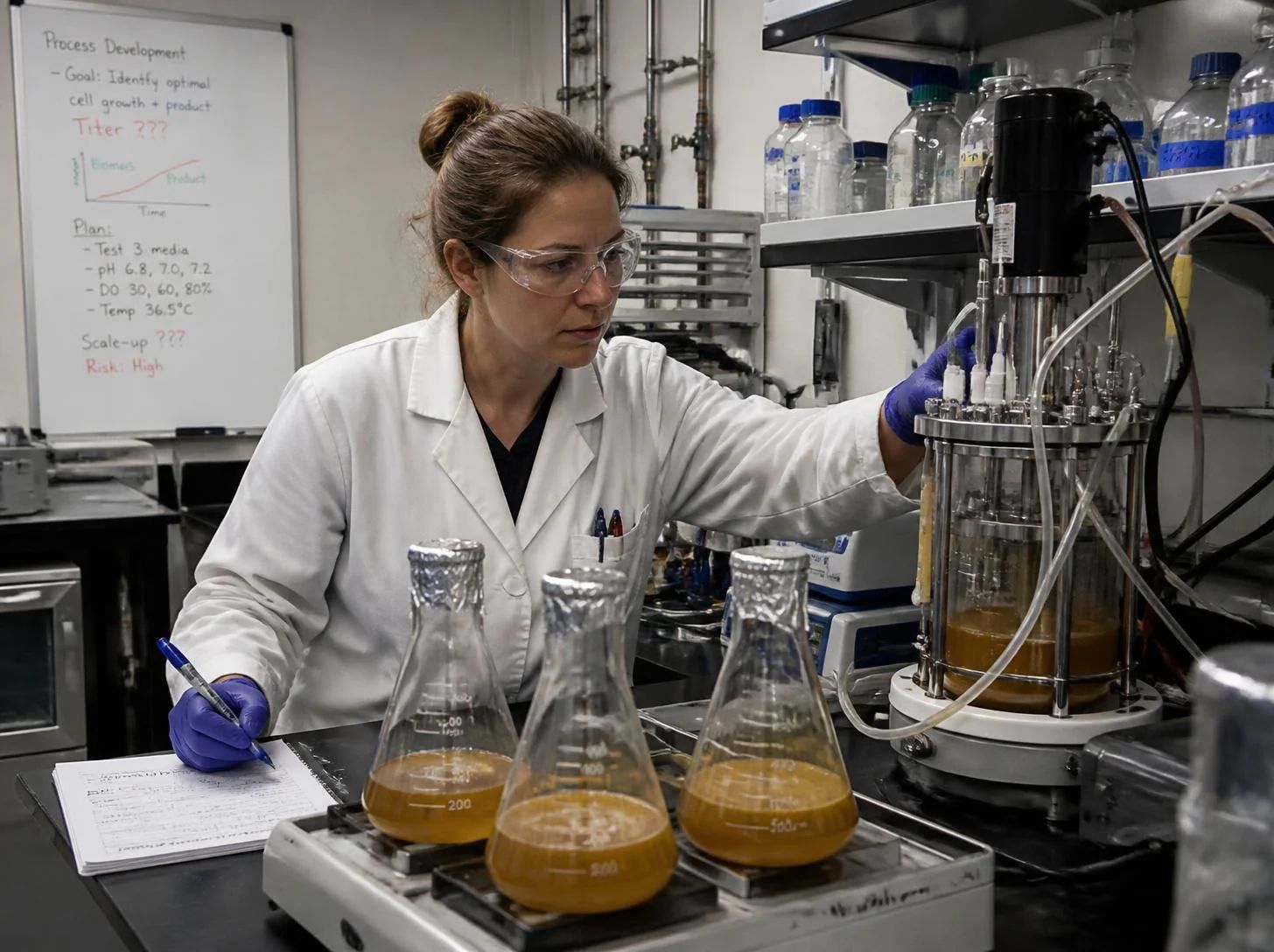
You cannot run every parameter combination.Predict which ones are worth running.

Titer in CHO cell culture depends on interacting parameters such as dissolved oxygen and pH setpoints, feed timing and seeding density, and each combination's effect is often known only after a full run. INSUS learns from your cultivation and QC data to predict titer before a run. Bioprocess teams keep change control.

  • 01

    Predictions come before bioreactor time is committed.

  • 02

    Read-only. Nothing is written to the control system.

  • 03

    Every recommended run stays a change-controlled decision.

The problem

Many interacting parameters,one titer outcome.

Final titer results from many parameters acting together. Dissolved oxygen and pH setpoints, pH shift timing, viable cell density, feed timing and glucose concentration can all matter, and they interact. Combinations multiply faster than design-of-experiments campaigns can cover, so suite capacity often goes to conditions tuned from experience while higher-titer settings are never systematically explored.

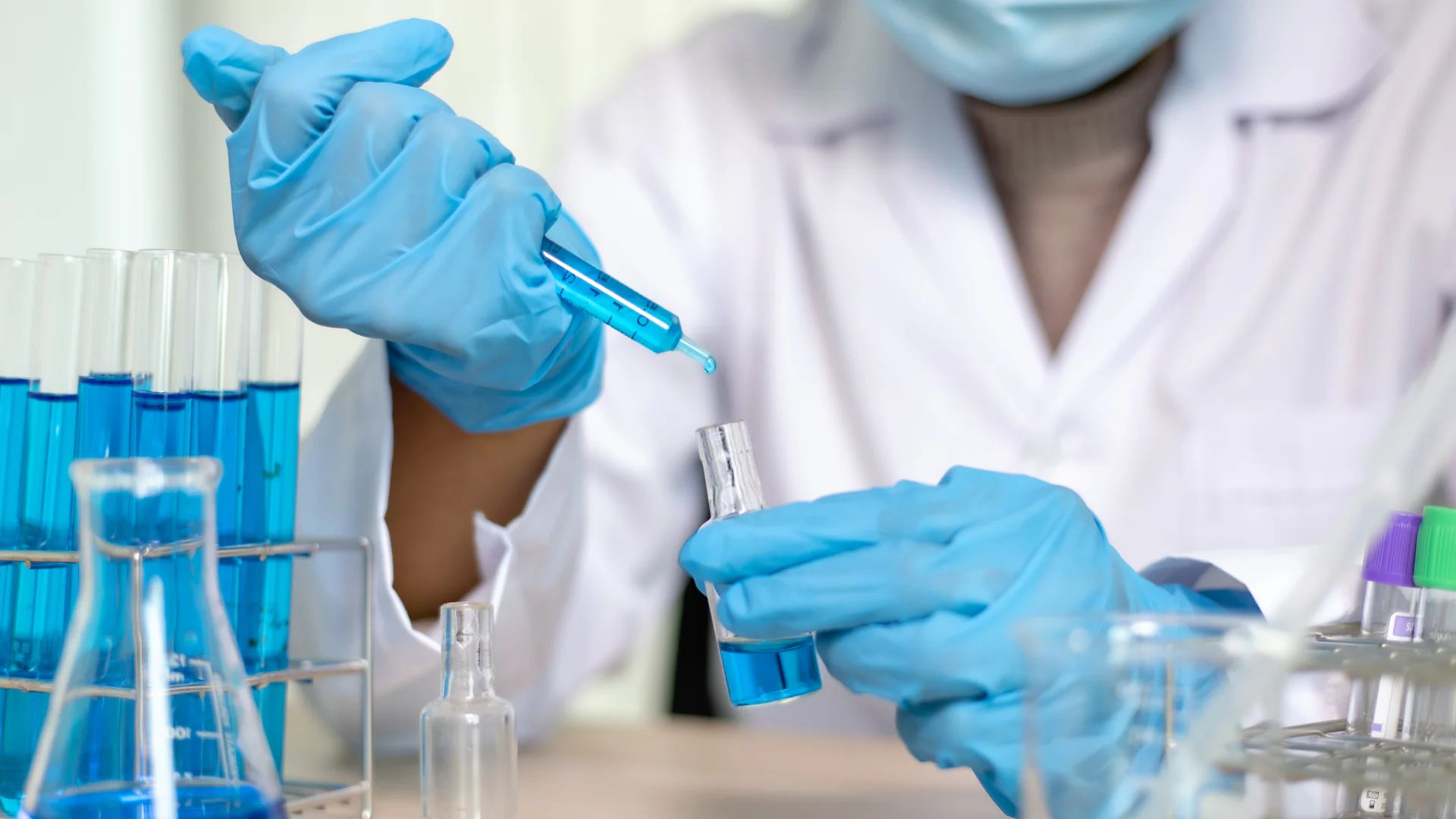
Bioprocess scientist reviewing predicted and measured titer results for cultivation runs
01
02
03
  • 01Predicted titer
  • 02Measured titer
  • 03Untested combinations

The shift

From screening one run at a timeto running the most promising ones.

Experiments stay essential and change control stays in place. What changes is which candidate conditions are scored before bioreactor time is committed.

Today

Titer effects discovered after the fact

  • Improving combinations are found through incremental experimental screening.
  • Testing outside explored ranges carries cost with little predictive guidance.
  • The outcome of a change is known only after a full cultivation run.
With INSUS

Candidate conditions ranked before the run

  • Likely titer is predicted for candidates before bioreactor time is committed.
  • Experimental runs can focus on the strongest predicted conditions.
  • Candidates beyond tested ranges are flagged as extrapolations to confirm.

How it works

From cultivation datato a titer prediction.

This fits OptiStudio as bioprocess decision support beside existing bioreactor control, batch records and LIMS. Access is read-only. The team decides what gets run.

  1. Connect

    Link bioreactor, batch record and QC data

    Connect read-only to the bioreactor control system and historian for DO, pH, feed timing and concentration and viable cell density; MES or batch records for process parameters; and LIMS titer and analytical results.

  2. Understand

    Find the parameters that drive titer here

    Analyze which parameters most influence final titer for this cell line and process, and how they interact, from your own development and manufacturing history.

  3. Predict

    Predict titer for a candidate combination

    Predict the likely final titer of a candidate parameter combination before the run. Candidates outside the training range are flagged as extrapolations for experimental confirmation.

  4. Advise

    Propose the next experiments to run

    Put forward parameter combinations expected to improve titer for review. Process development or manufacturing teams decide whether to run each one under existing change-control practice.

  5. Verify

    Compare every prediction with measured titer

    Compare predictions with actual titer from runs that are carried out, with other critical quality attributes tracked alongside, so the model can be refined for that cell line.

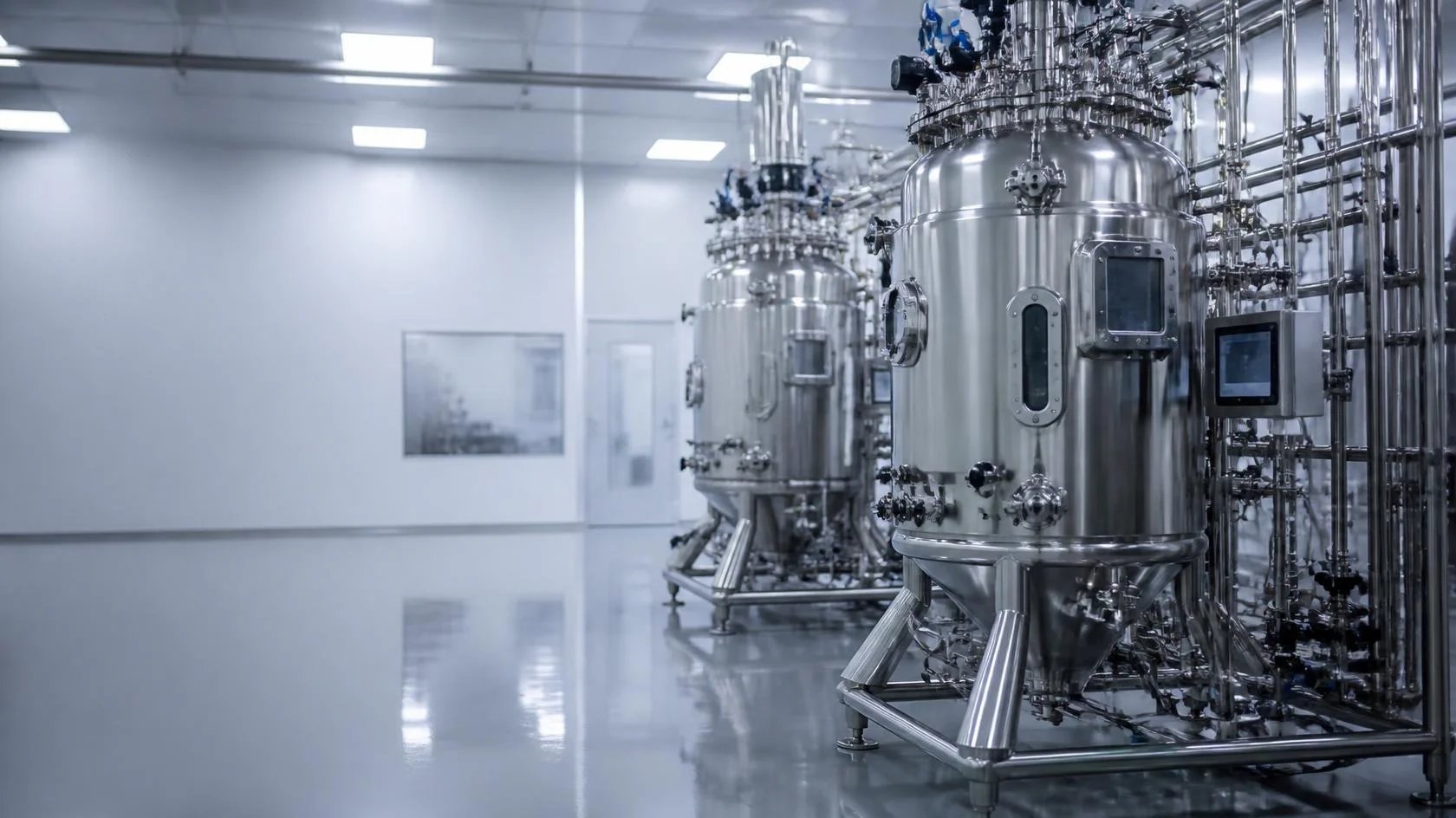
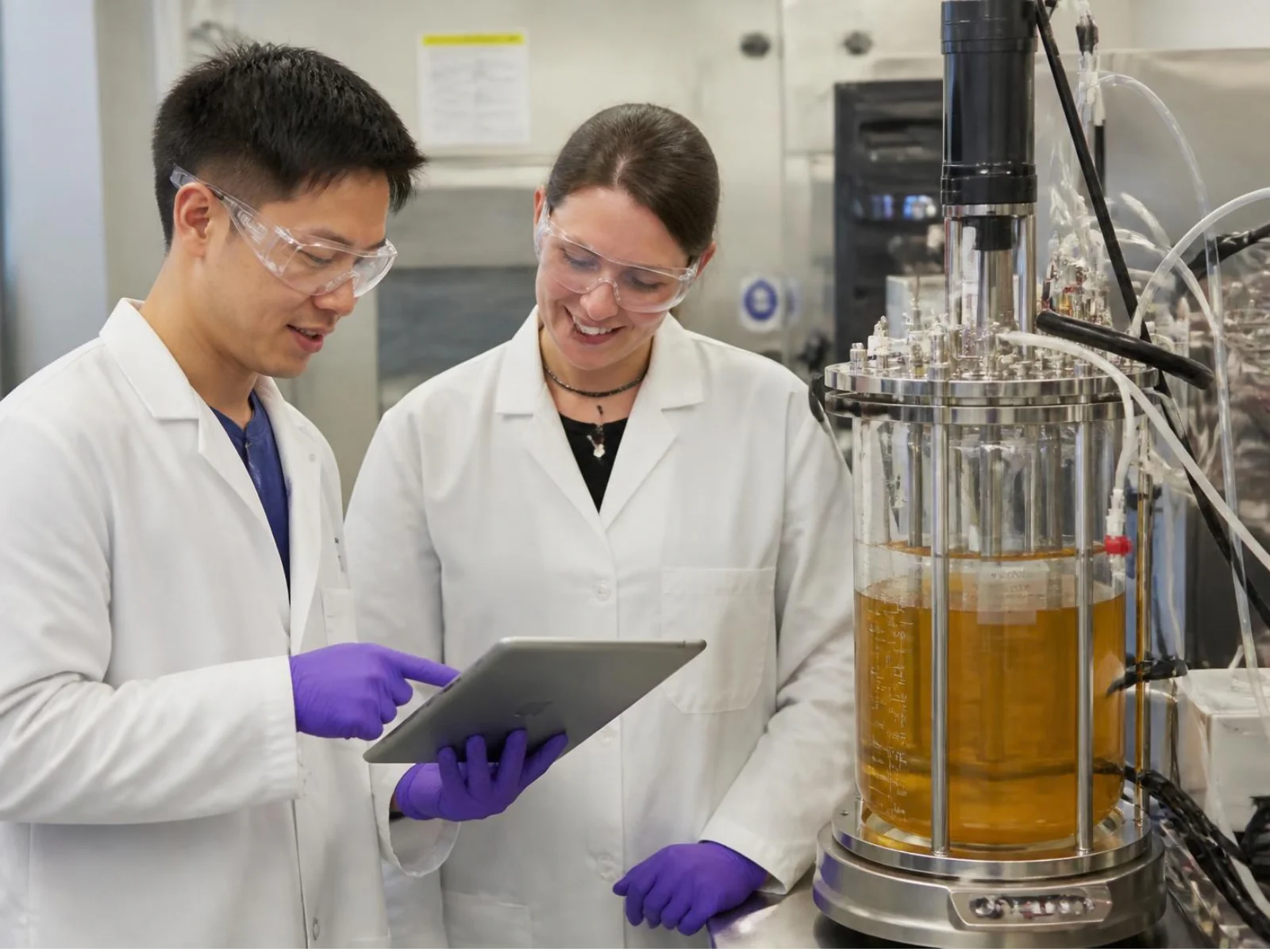
Biologics process development team reviewing cultivation data before a run

Getting started

Start with one cell lineand the runs you already have.

For bioprocess teams with CHO or similar cell culture history. Delivered through OptiStudio as upstream decision support. Expert Services can help with data assessment and validation. Advisory and read-only. Models are built for one cell line and process at a time.

  • What we need. Historical process parameters such as DO and pH setpoints, feed timing and concentration, viable cell density and process time, with matching titer and QC results from control, batch record and LIMS systems. Runs that vary parameters carry the most information.
  • What you see first. One cell line or product: predicted versus measured titer on historical runs before any live recommendation enters process development workflows.
  • Where the limits are. Accuracy is cell-line and process-specific. It predicts titer; other critical quality attributes must be assessed alongside any higher-titer condition. Closed-loop control is out of scope. GMP changes follow your validation and change-control requirements.
Explore OptiStudio

Questions bioprocess teams ask us

Titer depends on many interacting parameters, so full experimental screening is slow. This use case predicts likely titer for candidate combinations before a cultivation run for bioprocess-team review.

Historical bioreactor process parameters with corresponding titer and QC results across a representative range of conditions. No new hardware when control, batch record and LIMS data already exist.

No. The team reviews every proposed combination and decides whether to run it. Access to bioreactor control systems is read-only.

It can flag extrapolated candidates. Those are hypotheses to confirm experimentally, not settings to adopt without runs and QC review.

Parameter changes remain human and change-controlled decisions. Any change affecting GMP manufacturing follows your validation and change-control requirements.

Through OptiStudio as bioprocess decision support. Expert Services can support data assessment, integration and validation with your development team.

Performance depends on enough parameter variation in historical runs. Published cultivation modeling studies are not INSUS results for your cell line. Other critical quality attributes must be assessed alongside titer.

Biotech · Upstream cell culture

Know which run is worth doing before you commit the bioreactor.

Start with a data assessment on one cell line: whether your process and titer records span enough parameter variation to predict from, and what the model would have said about runs you have already done.