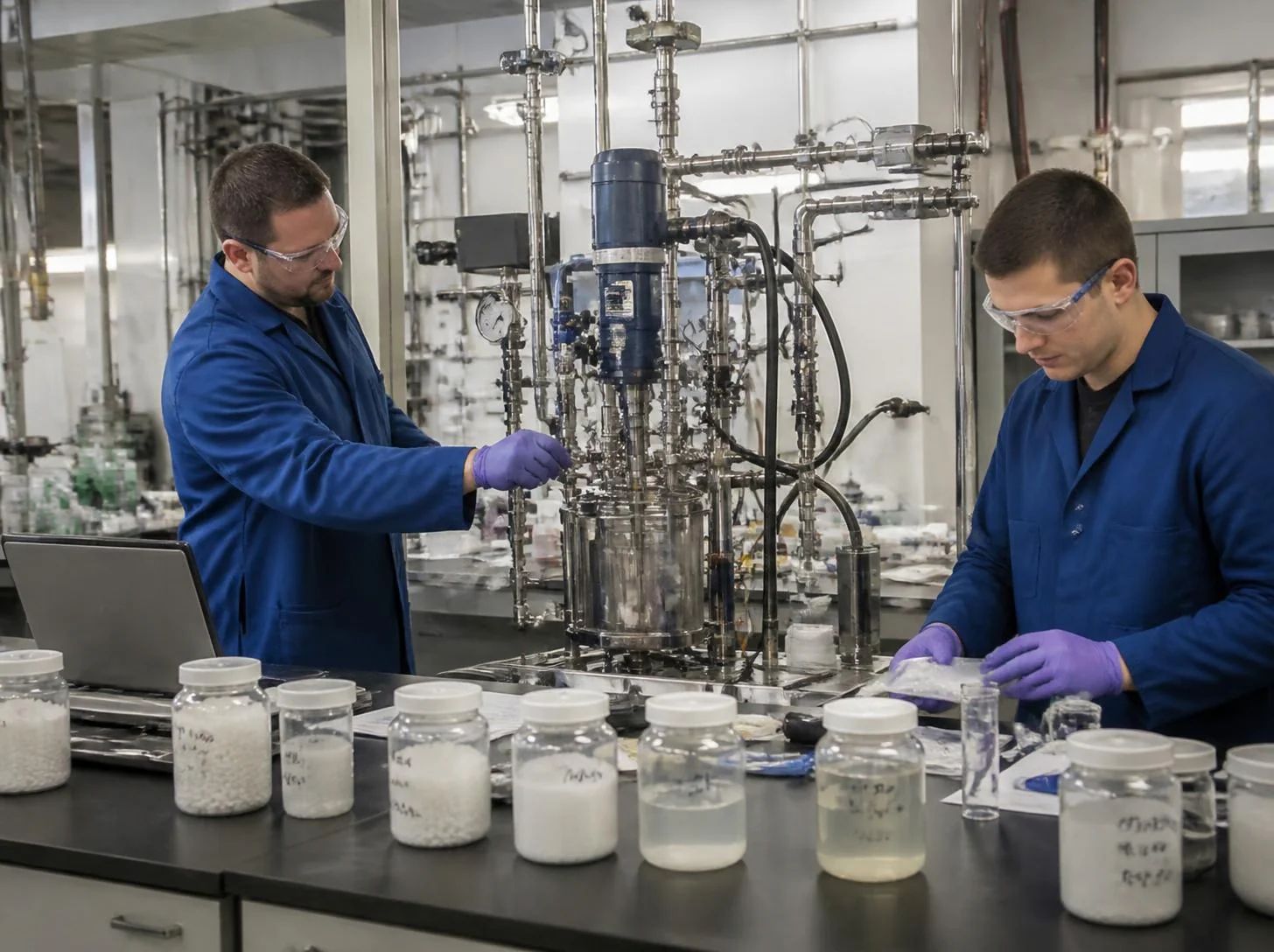
Start with the polymer property.Then find the process parameters.

INSUS models the relationship between polymerization conditions and product properties from your own reactor and lab history, then works backwards from the molecular weight and polydispersity you need to candidate conditions that could reach them. Process teams keep the decision.

  • 01

    Target-first: the property comes before the parameter.

  • 02

    Trade-offs with reaction time are shown, not hidden.

  • 03

    Calibrated to one catalyst system and process at a time.

The problem

Hitting a target propertystill takes iteration.

Molecular weight, polydispersity and reaction time are influenced by polymerization parameters that act together: monomer-to-catalyst ratio, co-catalyst ratio, temperature and time. When a specification changes, process teams often adjust one variable at a time across successive batches. Each trial costs reactor time and material, and a target outside recent history usually means another process-development round rather than a search through what the plant already knows.

Molecular weight and polydispersity trade-offs across polymerization conditions
01
02
03
  • 01Molecular weight target
  • 02Polydispersity target
  • 03Trade-off with reaction time

The shift

From adjust and testto starting from the target.

Process and formulation teams stay responsible for every operating condition. What changes is whether candidate parameters associated with the required molecular weight and PDI are visible before another trial batch is committed.

Today

The target is approached one batch at a time

  • New targets require repeated batch-to-batch parameter adjustment.
  • Individual variables are changed from experience and recent results.
  • Trade-offs between molecular weight, PDI and reaction time stay implicit.
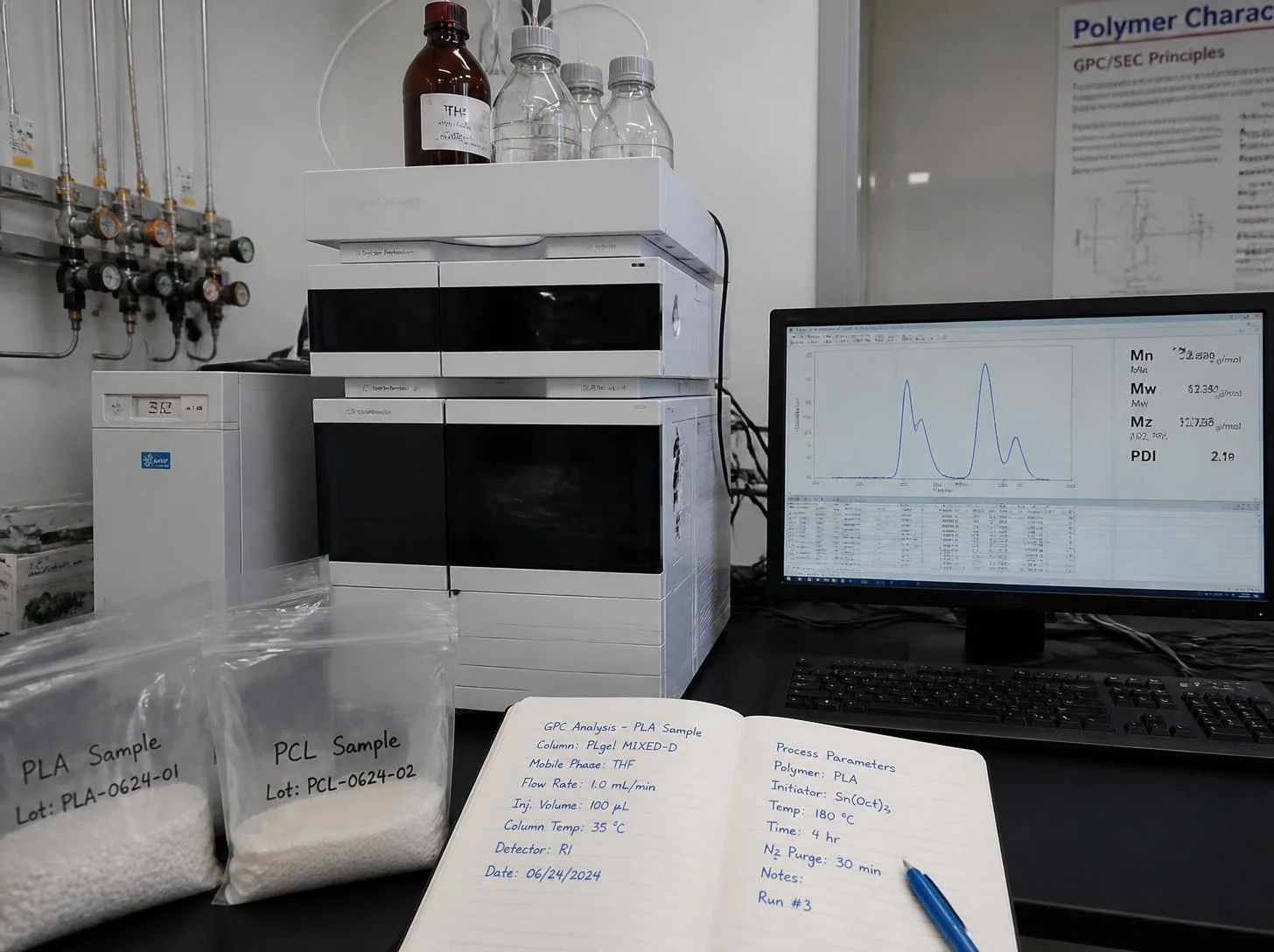
With INSUS

The property is specified before the conditions

  • Target molecular weight and PDI are specified before conditions are chosen.
  • Parameter combinations associated with that target region are identified.
  • Competing property and cycle-time objectives are shown as explicit trade-offs.

How it works

From process historyto a target-property parameter set.

This fits OptiStudio as process and quality decision support beside existing polymer synthesis workflows. Access is read-only. It does not write setpoints to the reactor control system.

  1. Connect

    Bring process and QC data together

    Connect reactor process parameters such as monomer-to-catalyst ratio, co-catalyst ratio, reaction temperature and time with the molecular weight and PDI results they produced, plus catalyst system information from existing DCS/SCADA, historian and laboratory QC systems.

  2. Understand

    Learn the process-to-property relationship

    Analyze historical batches to establish how parameters have influenced molecular weight and polydispersity for this reactor and this catalyst and co-catalyst system.

  3. Predict

    Predict the result before the batch

    For candidate conditions, estimate the expected molecular weight, PDI and reaction time before the process team commits reactor time to them.

  4. Advise

    Find the parameters for the target

    Identify candidate parameter combinations for the desired molecular weight and PDI, presenting trade-offs against reaction time so the team can choose the operating compromise.

  5. Verify

    Compare prediction with the actual batch

    Compare predicted molecular weight and PDI with laboratory results from the batches that are run, and feed new results back so calibration improves against this plant's own process.

Reactor, historian and laboratory QC data feeding a process-property model

Getting started

Start with one catalyst systemand the batch history you already keep.

For specialty polymer operations that already collect reactor parameters and laboratory property results. Delivered through OptiStudio as polymerization decision support. Expert Services can help with data assessment and validation. Advisory and read-only. No new reactor hardware.

  • What we need. Historical reactor process parameters with matching molecular weight and PDI measurements, catalyst and co-catalyst information, and the target specifications that define the property region.
  • What you see first. One catalyst and co-catalyst system: predictions compared with historical batch results before any live recommendation enters the process-development workflow.
  • Where the limits are. The model is specific to the available data, reactor and catalyst system. A relationship learned for one polymer chemistry should not be assumed to transfer to another. It does not replace laboratory characterization.
Explore OptiStudio

Questions polymer and process teams ask us

Hitting a new molecular weight and PDI target often means iterative trial batches. This use case predicts property outcomes and recommends candidate process conditions for process-team review.

Historical reactor process parameters with matching laboratory molecular weight and PDI measurements, plus catalyst and co-catalyst information. No new sensors when those records already exist.

No. It provides candidate conditions for process and formulation teams to evaluate. Nothing is written to the reactor control system.

Parameters such as monomer-to-catalyst ratio, co-catalyst-to-catalyst ratio, reaction temperature and reaction time, subject to available data and process constraints.

Yes, where sufficient process and QC data exists. A relationship learned for one catalyst system should not be assumed to apply to another.

Through OptiStudio as process and quality decision support. Expert Services can support data assessment, integration and validation with your polymer process team.

Performance depends on reliable process and laboratory history. Recommendations are reactor-, catalyst- and chemistry-specific. Published multi-objective polymerization studies are not INSUS results for your plant.

Specialty chemicals · Polymer synthesis

Start with the property, not the next parameter to adjust.

Start with one catalyst system and the batch history behind it. The useful first answer is how well your own records already predict the properties they produced.