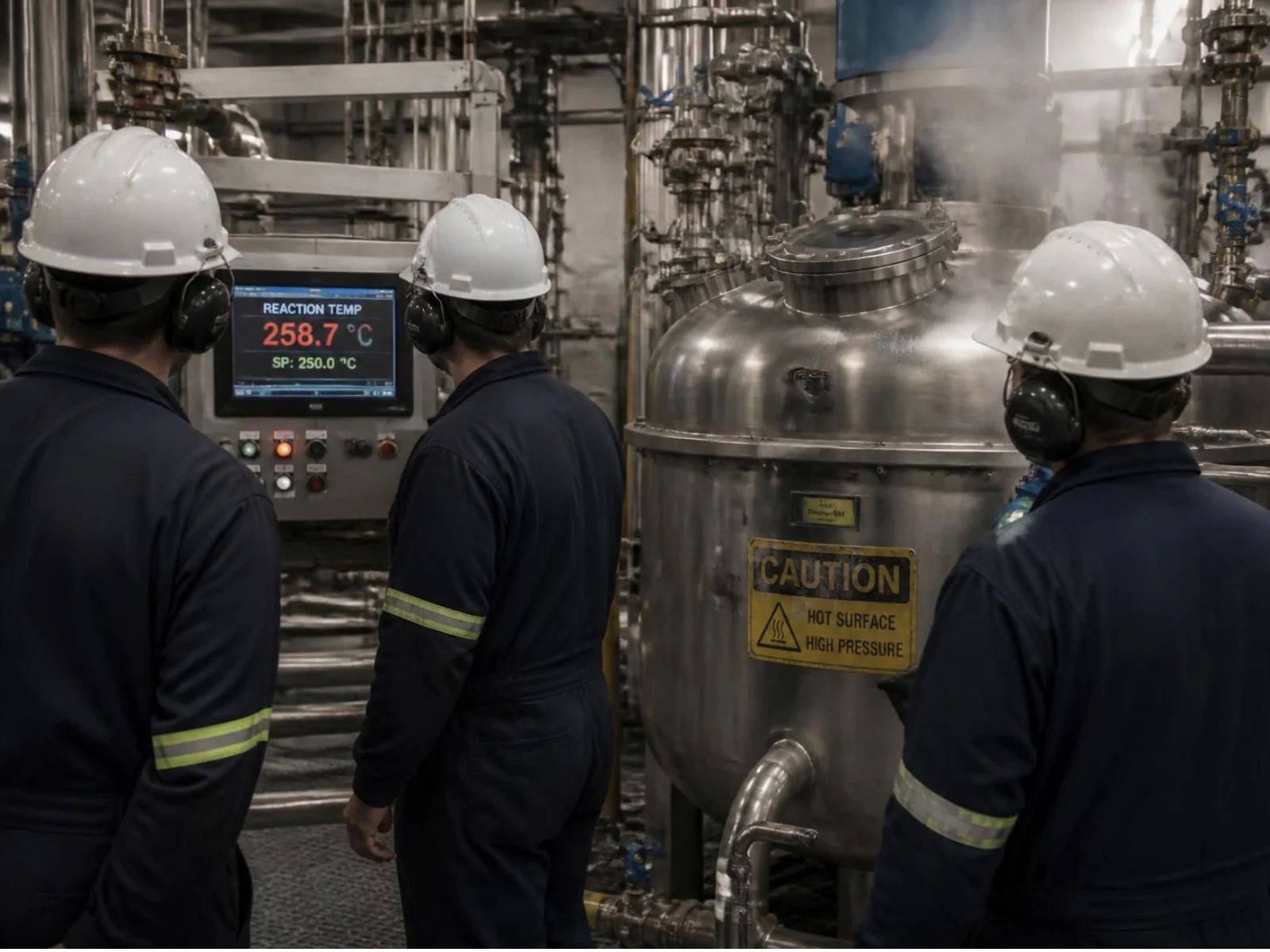
A reactor can look normaland still be operating close to runaway.

INSUS computes dimensionless safety parameters from live process data and the reaction's characterised kinetics, and classifies whether current conditions carry elevated thermal runaway risk. Operations and safety teams keep the decision. No control authority.

  • 01

    Monitoring and alerting only. Read-only, with no write access.

  • 02

    Interlocks, relief systems and PSM stay exactly as they are.

  • 03

    Every flag names the parameters driving it.

The problem

A known hazard,judged against fixed margins.

Thermal runaway is a well-documented hazard in batch and semi-batch reactors, including polymerisation. Risk depends on interacting thermal and kinetic factors that process safety engineers capture in dimensionless parameters such as the Semenov, Damköhler and Stanton numbers. Those parameters are used in design, but during operation safety often still rests on margins fixed at that stage. Elevated risk is typically seen only once temperature or pressure trends already look abnormal.

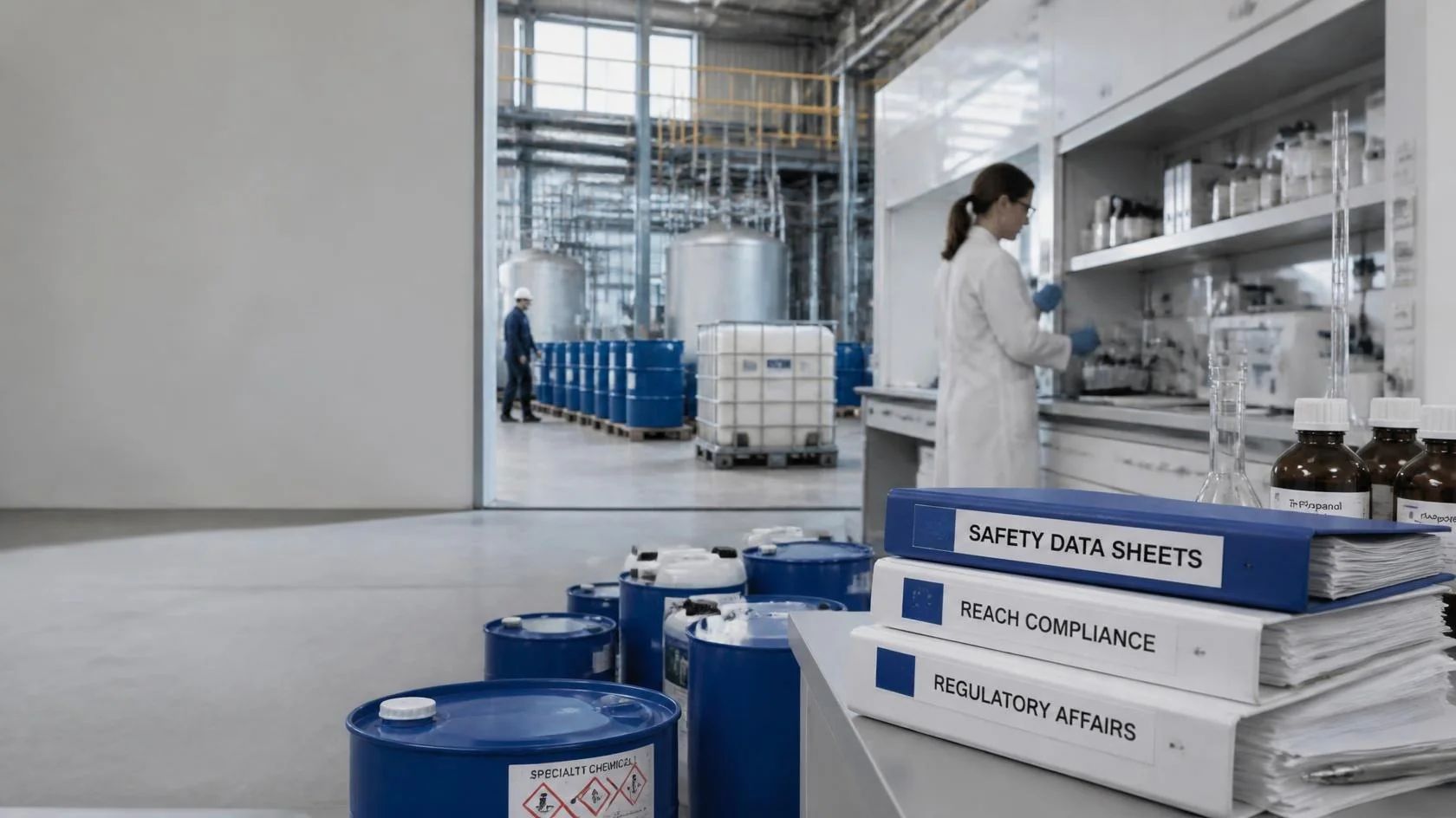
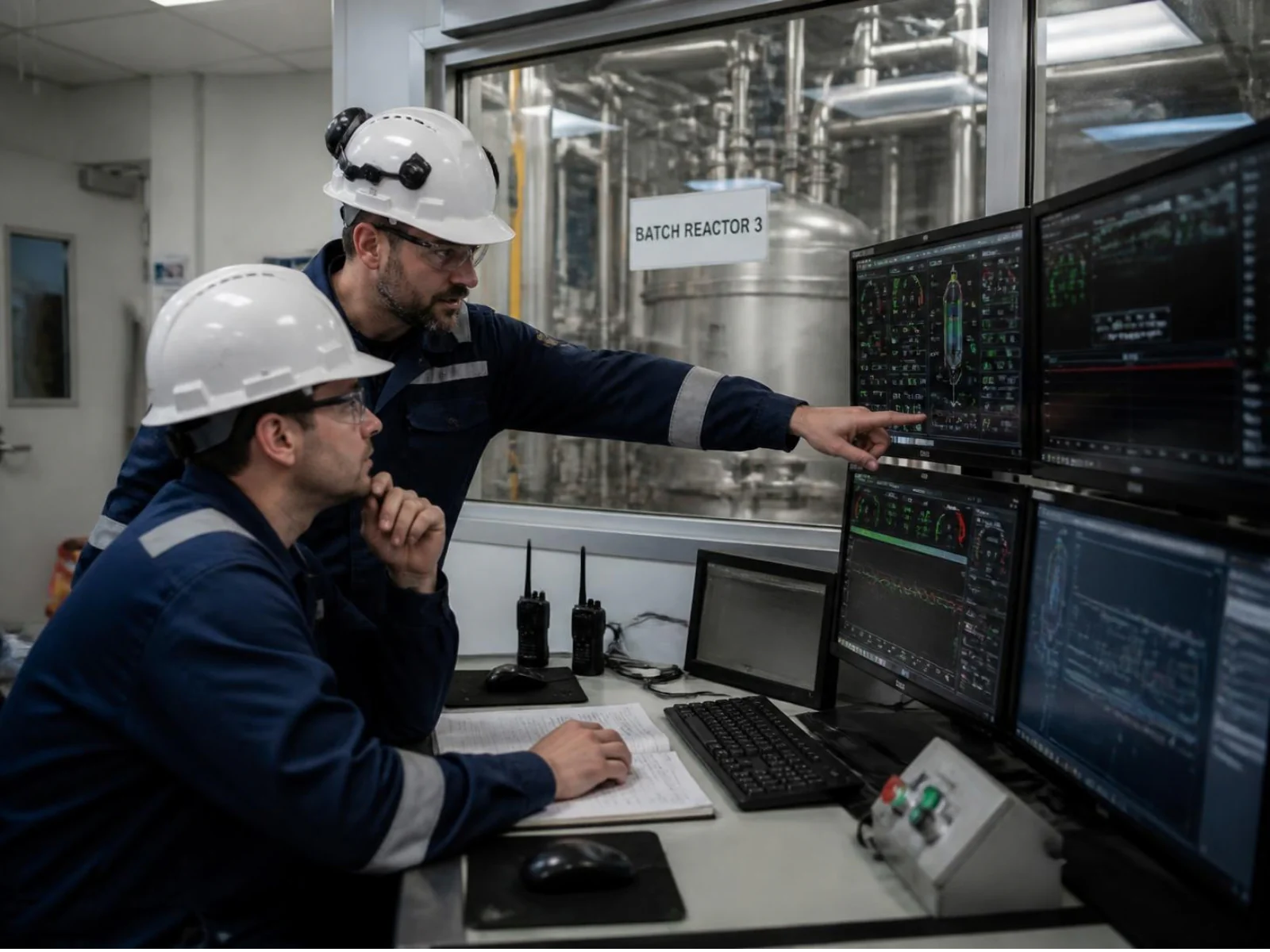
Process safety engineer reviewing reactor conditions against dimensionless safety parameters
01
02
03
  • 01Temperature still in band
  • 02Semenov / Damköhler shifting
  • 03Operating point near elevated risk

The shift

From fixed design marginsto a live read on runaway risk.

Interlocks, relief systems and process safety management stay exactly as they are. What changes is whether the team gets a continuous, explained risk classification alongside them.

Today

Risk judged against limits set years ago

  • Safety rests mainly on margins and setpoints fixed at the design stage.
  • Elevated risk is identified once temperature or pressure trends look abnormal.
  • Dimensionless safety parameters are used in design, not tracked in operation.
With INSUS

Risk classified continuously, with the reason shown

  • Risk is classified from live process data and dimensionless safety parameters.
  • Elevated conditions can be flagged for review before visible runaway symptoms.
  • Flagged and near-miss conditions can be logged to refine detection for this reactor.

How it works

From reactor data and reaction characterisationto a risk classification.

This fits OptiStudio as a monitoring and decision-support layer beside existing process safety systems. Access is read-only. Every flag goes to people who decide the response under existing PSM.

  1. Connect

    Link reactor data and reaction characterisation

    Connect read-only to the reactor DCS or SCADA and process historian for temperature, pressure, feed rate and composition, together with kinetic and thermodynamic characterisation where it exists, and near-miss or incident records.

  2. Understand

    Compute the safety parameters continuously

    Compute dimensionless activation energy, Semenov number, heat of reaction, Damköhler number and Stanton number from live process data and the reaction characterisation for this reactor and reaction system.

  3. Predict

    Classify conditions as elevated risk or stable

    Classify the current operating condition in the reaction's runaway-prone or stable region. For safety classification, miss rate matters more than headline accuracy, and results must be validated on this plant's data.

  4. Advise

    Alert the team, with the driving parameters shown

    When a condition classifies as elevated risk, the operations and safety team receives an alert naming which parameters are driving it. They review it and decide the response. The reactor is not adjusted.

  5. Verify

    Check classifications against real outcomes

    Compare classifications with actual operating history and near-miss or incident records so accuracy and miss rate can be tracked and the model refined for this reactor and reaction system.

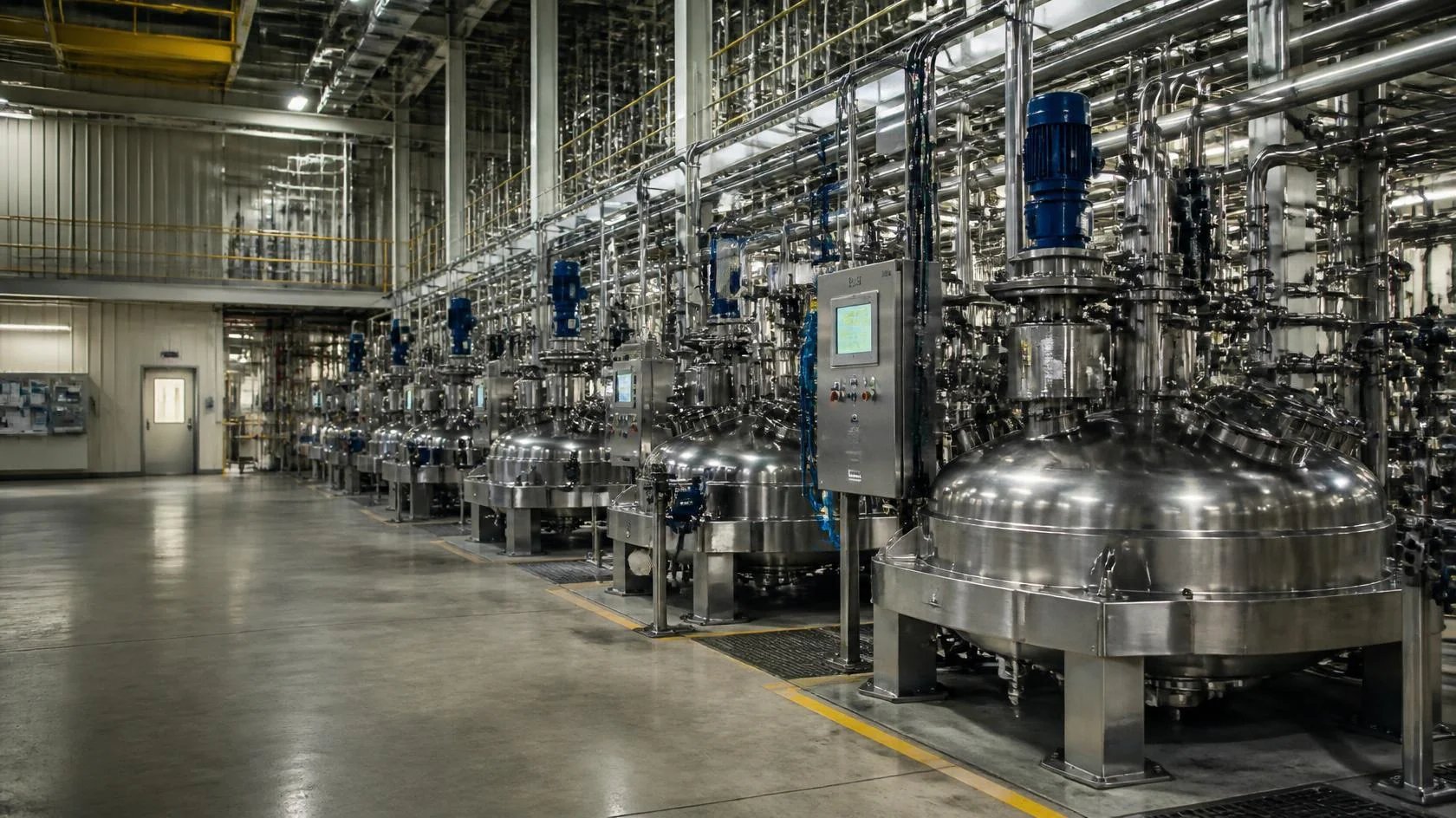
Reactor and historian data feeding a monitoring layer alongside unchanged interlocks and relief systems

Getting started

Start with one reactoras a monitoring layer only.

For specialty-chemical operations with characterised batch or semi-batch reactions. Delivered through OptiStudio as reactor-safety decision support. Expert Services can help with data assessment and validation. Monitoring and alerting only. Read-only. No control authority.

  • What we need. Historical and live reactor temperature, pressure, feed rate and composition data, plus kinetic and thermodynamic characterisation sufficient to compute the dimensionless parameters. Near-miss and incident logs strengthen validation. No new reactor hardware.
  • What you see first. One batch or semi-batch reactor and reaction system, running classification alongside existing safety monitoring, with accuracy and miss rate reported against that plant's history.
  • Where the limits are. Without enough reaction characterisation, the approach cannot be applied. Accuracy is reactor- and reaction-specific. No write access to the DCS. Closed-loop control is out of scope. Not part of protective or safety instrumented systems.
Explore OptiStudio

Questions process safety teams ask us

Thermal runaway risk is often judged against fixed design margins. This use case classifies elevated risk from live process data and dimensionless safety parameters so operations and safety teams can review conditions earlier.

Historical and live reactor temperature, pressure, feed rate and composition, plus kinetic and thermodynamic characterisation sufficient to compute the parameters. Near-miss logs help validation. No new sensors when that data already exists.

No. It classifies and alerts. Any resulting adjustment is a human operations or safety decision. Access is read-only, with no control authority.

No. It is a monitoring layer alongside existing process safety management. PSM, relief systems and interlocks are unchanged. It is not part of protective or safety instrumented systems.

A 2025 peer-reviewed study in Industrial & Engineering Chemistry Research classified runaway risk from dimensionless safety parameters for specific batch and packed-bed systems. Those published results are not INSUS results and do not transfer automatically to your reactor without plant-specific validation.

Through OptiStudio as monitoring and decision support. Expert Services can support data assessment, characterisation readiness and validation with your process safety team.

Without enough reaction characterisation, the approach cannot be applied. Accuracy is reactor- and reaction-specific. The system does not forecast time to runaway and does not write to the DCS.

Specialty chemicals · Reactor safety

A second read on runaway risk, explained by what is driving it.

Start with a data assessment on one reactor and reaction system: whether your process data and characterisation support computing the parameters, and what they would have said about conditions you have already run.