The Candidate List keeps growing.Your formulations have to keep up.

INSUS compares your formulation data against the current REACH SVHC Candidate List, flags the threshold crossings that matter and maps each finding to the obligation it triggers. Compliance teams keep every determination and communication.

  • 01

    Screening runs against the current list, not last review's copy.

  • 02

    It screens composition data. It performs no chemical analysis.

  • 03

    Compliance owns every determination and every communication.

The problem

A moving regulatory target,tracked across every formulation.

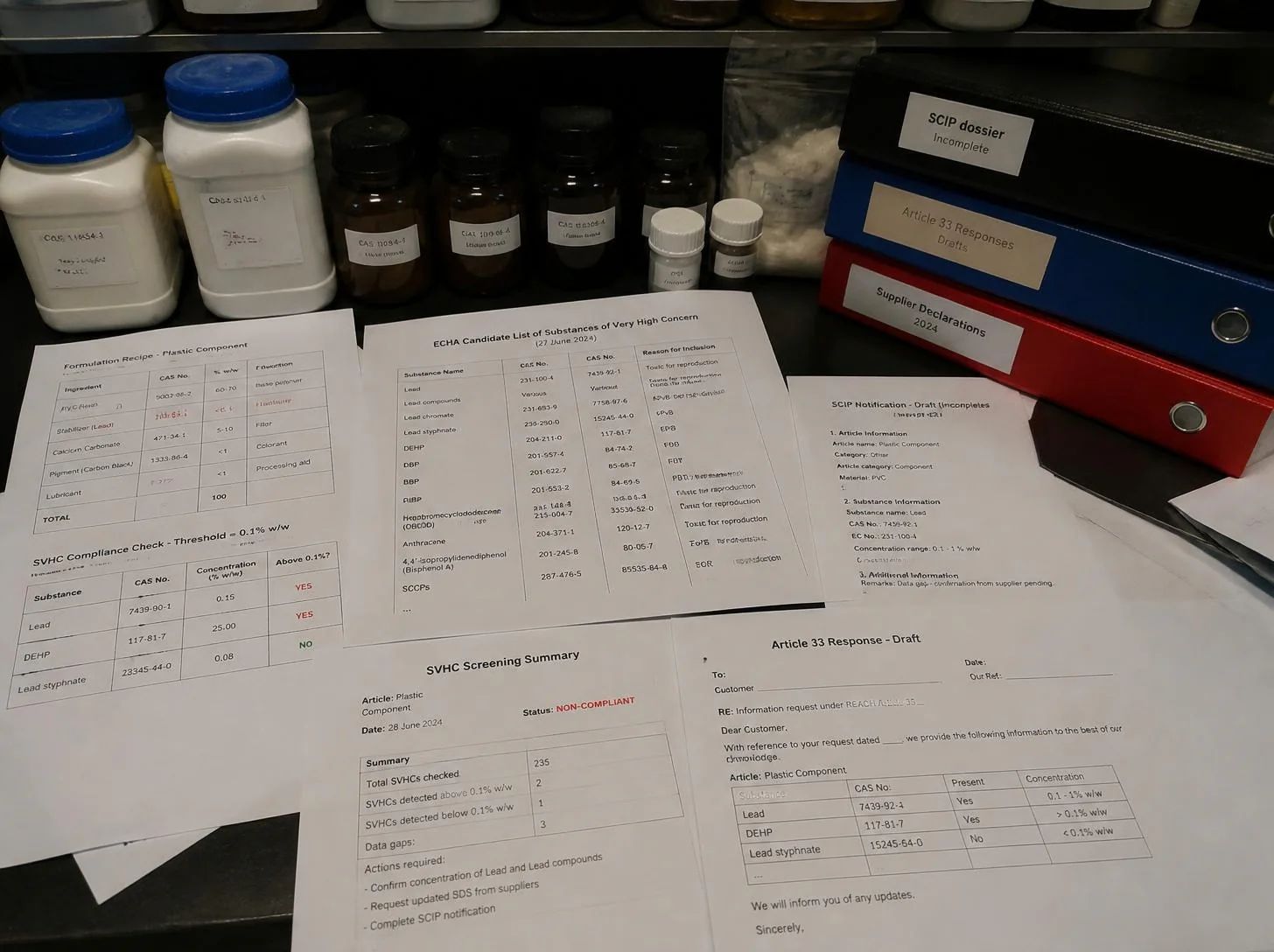
SVHC compliance is not a one-time screen. The Candidate List is updated periodically, and each addition can require reassessment of formulations and articles that already passed review against the 0.1% w/w threshold that governs Article 33 communication, and against Article 7(2) and SCIP obligations that can follow. Across a large portfolio, that work is often manual and delayed until the next compliance review, while a customer inquiry can still trigger urgent data gathering.

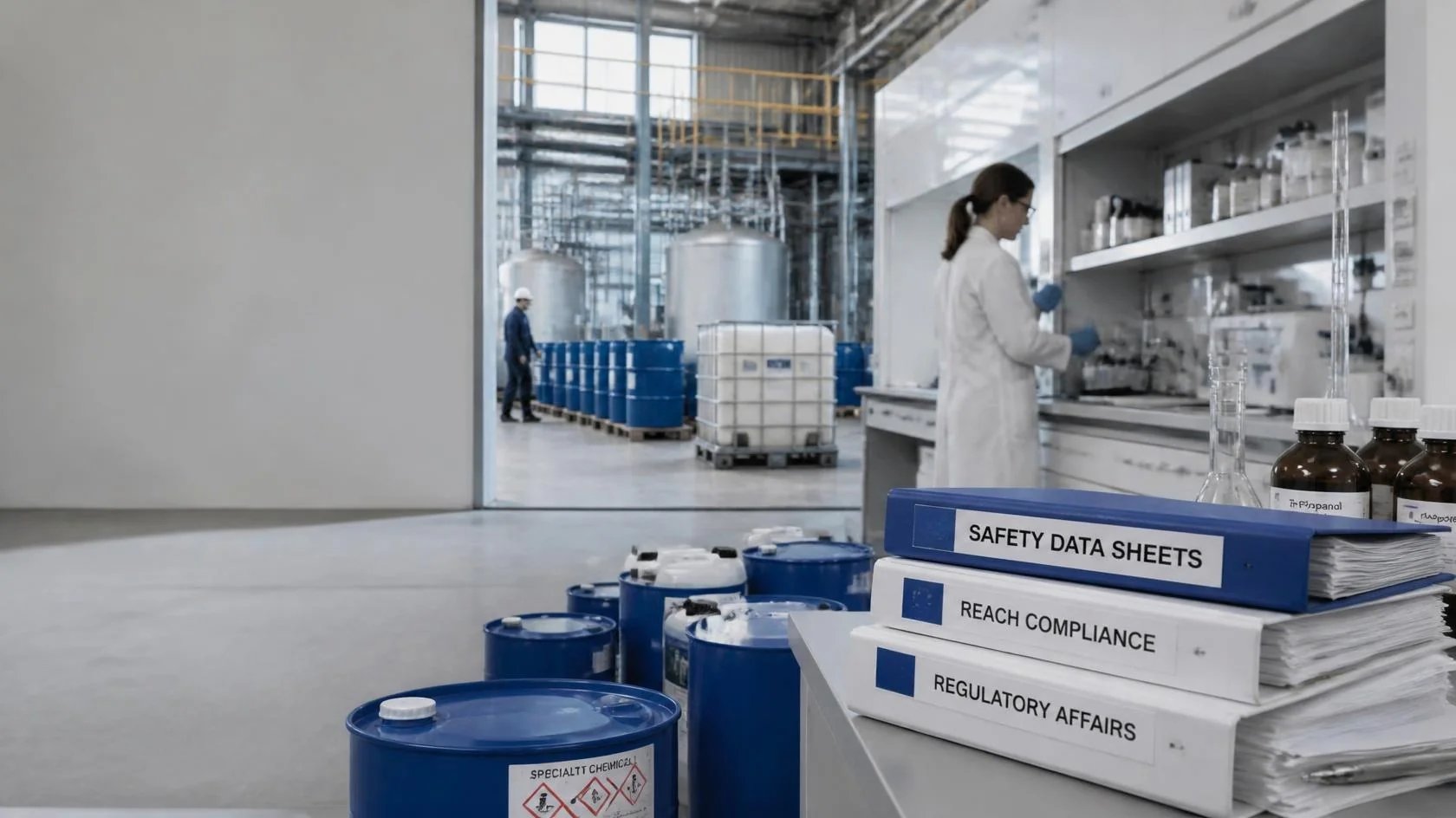
Specialty chemical production where formulation and composition records originate
01
02
03
  • 01Candidate List updated
  • 02Formulations rescreened
  • 03Obligations that follow

The shift

From periodic manual screeningto continuous formulation tracking.

Regulatory and compliance teams stay responsible for every determination and communication. What changes is whether a Candidate List update that touches a product is visible when the list changes, not only at the next review.

Today

The list is checked when someone checks it

  • Formulations are screened periodically against whichever list version was current.
  • New substances are cross-checked by hand across the product and SKU range.
  • Customer inquiries can trigger urgent manual data gathering.
With INSUS

You know what changed, and what it touched

  • Formulations are screened against the current Candidate List on an ongoing basis.
  • Newly affected products can be surfaced when the list changes.
  • Applicable obligations are mapped to each finding for compliance review.

How it works

From formulation datato a current obligation view.

Delivered through ExpertFlow AI as document and formulation intelligence over composition and regulatory records. It screens composition information. It performs no chemical analysis and makes no binding legal determination.

  1. Connect

    Bring formulation and regulatory data together

    Connect formulation and recipe composition data, product and article bill-of-materials information, existing quality and compliance records, and the current REACH SVHC Candidate List with relevant regulatory text.

  2. Understand

    Check every formulation against the list

    Compare formulation and article composition against the Candidate List, checking whether relevant substances meet the applicable 0.1% w/w threshold for the product and article in question.

  3. Identify

    Surface new and near-threshold findings

    When the Candidate List changes, surface affected formulations and articles for review. Keep near-threshold formulations on a watch list so a small recipe change does not quietly cross the limit.

  4. Advise

    Map each finding to the obligation it triggers

    Map flagged formulations to applicable Article 33 communication, Article 7(2) notification or SCIP requirements, with the conditions and deadlines that apply, for compliance-team review.

  5. Verify

    Compliance reviews before anything is issued

    Compliance professionals review and confirm every flagged formulation and mapped obligation before any communication or notification is made. Screening is refreshed as new list entries are published.

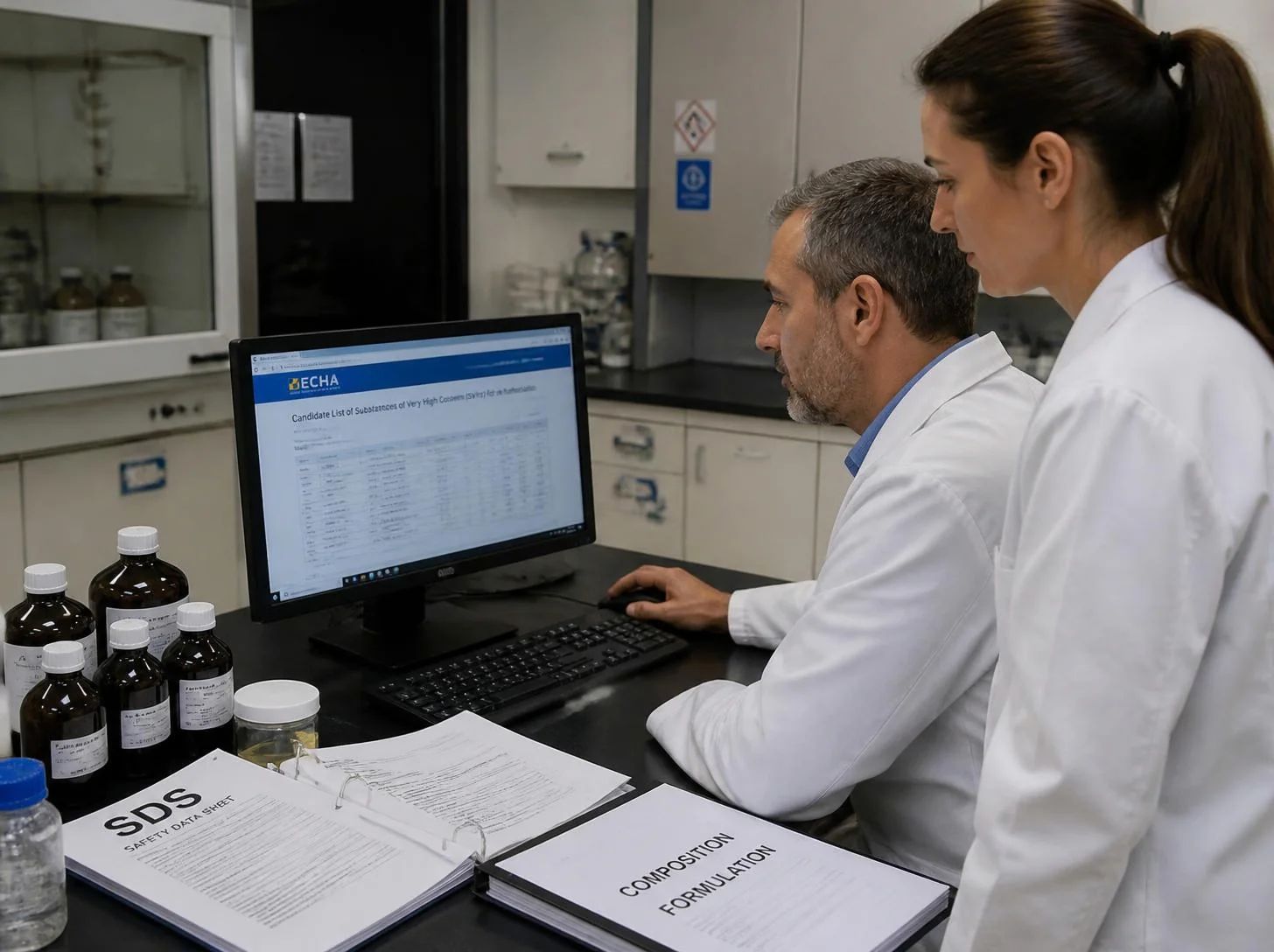
Formulation, product and regulatory data connected into one compliance view

Getting started

Start with one product rangeand the composition data you already keep.

For specialty-chemical manufacturers managing large formulation and article portfolios. Delivered through ExpertFlow AI as document and formulation intelligence. Expert Services can help with discovery and validation. Advisory only. No new sensors or laboratory equipment.

  • What we need. Formulation and recipe composition data, product and article bill-of-materials information, and existing quality and compliance records, alongside the current Candidate List and relevant regulatory text.
  • What you see first. One product range screened against the applicable list, with affected and near-threshold formulations surfaced and their obligations mapped, then validated by the compliance team.
  • Where the limits are. Screening quality depends on complete and accurate formulation data. It performs no chemical analysis, makes no independent legal determination and does not interact with plant control systems.
Explore ExpertFlow AI

Questions compliance teams ask us

The REACH SVHC Candidate List changes over time. This use case screens formulations against the current list, flags threshold crossings and maps related obligations for compliance-team review.

Article 33 uses a 0.1% weight-by-weight threshold for communication obligations concerning SVHCs in articles. How it applies is a legal assessment your team makes, not one the system makes for you.

Formulation or recipe composition data, article and product bill-of-materials information, and the applicable Candidate List and regulatory requirements. No new sensors or laboratory equipment.

No. It screens composition data you already maintain. Compliance teams remain responsible for determinations, communications and notifications.

No. It can assemble current screening information to support a response. The compliance team reviews and approves whatever is sent.

Through ExpertFlow AI as document and formulation intelligence. Expert Services can support discovery, integration and validation with your compliance team.

Usefulness depends on complete formulation records. The system does not replace laboratory testing or legal advice, and it does not submit notifications on its own.

Specialty chemicals · REACH and SVHC compliance

Every list update should trigger a check.

Start with one product range and the composition data behind it. The useful first answer is which formulations sit close to a threshold that nobody has looked at since the last review.